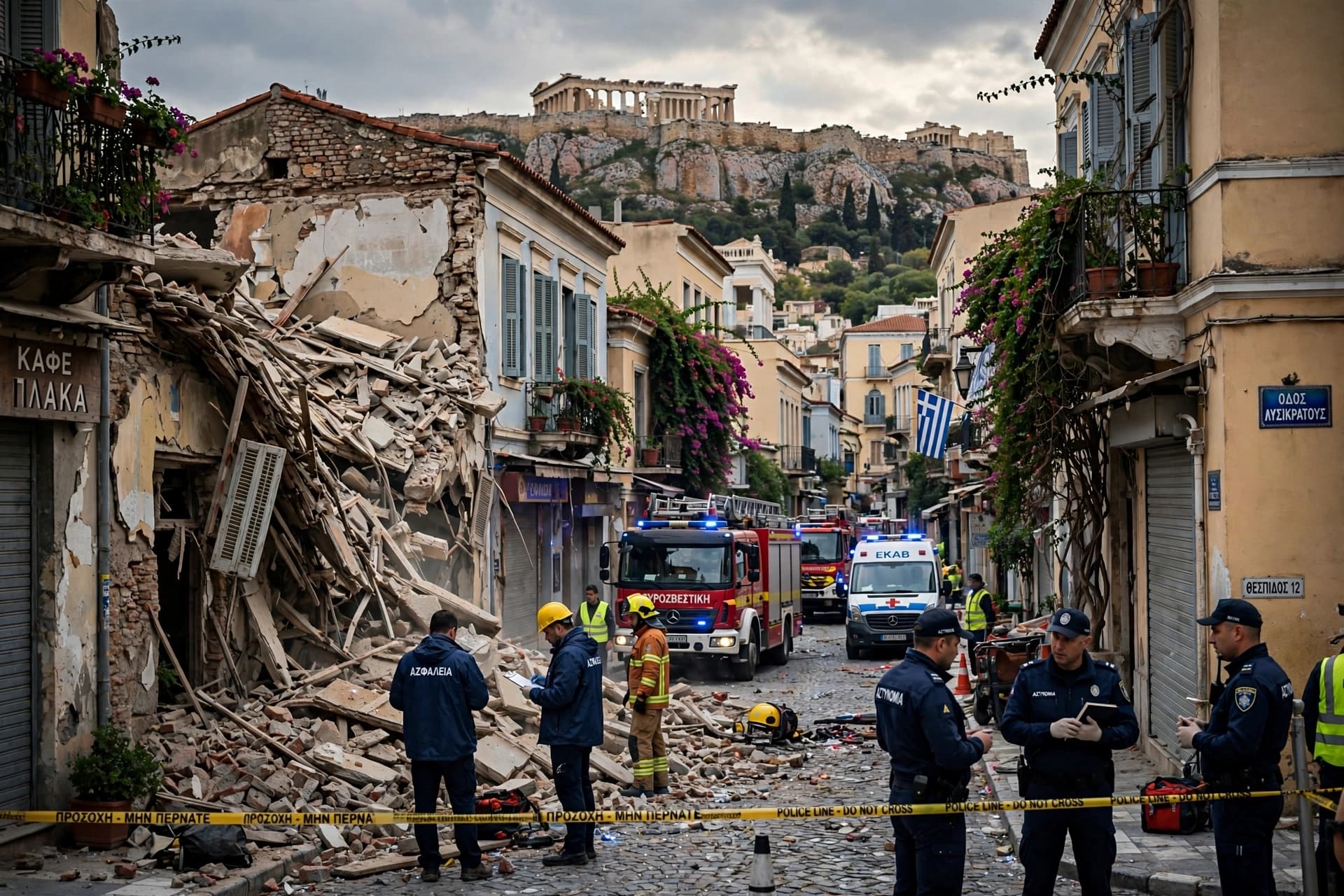
In Kyiv, the sound of another air raid has once again brought war into places normally associated with ordinary life. On Thursday, October 1, a Russian drone struck a school in the Ukrainian capital while children and staff were sheltering inside. The strike left visible damage to the building, but Ukrainian officials said there were no casualties at the school.
Kyiv Mayor Vitalii Klitschko said the drone hit the school while students and employees were in shelters. The warhead did not explode, according to officials, leaving a large hole in the brick facade, damaged windows, and burn marks. Emergency personnel later removed the unexploded warhead from the site.
The school was only one part of a wider wave of attacks across the capital. Two Russian drones struck a major bridge connecting eastern and western Kyiv, according to Klitschko, disrupting metro and ground transportation. The attacks added another layer of disruption to a city that has spent years adapting its daily routines around air-raid warnings and the threat of aerial strikes.
Ukraine's air force said the number of Russian drone attacks increased during September. According to figures cited by Al Jazeera, Ukraine recorded 3,177 drone attacks through September 29, compared with 2,850 in August. The figures illustrate the scale of the aerial campaign, although individual incidents can vary significantly in their effects.
Another incident occurred at a nuclear research facility in Kyiv the previous day. Ukraine's nuclear safety regulator said a Russian drone struck the facility's grounds and caused a fire, but the test reactor itself was not damaged. The regulator said the reactor had been shut down since 2022 and that no injuries were reported.
The attacks come as the broader war continues to place pressure on Ukraine's air defenses and civilian infrastructure. Ukrainian officials have repeatedly sought additional air-defense systems and other military assistance from international partners, while Russia has continued launching waves of drones and missiles against Ukrainian targets.
The Ukrainian capital has also remained a symbolic and practical center of the conflict. Damage to schools, bridges, scientific institutions, transportation infrastructure, and other urban facilities can affect daily life even when casualties are avoided. For residents, the distinction between a successful interception and an impact can sometimes be measured in broken windows, disrupted transport, and another morning spent assessing damage.
Russia and Ukraine continue to accuse each other of attacks and describe their military actions through sharply different narratives. The latest strike on the Kyiv school, however, is a documented physical event: a drone hit the building, an unexploded warhead was recovered, and officials reported no casualties there. As the aerial campaign continues, the immediate task for Kyiv remains both protecting civilians and repairing the ordinary infrastructure that war repeatedly interrupts.
AI Image Disclaimer: This visual is AI-generated and is intended only as an editorial representation, not a photograph of the actual strike.
Sources: Associated Press; Al Jazeera; Reuters; Australian Associated Press
Published by Banx Network. This article is part of the Banx decentralized media programme, powered by the BXE token on the XRP Ledger.