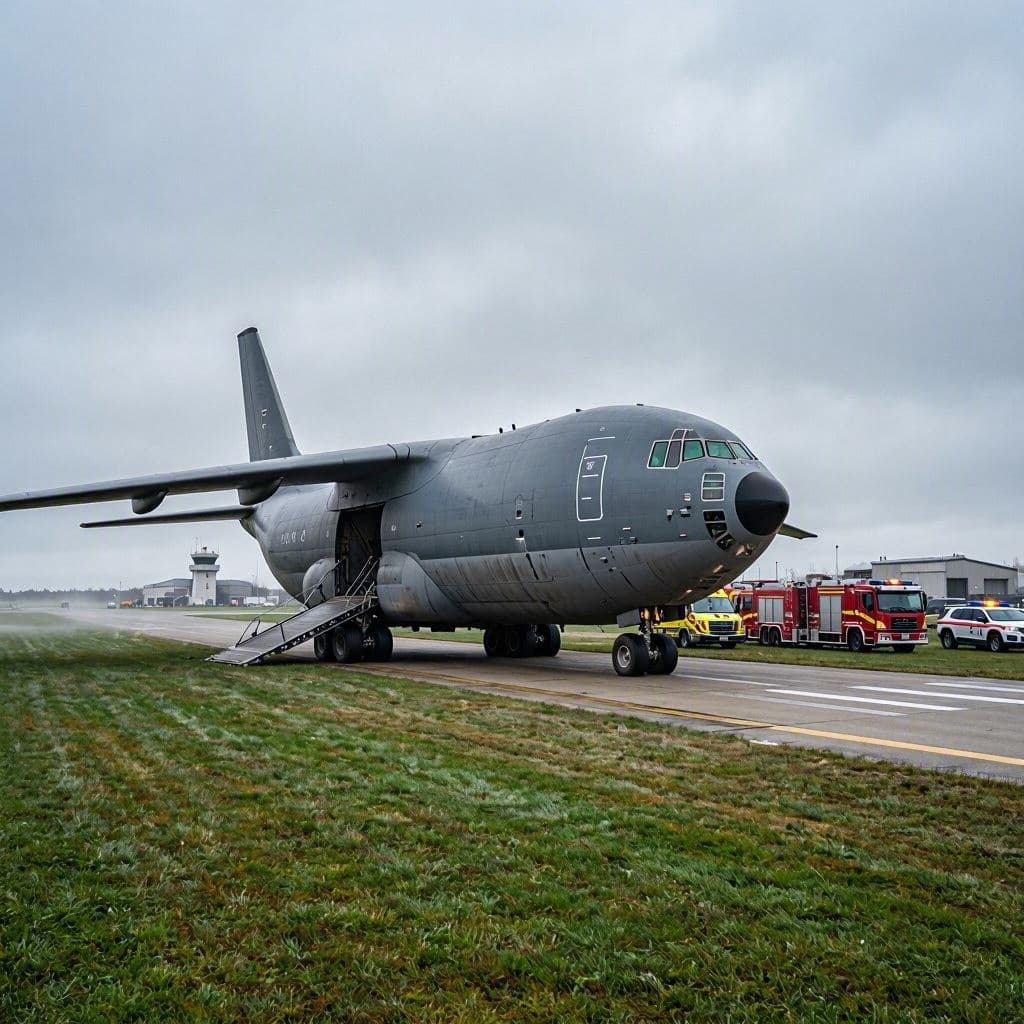
The rhythmic hum of aviation is a sound that defines modern connectivity, a constant reminder of the intricate dance between machinery and sky. Yet, on the tarmac of Miami International Airport, that rhythm was abruptly interrupted by a jarring screech and the crunch of metal. A Prime Air Boeing 767 cargo aircraft, tasked with the silent logistics of global commerce, overran the runway, colliding with ground vehicles in an incident that shook the routine of one of America’s busiest hubs.
The event unfolded during what appeared to be standard operations, transforming a routine landing into a scene of emergency response. As the heavy freighter failed to stop within the designated confines of the pavement, it breached the safety zones, coming to rest after striking service vehicles parked nearby. The immediate chaos was tempered by the swift arrival of fire crews and airport personnel, who worked to secure the area and assess the situation.
Miraculously, reports indicate that there were no serious injuries among the crew or the ground staff involved. This outcome, while fortunate, does not diminish the severity of the breach. The collision serves as a stark reminder of the kinetic energy inherent in aviation and the critical importance of precise braking systems and runway conditions. It highlights the thin margin for error when managing aircraft weighing hundreds of thousands of pounds.
Investigators from the National Transportation Safety Board (NTSB) have launched a thorough inquiry into the cause of the overrun. Factors such as weather conditions, runway surface friction, and mechanical performance are being meticulously examined. Each detail, from the pilot’s actions to the status of the reverse thrusters, will be scrutinized to understand how the aircraft exceeded its stopping distance.
For the airport community, the incident caused significant disruption. Flights were delayed, and gates were reassigned as authorities cleared the debris and inspected the runway for damage. The ripple effect of such an event extends beyond the immediate location, impacting travel plans and logistical schedules across the network. It underscores the interdependence of air traffic systems, where a single incident can create waves of inconvenience.
Prime Air, the cargo division associated with Amazon, has expressed cooperation with the investigation. The company emphasized its commitment to safety protocols and the well-being of its employees. In the aftermath, there is a renewed focus on reviewing operational procedures to prevent similar occurrences. Safety in aviation is not just a regulatory requirement but a cultural imperative that demands constant vigilance.
As the runway reopens and operations return to normal, the memory of the incident remains. It serves as a case study for aviation professionals worldwide, offering lessons on risk management and emergency preparedness. The resilience of the airport staff in handling the situation reflects the robust training and coordination that define modern aviation safety.
The overrun of the Prime Air 767 in Miami is a serious incident that thankfully resulted in no major injuries. As investigators work to determine the cause, the event reinforces the need for continuous improvement in aviation safety standards and operational precision.
AI Image Disclaimer: The visual representations accompanying this report are generated by artificial intelligence to illustrate the context of the incident.
Sources: Miami Herald Aviation Week National Transportation Safety Board
Published by Banx Network. This article is part of the Banx decentralized media programme, powered by the BXE token on the XRP Ledger.