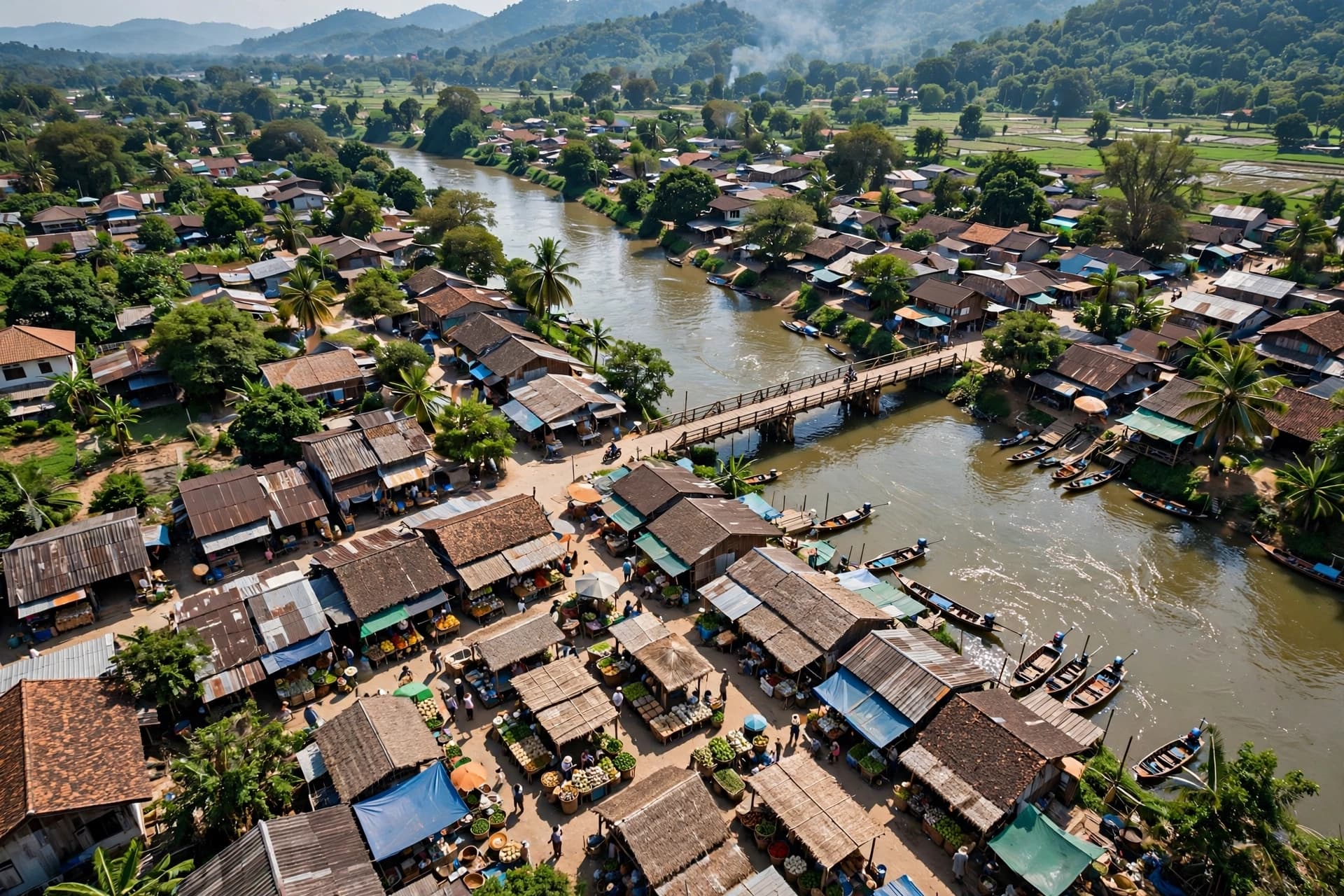
There are moments when a marketplace becomes more than commerce—it becomes the quiet heartbeat of a community, a place where vendors greet familiar faces and the ordinary rhythms of life unfold. In Kyauktaw town, along the riverside of Myanmar’s Rakhine state, such a place existed until Monday, when the sky itself became a bearer of destruction. What followed was not merely a tragedy of numbers, but the unraveling of lives woven together by daily exchange and human connection.
On Tuesday, local aid workers confirmed what many had feared: the death toll from the military airstrike had risen to 50, with 58 others wounded . The bombing occurred around midday on Monday, striking the busy market and adjacent bridge when they were filled with shoppers, vendors, and cargo loaders going about their routines . Some of the bodies, according to those at the scene, were lost to the fires that consumed vehicles and stalls in the aftermath, making the final count uncertain .
The Arakan Army, which controls much of Rakhine state, issued a statement identifying the victims as “innocent passersby, market vendors, shoppers and cargo loaders” . Their words carry the weight of a community that has already endured years of displacement and hardship. Nearly half a million people in Rakhine have been uprooted by the conflict, according to United Nations data, and this market had become a vital lifeline through its river trade route to India .
Since the 2021 military coup that removed Aung San Suu Kyi’s elected government, Myanmar has witnessed more than 100,000 deaths in conflict, according to the conflict monitor ACLED . The military’s air wing, equipped with fighter jets from Russia and China, has been accused of targeting civilian sites including schools and monasteries—allegations that rights groups suggest may constitute war crimes . The military did not respond to requests for comment on this attack .
Human rights advocates have responded with sorrow and urgency. The Arakan Human Rights Defenders and Promoters Association described the strike as an act of genocide rather than a conventional war crime, calling on the United Nations to bring those responsible before international courts . The ASEAN Parliamentarians for Human Rights also demanded accountability for what they termed the bombardment of civilian targets . These calls echo a broader question: how does a nation reckon with violence that falls upon those simply buying and selling, living and breathing?
For families in Kyauktaw, Tuesday was spent searching through charred remnants for loved ones. One man, Aung Chay, believed his brother-in-law had perished and continued looking for the body . The market that once hummed with the sounds of trade now holds only ash and grief. The riverside bridge, once a connector, now stands as a mute witness to what passed through it.
An investigation by local and international observers continues, though the Myanmar military has not issued any statement. The victims were not combatants in any conventional sense. They were the threads that held a fragile community together—sellers of vegetables, carriers of goods, parents buying for their children. In war, such threads are the first to break.
AI-generated images are used for illustrative purposes only.
Sources: AFP, Bangladesh Sangbad Sangstha, Central News Agency (CNA), RTL Today, Daily Mail, Free Malaysia Today, Burma News International
Published by Banx Network. This article is part of the Banx decentralized media programme, powered by the BXE token on the XRP Ledger.