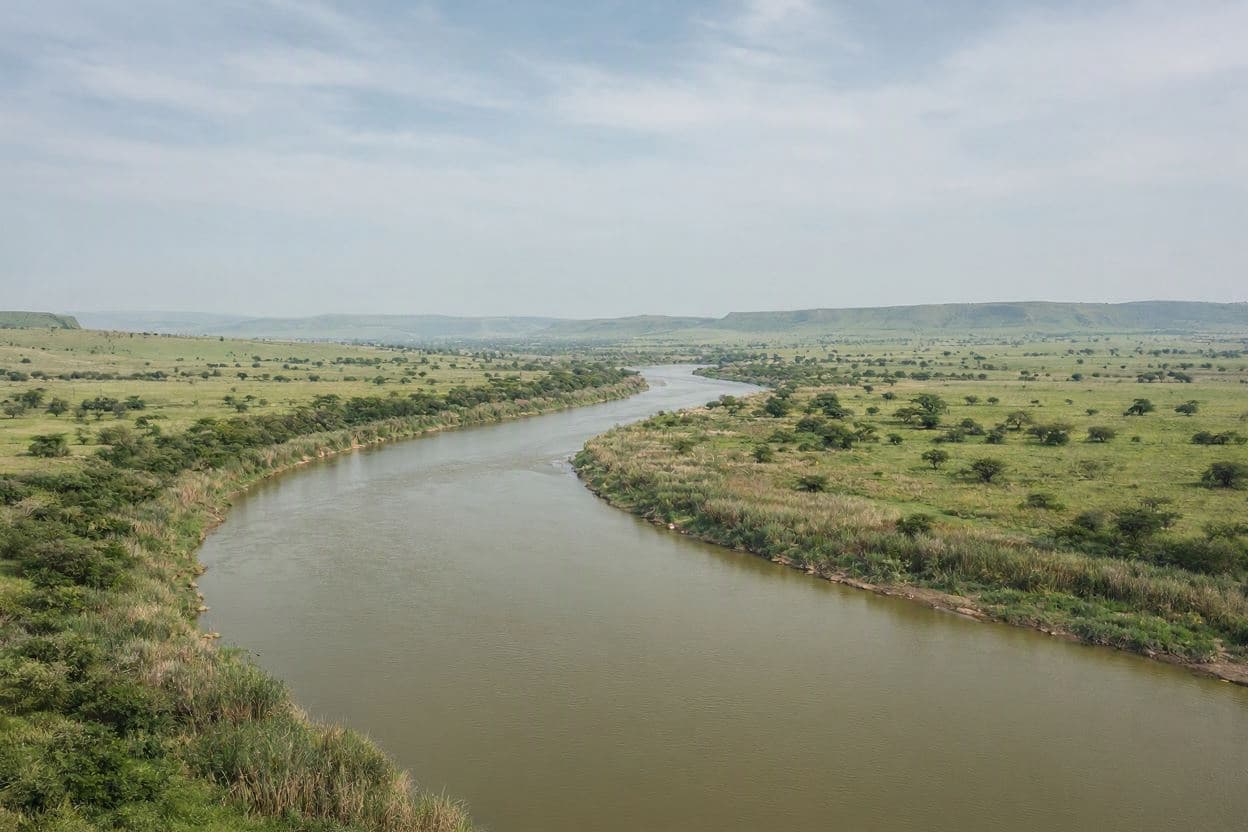
There is a river that does not belong to any one nation, yet feeds eight. The Zambezi winds through southern Africa like a shared inheritance—sometimes generous, sometimes unforgiving—and the communities along its banks have learned to read its moods the way farmers read the sky. Droughts choke the hydropower. Floods take the farmland. Between those extremes, millions live with a daily uncertainty that no single country can solve alone. What happens when eight nations decide to act as one?
That question moved closer to an answer earlier this month. Representatives from Angola, Botswana, Malawi, Mozambique, Namibia, Tanzania, Zambia, and Zimbabwe gathered in Harare from September 9 to 11 for a regional workshop convened by the Zambezi Watercourse Commission, the African Development Bank, and the Global Mechanism of the UN Convention to Combat Desertification . Their purpose was concrete: to agree on priority investments for a proposed $130 million program called Building Resilience of Food, Livelihoods and Ecosystems in the Zambezi River Basin, or BREFOLE-ZRB .
The program is being developed as a bankable investment initiative, with participants reviewing financing allocations, implementation arrangements, and environmental safeguards . It rests on four pillars: natural resources management, community climate resilience, institutional capacity and knowledge, and regional coordination . In practice, that translates to landscape restoration, improved water management, climate-smart agriculture, stronger value chains, and economic opportunities for women and young people .
Dr. Laouali Garba of the African Development Bank offered an agricultural metaphor that captured the spirit of the gathering. “We planted together, and we need to harvest together for the benefit of the most vulnerable communities of the Zambezi basin,” he said . The sentiment was echoed by ZAMCOM Executive Secretary Felix Ngamlagosi, who stressed that while individual investments must respond to each country’s priorities, they must all contribute to common basin-wide results .
The stakes are difficult to overstate. The Zambezi Basin covers approximately 1.37 million square kilometers and supports around 51 million people, roughly 44 percent of whom live below the poverty line . The basin’s economies depend on agriculture, fisheries, tourism, hydropower, and water supplies, all of which face mounting pressure from climate variability . Approximately 51 percent of the land is moderately degraded, and mean annual river flows have declined by nearly 20 percent over the past two decades .
The workshop recommended that member states allocate at least 10 percent of their national budgets toward basin program benefits and priority areas, while also strengthening community-level capacity and gender-outcome tracking . The program is now moving toward an appraisal mission that will review its final design before financing is formally secured .
Eight Zambezi River Basin countries have agreed on priority investments for a proposed $130 million program to strengthen food security, livelihoods, and climate resilience. The program will focus on landscape restoration, water management, and economic opportunities for women and youth.
AI Image Disclaimer: The images accompanying this article are generated by artificial intelligence and are intended for illustrative purposes only.
Sources: EnviroNews Nigeria, African Development Bank Group, Global Environment Facility, UNCCD
Published by Banx Network. This article is part of the Banx decentralized media programme, powered by the BXE token on the XRP Ledger.