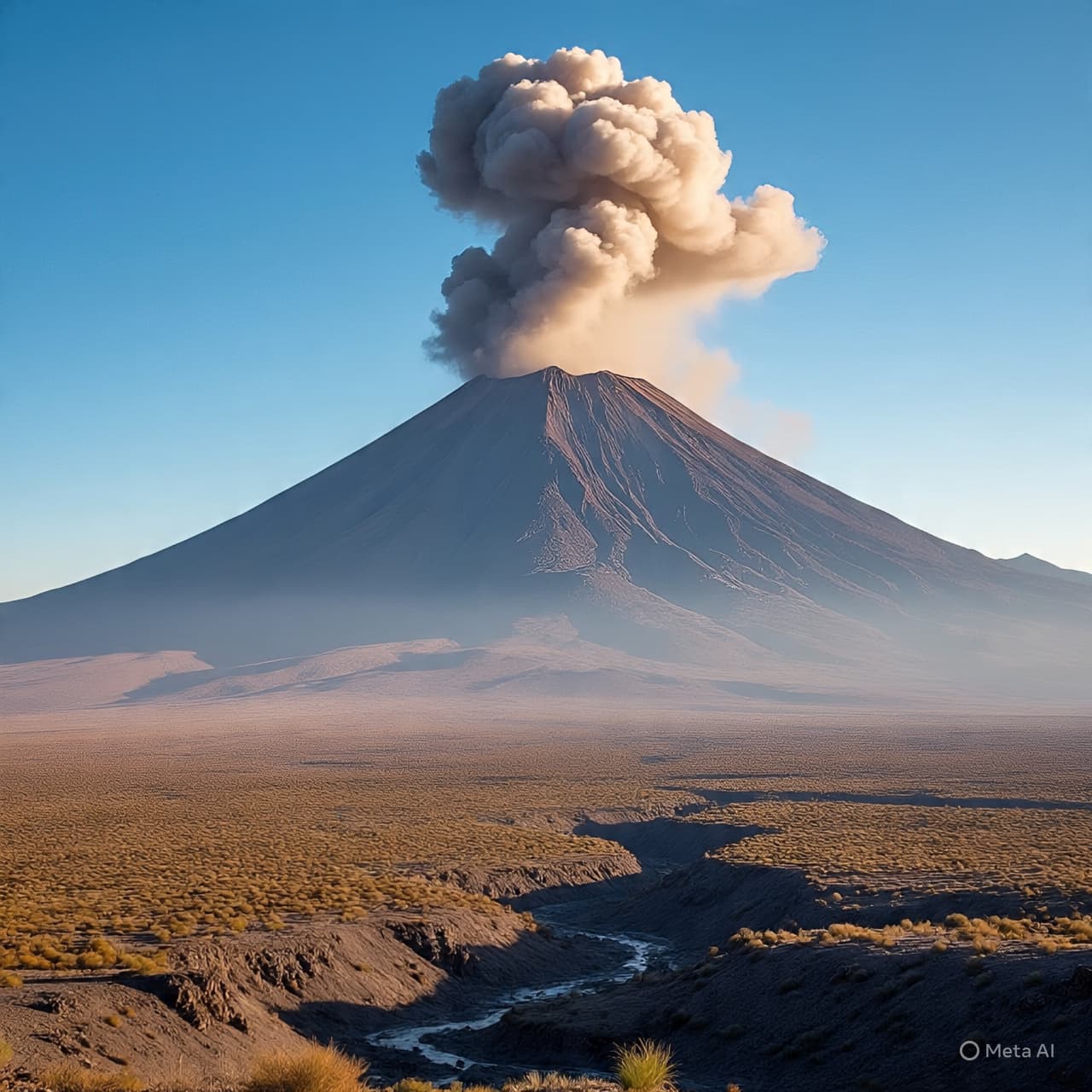
Like a storyteller finally breaking a long-held silence, the Hayli Gubbi volcano in Ethiopia has spoken—erupting in a rare, ancient voice that has not been heard in millennia. What was once a remote, quiet shield in the Afar region now belches ash into the sky, as if resurrected from a long sleep at the edge of the Rift.
On November 23, 2025, satellite data confirmed what many had not dared to expect: Hayli Gubbi, a volcano in northeastern Ethiopia, erupted explosively for several hours. The plume of ash soared to heights of roughly 45,000 feet, drifting across the Red Sea toward Yemen and Oman. Local officials reported that, so far, no human or livestock fatalities have been confirmed. But the fallout is not just atmospheric — villages in the Afar region, including Afdera, have been blanketed in ash, threatening grazing lands vital for pastoralist communities.
Geologically, this is an extraordinary event. According to volcanologists and historical records, Hayli Gubbi had no known eruptions during the Holocene — the roughly 12,000-year period since the last ice age. In other words, this is not just a rare eruption but one that may mark the volcano’s first documented explosion in recorded (or meaningful geological) memory.
Experts say the volcano’s sudden awakening offers a rare scientific window. Because Hayli Gubbi is relatively understudied, its eruption could shed new light on the tectonic forces at play in the Afar Rift — an area where tectonic plates diverge, and deep magma pathways remain mysterious. Meanwhile, aviation authorities are monitoring the ash cloud actively: the plume has already triggered warnings in parts of the Middle East, and its high altitude raises concerns for aircraft.
The human story is tangible too. For herders in nearby villages, the economic toll may be as serious as the geological surprise. Ash fall can suffocate grazing grass or poison pastures, imperiling livestock — the backbone of many local livelihoods. Tourists in the Danakil Depression, drawn to its surreal landscapes, have also been stranded as roads and visibility are disrupted.
In a region long defined by geological restlessness, the Hayli Gubbi eruption stands out as a once-in-many-millennia event. Authorities are urging caution but also studying the eruption’s fallout closely. For now, the ash is settling, the skies are clearing, and scientists are watching — asking new questions about the Earth beneath their feet, and what this deep-time voice might be trying to tell us.
AI Image Disclaimer: “Visuals are created with AI tools and are not real photographs.”
Sources: The Guardian Scientific American Al Jazeera CBS News Geo News
Published by Banx Network. This article is part of the Banx decentralized media programme, powered by the BXE token on the XRP Ledger.