The most terrifying part isn’t the melt itself.
It is the speed at which our assumptions keep becoming obsolete.
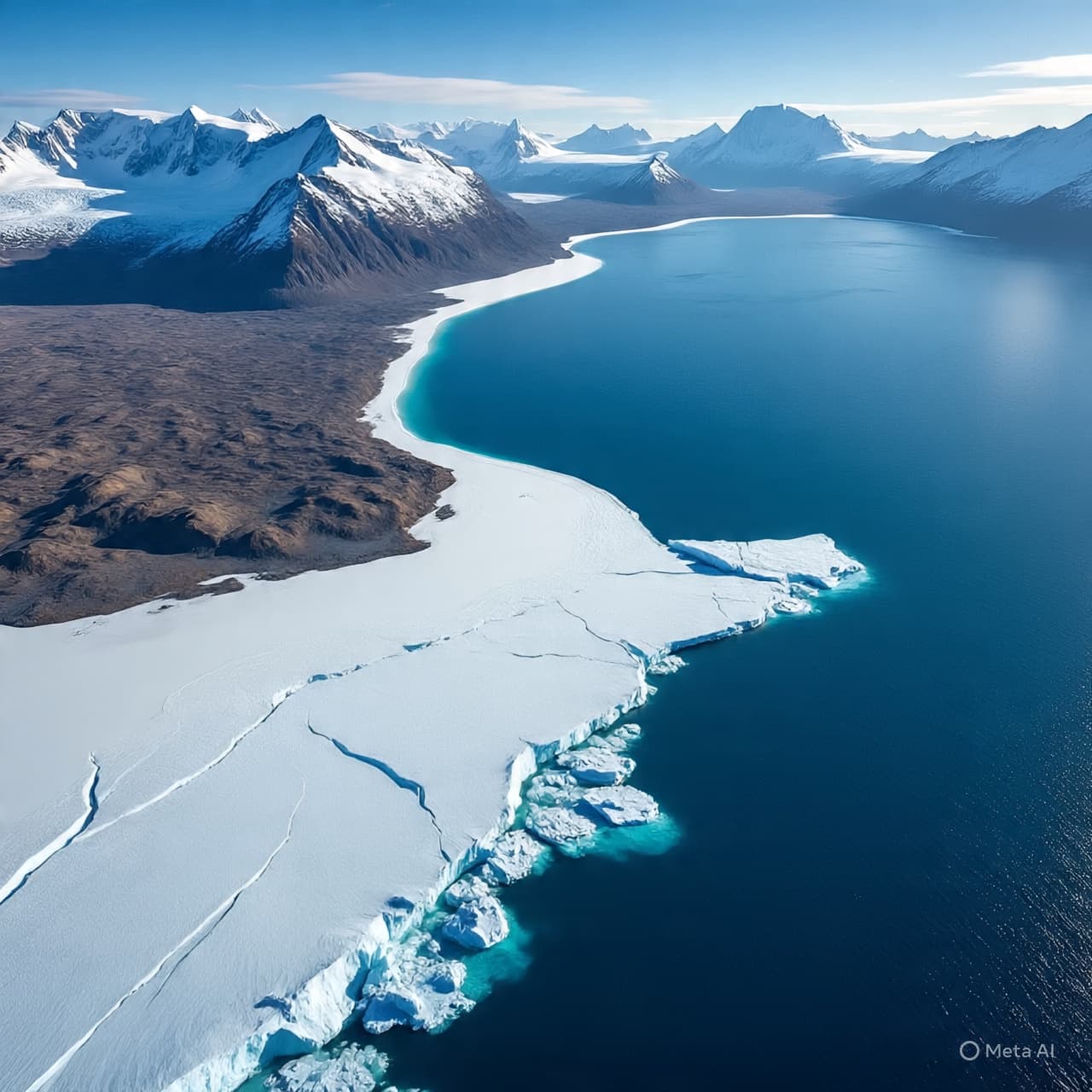
A new study measuring a major Antarctic glacier found it is retreating at a pace ten times faster than previously recorded. Numbers like that jar the imagination. They take a concept that once felt generational and compress it into something almost immediate. This isn’t a slow fade—it’s acceleration.
We keep wanting the ice to behave like a library archive: cold, static, reliable, predictable. But Antarctica is not a storage facility. It is a dynamic energy system, sensitive to ocean temperature, current, wind, and the long tail of industrial heat we keep adding to the atmospheric balance sheet.
The new measurements used seabed topography and sediment scans—basically forensic reconstruction—to map how fast the grounding line jumped backward in the past. And the evidence indicates that within the last two centuries, the glacier retreated at speeds we previously thought belonged only to the hypothetical future.
If that happened before—without aviation, without highways, without petrochemical global lifecycles—what happens now, when the thermal input is significantly higher?
We talk about climate change as a political argument. But ice is not political. Ice is mechanical. It holds or it doesn’t. It remains grounded or it unhooks from the bedrock. After that, the rest is physics.
Sea level rise is not a line on a chart—it's a mortgage line for coastal cities. It is the future price of storm insurance. It is which neighborhoods get rebuilt and which ones get abandoned. Every fresh study from Antarctica isn’t just science—it’s a preview of real estate, migration, logistics, and infrastructure reallocation.
And the tragedy is how normalized it becomes to read that the ice is worse than we expected. The human brain is not built for exponential curves. But the ice doesn’t care about that either.
The glacier is telling us something simple: the future is not crawling toward us.
It’s sprinting downhill.
Published by Banx Network. This article is part of the Banx decentralized media programme, powered by the BXE token on the XRP Ledger.