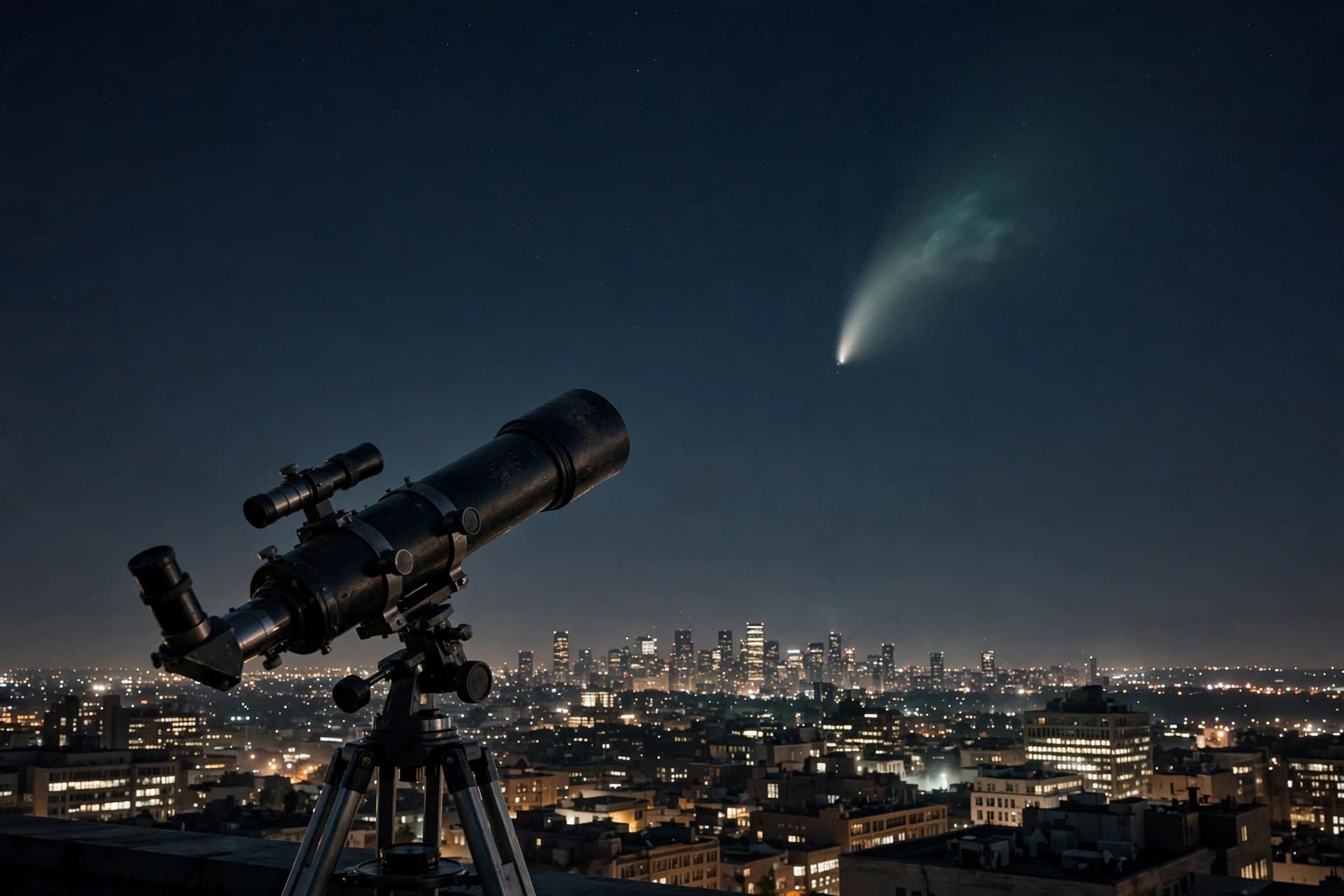
There are moments when the night sky feels closer than usual, as if it leans gently toward those who look up. Meteor showers offer such moments—brief, luminous reminders that even in vast stillness, motion continues quietly above us.
Astronomers have indicated that a meteor shower expected this week could produce up to 20 visible meteors per hour under optimal viewing conditions. The event offers skywatchers an opportunity to observe streaks of light as debris from a comet enters Earth’s atmosphere.
Meteor showers occur when Earth passes through trails of cosmic debris left behind by comets. As these particles collide with the atmosphere, they burn up, creating the bright streaks commonly referred to as shooting stars.
Visibility will depend largely on local weather conditions and light pollution. Areas with clear, dark skies—far from urban lighting—are expected to provide the best viewing experience.
The peak viewing period is typically during the late night and early morning hours, when the side of Earth facing the meteor stream is in darkness. During this time, observers may see several meteors within a short span.
Experts recommend allowing time for eyes to adjust to the dark, as this can significantly improve visibility. No special equipment is required, making meteor showers one of the most accessible astronomical events.
While 20 meteors per hour represents an average under ideal conditions, actual rates may vary. Factors such as moonlight and atmospheric clarity can influence how many meteors are visible.
Astronomical events like these continue to draw both seasoned observers and casual viewers, offering a shared experience that connects science with quiet wonder.
As the week unfolds, the night sky offers a gentle invitation to pause and look upward. In those fleeting streaks of light, there is both science and stillness—a reminder of motion far beyond our horizon.
AI Image Disclaimer: The accompanying images are generated by AI to visually represent the described scenes.
Sources: NASA, American Meteor Society, Space.com, Sky & Telescope
Published by Banx Network. This article is part of the Banx decentralized media programme, powered by the BXE token on the XRP Ledger.