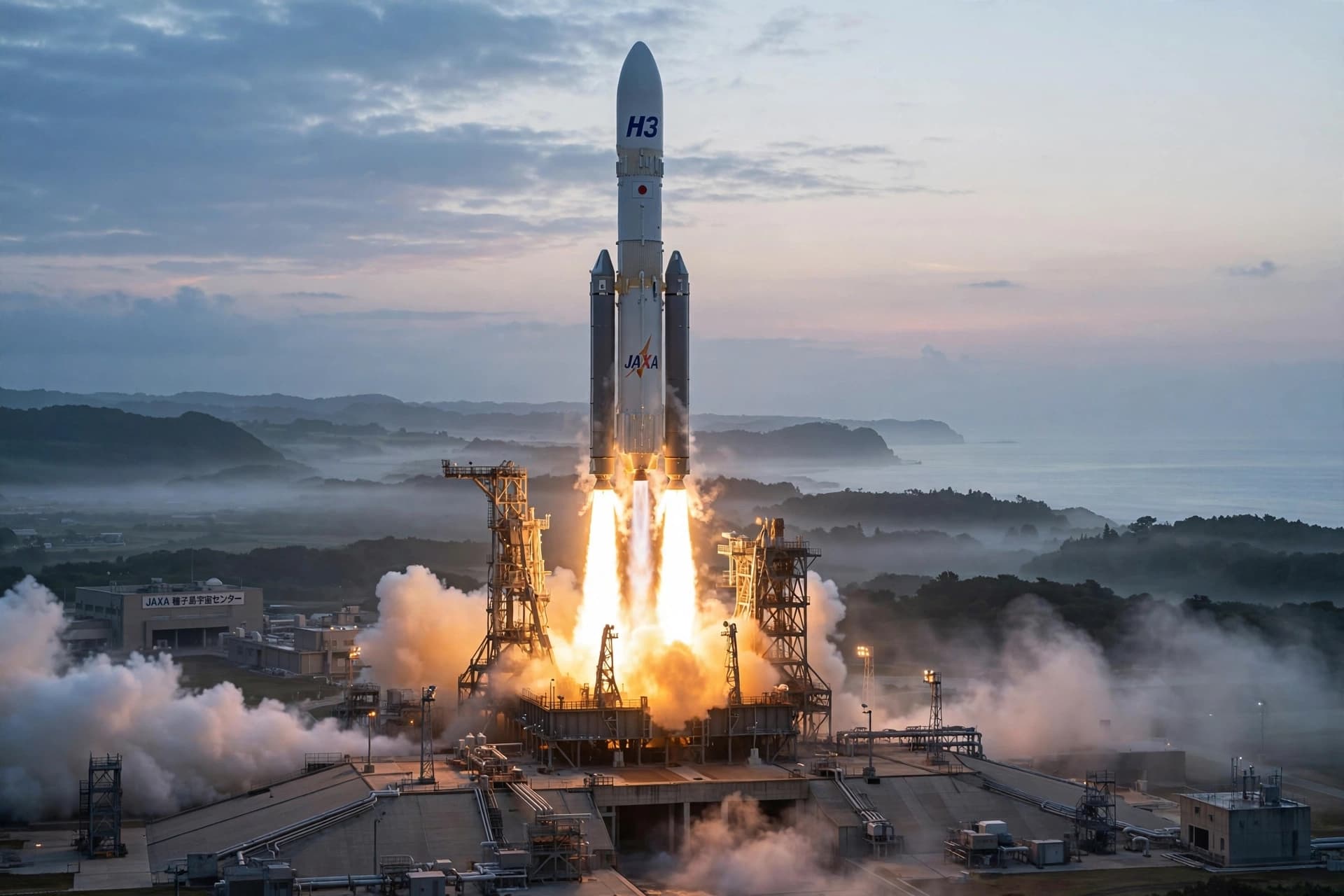
There is a particular romance in naming a mission after fear and dread. Phobos and Deimos, the twin moons of Mars, carry the names of the Greek personifications of terror, sons of the war god Ares. Yet the spacecraft that left Earth this week carries no such heaviness. It is called MMX, for Martian Moons eXploration, and it departed from Tanegashima Space Center in southwestern Japan at 4:41 a.m. local time, rising into the dark on an H3 rocket, carrying with it the quiet hope of a nation and the curiosity of five space agencies .
The launch was originally scheduled for 2024 but was postponed after the maiden flight of the H3 rocket failed the previous year . The successful liftoff this week was, in the words of project manager Makoto Arita, placed into orbit with "exceptional precision" . The spacecraft separated from the rocket and began its long journey toward the red planet.
MMX is the world's first mission designed to collect samples from a Martian moon. The target is Phobos, the larger and closer of the two, a lumpy, potato-shaped rock roughly twenty to thirty kilometers in diameter orbiting about six thousand kilometers from Mars' surface . The spacecraft, weighing 4,480 kilograms and standing 5.3 meters tall with solar panels spanning nine meters, will arrive in Martian orbit in August 2027 .
The mission's ambitions are layered. A French-German rover named Idefix, no bigger than a microwave oven, will land on Phobos first, serving as a scout for safety . The four-wheeled rover is designed to right itself if it lands upside down, moving at a glacial one millimeter per second to avoid tipping in the moon's extraordinarily weak gravity . After the rover's survey, the main spacecraft will attempt two landings of its own, drilling and vacuuming up at least ten grams of material from the surface .
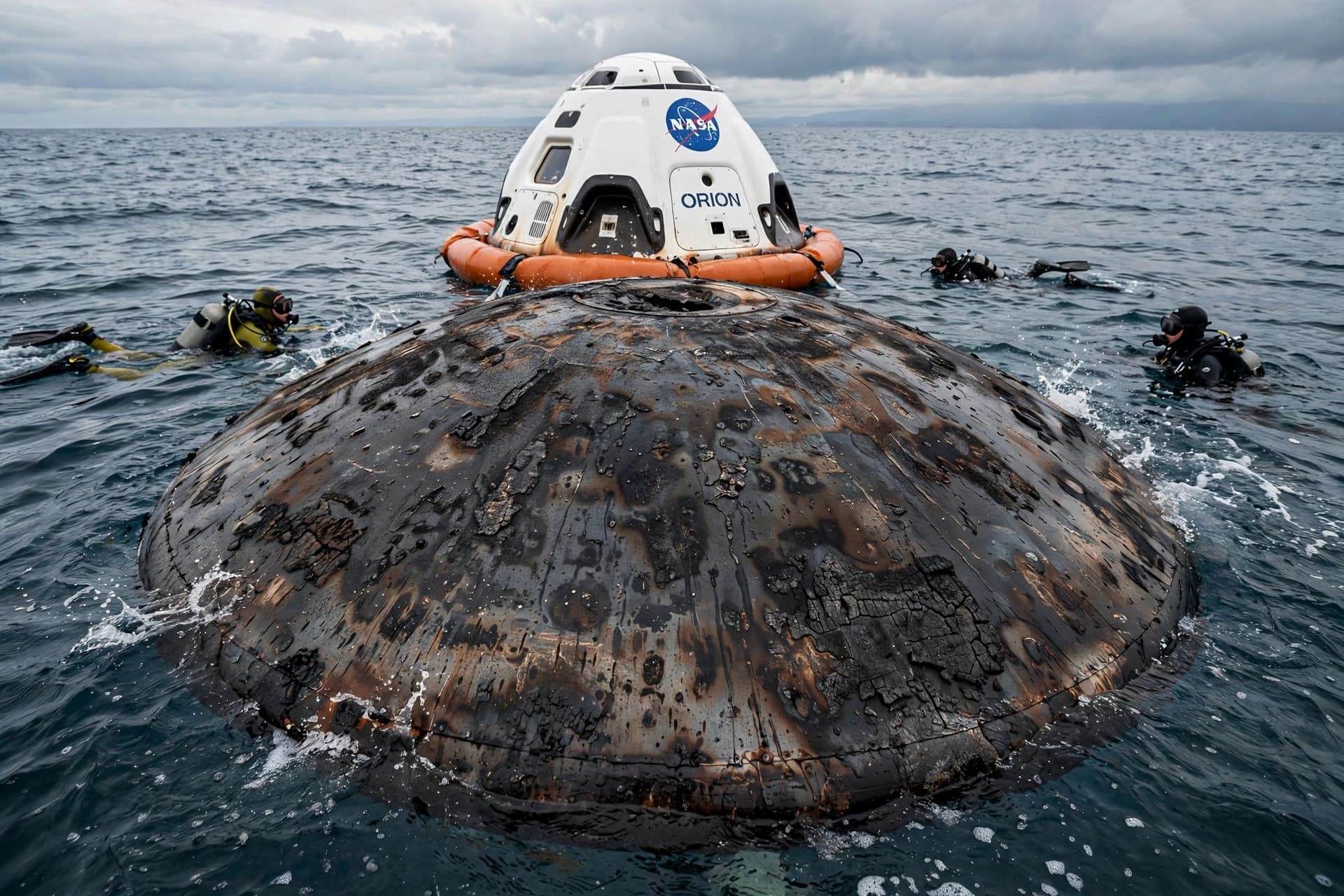
The samples are expected to return to Earth in July 2031, landing in Woomera, South Australia, where a capsule will be recovered . If successful, Japan will join a small club of nations that have returned samples from another world, building on its previous asteroid sample missions.
The scientific questions driving MMX are fundamental. There are two competing theories about how Mars' moons formed: either they coalesced from debris after a massive collision with Mars, or they are asteroids captured by the planet's gravity . The samples, preserved on a moon that has not undergone the geological evolution of a planet, may hold evidence of the early Martian environment, including traces of water and organic matter that could illuminate the conditions that made life possible .
For all the precision of the launch and the careful engineering of the landings, there is something humbling in the mission's scale. A spacecraft the size of a small truck will cross millions of kilometers, land twice on a moon that has never been visited, and return a handful of dust and rock to a desert in Australia. The samples will weigh less than half an ounce. And from them, scientists hope to read the history of a world.
AI Image Disclaimer: The images accompanying this article are AI-generated illustrations and do not depict the actual spacecraft or mission.
Sources: Japan Aerospace Exploration Agency (JAXA), Kyodo News, Associated Press, ABC News
Published by Banx Network. This article is part of the Banx decentralized media programme, powered by the BXE token on the XRP Ledger.