There is a particular kind of horror that lives not in fire or flood, but in the quiet possibility that the laws of physics themselves might one day change—that the vacuum of space, which we imagine as empty and stable, might be nothing more than a temporary state, waiting to collapse into something else. This is the idea of vacuum decay, and it is perhaps the most complete catastrophe the universe could produce.
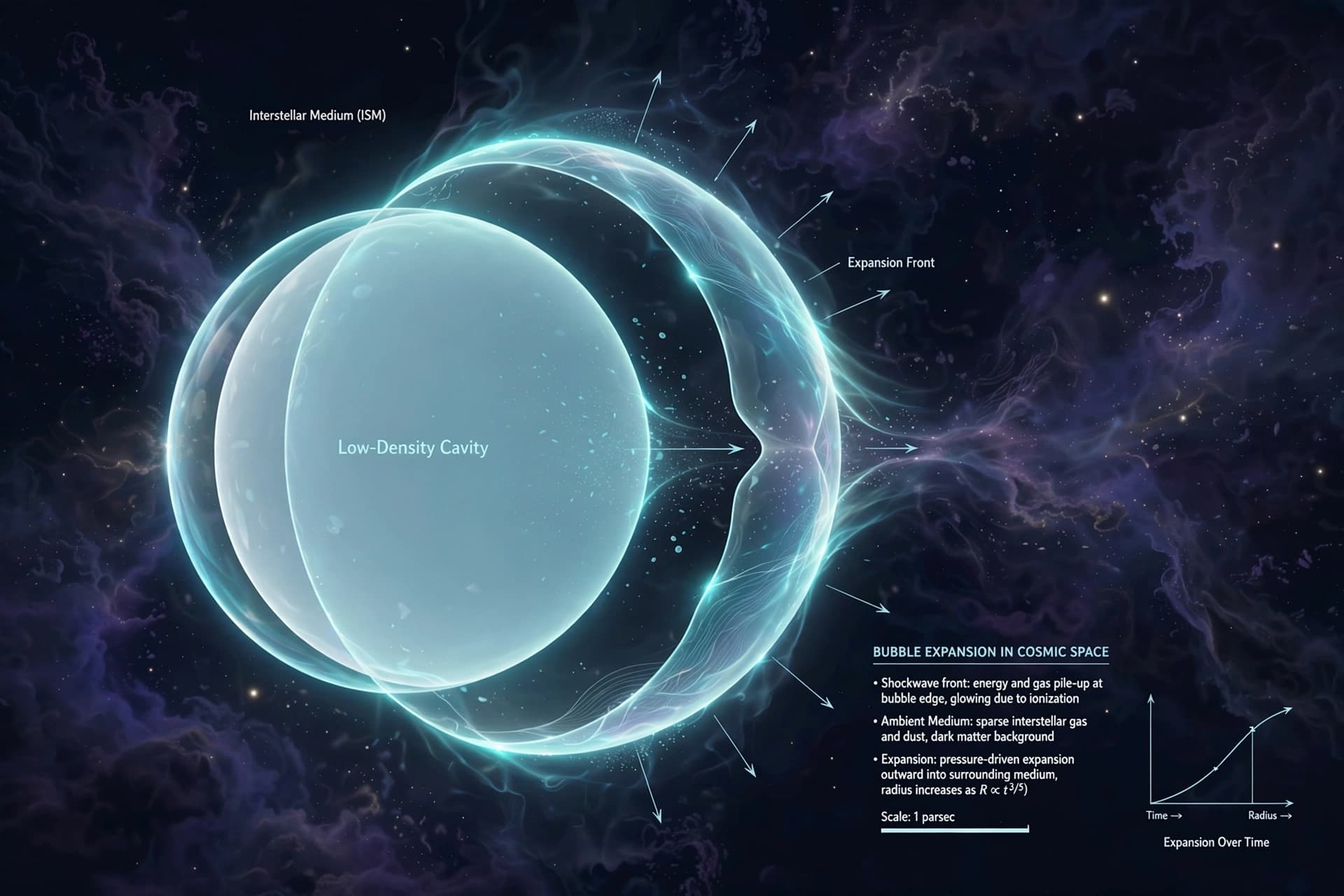
The concept begins with the Higgs field, a quantum field that permeates all of space and gives particles their mass. Our universe sits in what physicists call a “false vacuum”—a state that is stable enough to have lasted 13.8 billion years, but not necessarily the lowest energy state possible. If the Higgs field were to tunnel to a lower energy state—a “true vacuum”—the result would be a bubble of altered physics expanding at nearly the speed of light, transforming everything it touches. Inside that bubble, the laws of physics as we know them would cease to apply. Matter as we understand it could not exist .
The mechanism is quantum tunneling, the same phenomenon that allows particles to pass through barriers they classically cannot. If the Higgs field tunnels to a lower value, a bubble forms. And because the energy difference between the false vacuum and the true vacuum is so great, the bubble would expand without stopping .
But here is the reassurance. The probability of this occurring anywhere near us is vanishingly small. Physicists’ most precise estimates place the likelihood so low that it is not worth losing sleep over. The universe has already existed for billions of years in its current state, which itself is evidence of the false vacuum’s stability .
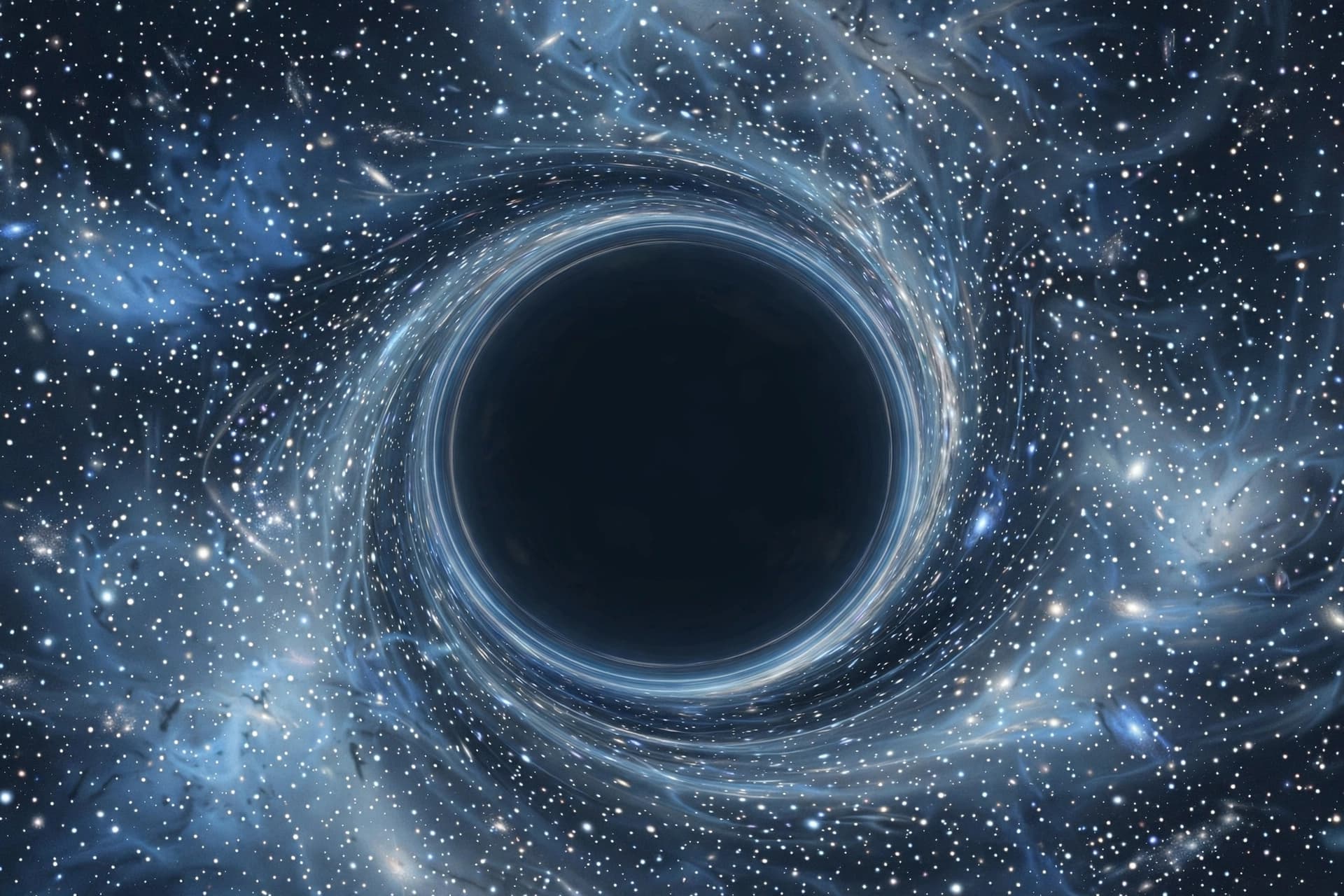
Recent research has explored one possible trigger: black holes. Some theories suggest that microscopic black holes could act as seeds for vacuum decay, catalyzing the formation of a bubble. But calculations by physicists like Dejan Stojkovic at the University at Buffalo have shown that even this scenario is wildly unlikely. “I hate to speculate without calculations, but once you have calculations, as crazy as it looks, you have to face it,” Stojkovic said. “What if there is a bubble near Earth? And the bubble is moving with the speed of light, so we’d better calculate this very quickly” .
The calculations, it turns out, offer comfort. The universe is safe—probably. And in studying vacuum decay, physicists hope to learn more about the deepest unsolved questions of particle physics and the nature of the vacuum itself. The threat of a quantum bubble is not a reason for fear. It is, instead, a reminder of how strange and contingent our reality truly is.
AI Image Disclaimer: The images accompanying this article are generated by artificial intelligence and are intended for illustrative purposes only.
Published by Banx Network. This article is part of the Banx decentralized media programme, powered by the BXE token on the XRP Ledger.