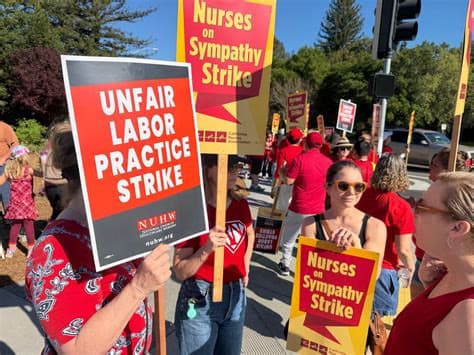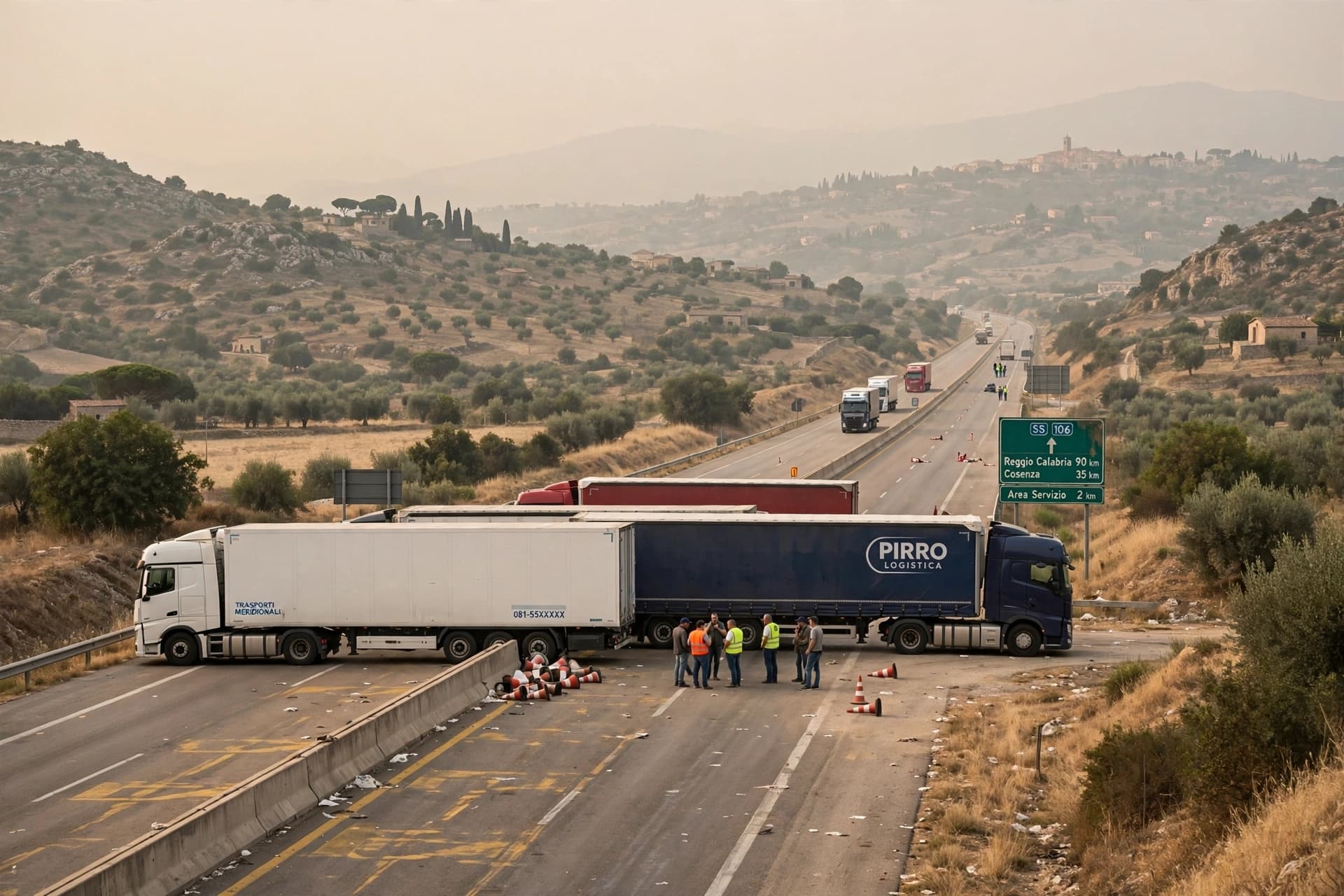
There is a particular irony in a protest over the cost of living that ends up emptying the shelves of the very food that sustains a nation. In southern Italy, truck drivers have blocked roads, motorways, and ports for days, their anger aimed at fuel prices that have climbed beyond what their livelihoods can bear. But the consequence of their standstill has rippled outward in ways that few could have anticipated: the factories that turn wheat into pasta, the staple that defines Italian tables, have begun to fall silent.
The pasta maker Rummo, based in the southern Campania region, suspended production on Tuesday after running out of ingredients. Its CEO, Cosimo Rummo, told the daily la Repubblica that almost all major producers in neighboring Puglia—which, together with Campania and Sicily, forms the heartland of Italy's pasta production—are facing similar difficulties. "This means that most of Italy's pasta production has ground to a halt, or is close to," he said . La Molisana, based in Molise, reported a significant drop in production and has been forced to draw on its stocks of wheat and semola flour .
The scale of what is at stake is not small. Italy's pasta supply chain generated €13.5 billion in revenue last year, according to a report from the European House-Ambrosetti . The industry is not merely an economic sector but a cultural one, a daily presence in households across the country and a symbol of Italian identity abroad. When the trucks stop, the wheat does not arrive, and the factories that depend on steady deliveries cannot function.
The protest itself began last week with the blocking of roads and ports in Sicily and the south. It has since caused wider disruption: supermarket shelves emptied in some areas, petrol stations ran dry, and queues formed at the pumps. Zineb Boutimah, a 45-year-old resident of Locri in Calabria, described the scramble to stock up. "People were trying to grab whatever was left," she said. Elena Lombardo, 78, was warned by her local petrol station attendant to fill her tank, because he did not know whether there would be fuel the next day. On Tuesday, the station was closed .
The government has responded with a package of more than €150 million in aid for road hauliers, announced by Deputy Infrastructure Minister Edoardo Rixi after meeting with their representatives on Tuesday . Prime Minister Giorgia Meloni's administration is also preparing a security crackdown in response to weekend riots in Milan and other northern cities, unrest that developed on the back of demonstrations against inflation . The measures suggest a government trying to address both the cause of the anger and its most visible symptoms.
There is a human dimension to the disruption that statistics do not capture. Vincenzo Aleccia, president of the Trapani trucking consortium in western Sicily, told Reuters that he understood the disruption was enormous but described the protest as peaceful and for the benefit of the people, noting that rising prices affected everyone . His words carry the weight of a man who has chosen to inconvenience others because he believes the alternative—continuing to absorb costs that outpace his income—is worse. Whether that calculation is correct is a question the government's aid package will begin to answer.
For now, the factories remain quiet, the shelves remain sparse, and the trucks remain parked. The pasta will return when the roads open, and the roads will open when the drivers believe they have been heard. In a country where a plate of pasta is not merely a meal but a daily ritual, the standstill is a reminder of how quickly the ordinary can become precarious.
---
AI Image Disclaimer: The images accompanying this article are AI-generated and are for illustrative purposes only.
Sources: Reuters, The Korea Times, The Jerusalem Post, BTA, Yahoo News Malaysia
Published by Banx Network. This article is part of the Banx decentralized media programme, powered by the BXE token on the XRP Ledger.