There are planets that should not exist, at least not according to the models. They orbit too close to their stars, receive too much radiation, and by all reasonable expectation should have lost their atmospheres billions of years ago, stripped bare like a stone in a desert wind. When we find one that has not, it is a reminder that the universe does not consult our predictions before it acts.
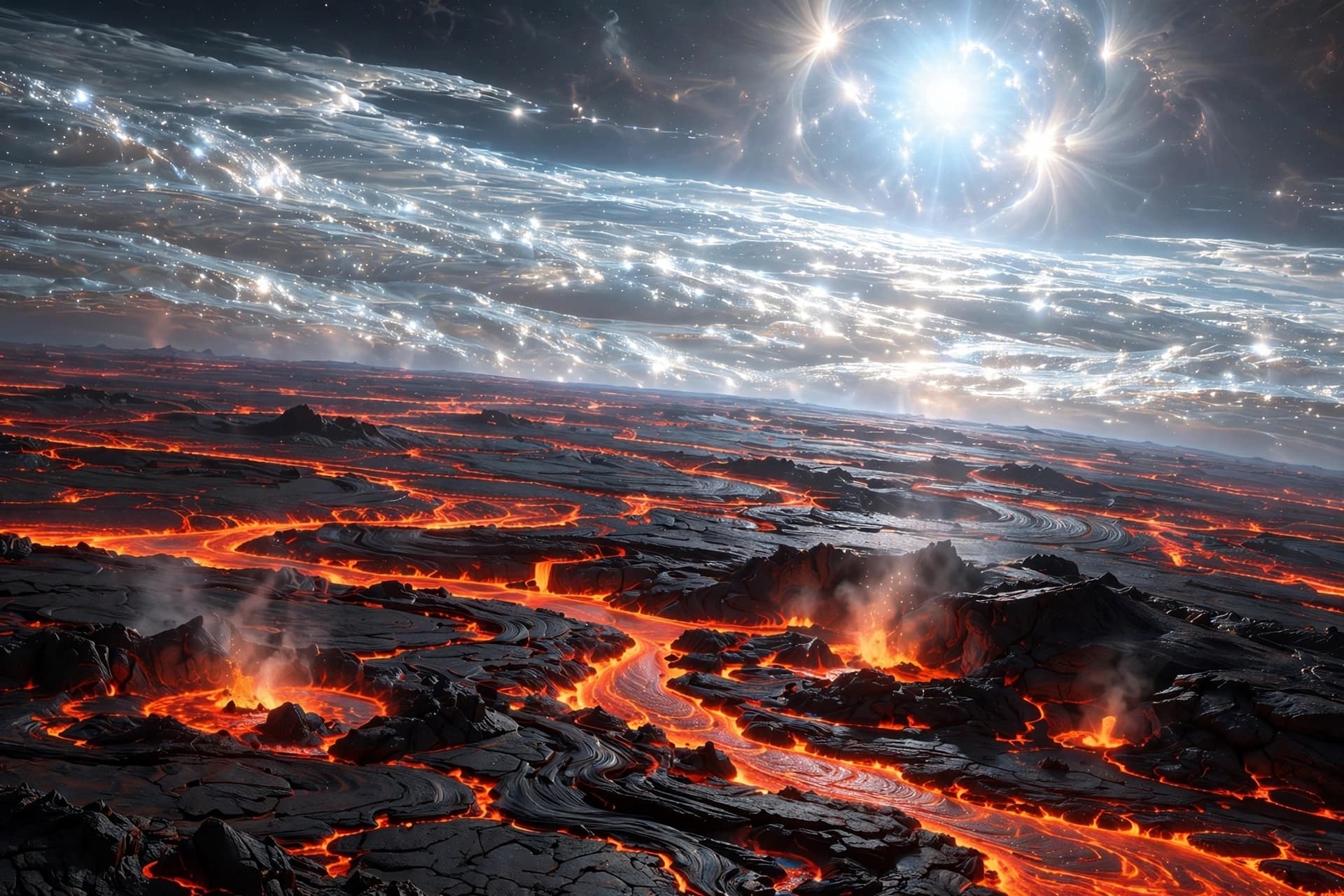
TOI-561 b is such a planet. Located about 280 light-years from Earth, it is a rocky world covered in an ocean of molten rock, orbiting so close to its star that a year lasts less than half a day. Astronomers had long assumed it was a bare rock, its atmosphere burned away by the relentless radiation of its host. New observations from the James Webb Space Telescope suggest otherwise .
A team led by Lisa Dang of the University of Waterloo observed TOI-561 b for 37 hours, capturing nearly four complete orbits. By measuring how the planet's brightness and heat changed throughout its circuit—a technique called a phase curve—they found something unexpected. The dayside was cooler than a bare rock should be, and the nightside was not warm enough to account for the missing heat. The only explanation was reflection: the planet must be bouncing roughly 75 percent of the starlight that hits it back into space, comparable to Venus .
What could reflect so much light? The team's climate models point to clouds made of silicate minerals—the same compounds that make up quartz and sand—forming on the dayside and acting as a planet-wide sunscreen. These clouds would reflect incoming radiation before it reaches the surface, keeping the planet cooler than it would otherwise be and helping it hold onto an atmosphere that should have been lost long ago .
"The discovery challenges current theories," said Anjali Piette of the University of Birmingham. "We would expect a heavily irradiated rocky planet like TOI-561 b to have lost its atmosphere billions of years ago. Instead, the evidence suggests it still has a significant atmosphere today" .
What that atmosphere is made of remains an open question. It could be a dense blanket of carbon dioxide, like a much hotter version of Venus. It could be rich in sulfur dioxide, a gas released by volcanic activity. Or it could be continuously replenished by gases escaping from the planet's molten interior—a global volcano feeding its own sky .
"The next big question we will seek to answer is whether TOI-561 b's atmosphere resembles Venus or an extreme version of Io," Dang said. "Observing the planet at longer wavelengths with JWST could give us insights and help explain how a planet this hot has held on to an atmosphere for billions of years" .
The planet is not habitable. It is not a place anyone would want to visit. But it is a place that exists, against expectation, wrapped in its own protective layer of vaporized rock. In the study of worlds beyond our own, that is enough to make it remarkable.
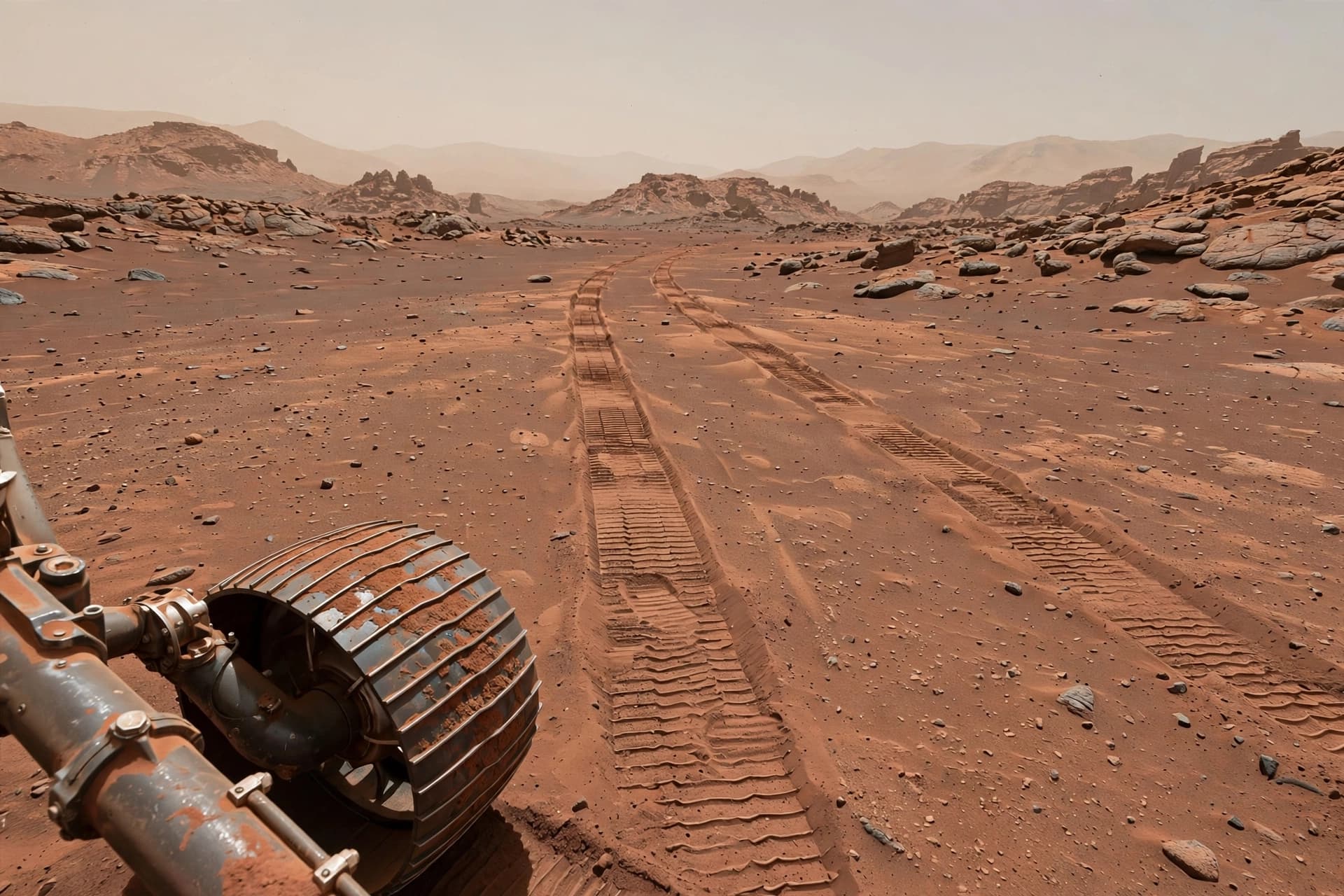
The images in this article are AI-generated and are not actual photographs of the planet.
Sources: University of Waterloo, University of Birmingham/EurekAlert, The Astronomical Journal
Published by Banx Network. This article is part of the Banx decentralized media programme, powered by the BXE token on the XRP Ledger.