When Voyager 2 slipped past Uranus in January 1986, it did not linger. The spacecraft arrived, gathered what it could, and disappeared into the dark, leaving behind a thin trail of data and a planet largely untouched by human observation. For decades, that brief encounter defined almost everything scientists knew about Uranus. Only recently has it become clear that the planet Voyager met may not have been behaving normally at all.
Uranus is usually quiet. Its magnetic field is strange—tilted and offset—but typically modest in its interactions with the solar wind. Yet during Voyager 2’s flyby, the planet appeared unusually active. Its magnetosphere seemed compressed, energized, and crowded with charged particles, as though something external had briefly switched it on.
New analyses suggest that timing was everything. Voyager arrived just as a powerful surge of solar wind swept through the outer solar system. The Sun, nearly three billion kilometers away, had sent a blast of charged particles outward, and Uranus happened to be in the way. The encounter effectively supercharged the planet’s magnetic environment, amplifying activity that might otherwise have remained subdued.
As solar wind slammed into Uranus’s tilted magnetosphere, magnetic field lines twisted and reconnected. Charged particles were accelerated, radiation intensified, and auroral activity likely flared. What Voyager 2 recorded was not a baseline portrait of Uranus, but a planet caught mid-storm—its magnetic shield compressed and energized by forces far beyond it.
This realization reframes decades of assumptions. Many of the oddities attributed to Uranus itself—its unexpectedly strong radiation belts, its magnetospheric structure—may have been shaped by this temporary solar disturbance. In other words, scientists may have mistaken weather for climate, capturing a snapshot of Uranus during an unusually loud moment in an otherwise quiet life.
The implications ripple outward. Uranus is often used as a template for understanding ice giant planets, both in our solar system and around distant stars. If its only close-up inspection occurred during an extreme solar event, then models built on that data may need recalibration. What seemed intrinsic may have been circumstantial.
Voyager 2 could not have known this. It was built to move fast, to glimpse and go, to turn fleeting encounters into enduring knowledge. But the data it sent back still holds surprises, revealing how even the most distant planets remain tethered to the rhythms of the Sun.
Uranus, pale and remote, was briefly stirred awake by a solar gust, and humanity happened to be watching. The moment passed, the planet settled back into quiet, and the spacecraft moved on—leaving behind a reminder that first impressions, especially in space, are often shaped by timing.
AI Image Disclaimer
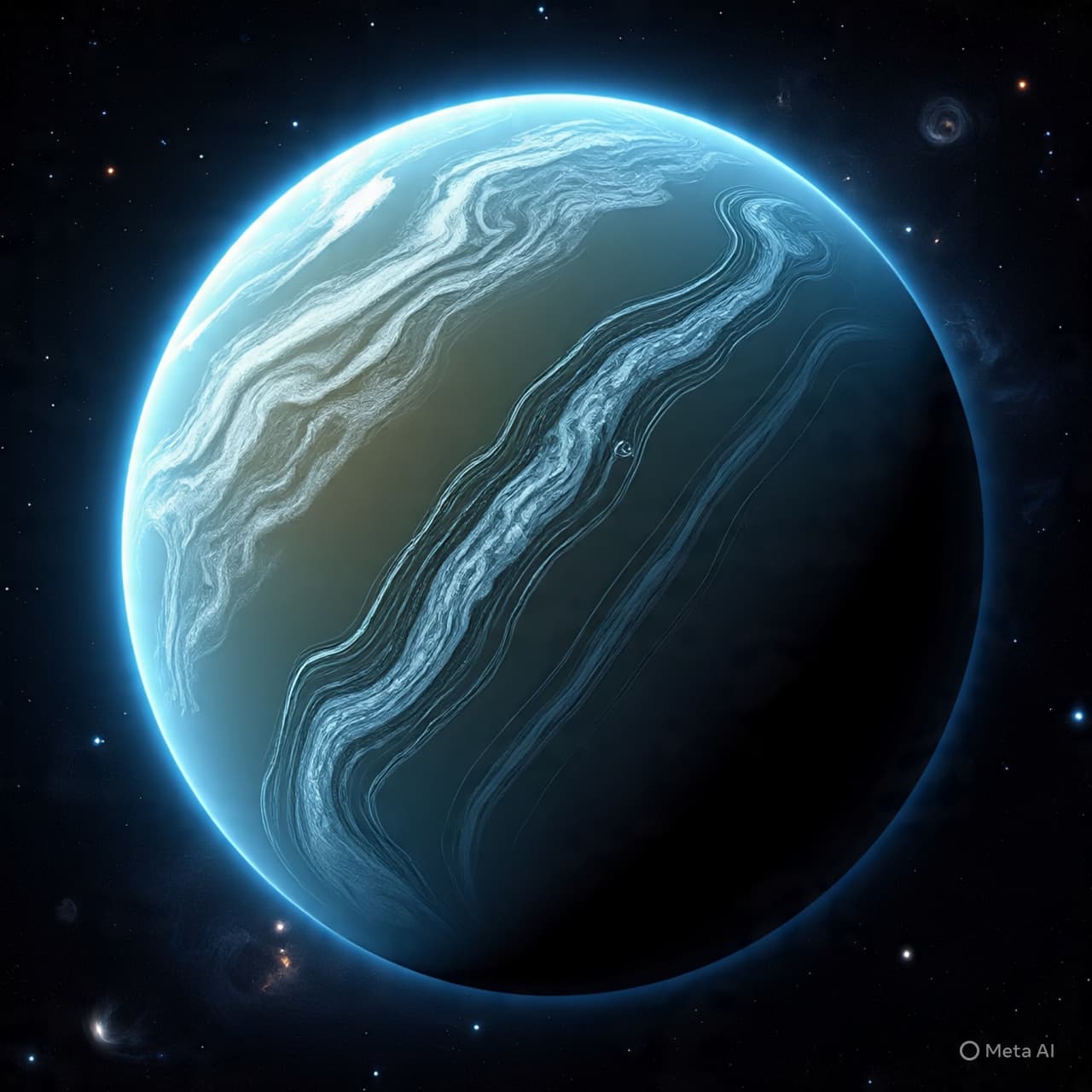
Visuals are AI-generated and serve as conceptual representations.
Sources
NASA Nature Astronomy Science Astrophysical Journal Letters
Published by Banx Network. This article is part of the Banx decentralized media programme, powered by the BXE token on the XRP Ledger.