In the quiet distances of space, countless rocks drift along ancient paths carved by gravity. Most pass unnoticed, moving silently through the solar system as they have for millions of years. Yet occasionally, one of these travelers draws the attention of astronomers on Earth, not because it is unusual, but because its path briefly intersects with our curiosity.
Such was the case with an asteroid known as 2024 YR4.
When astronomers first began tracking the object, its future trajectory raised a question that sparked momentary speculation. Could the asteroid one day come close enough to strike the Moon? The possibility was never certain, but it was intriguing enough to prompt careful analysis by scientists who specialize in mapping the subtle movements of near-Earth objects.
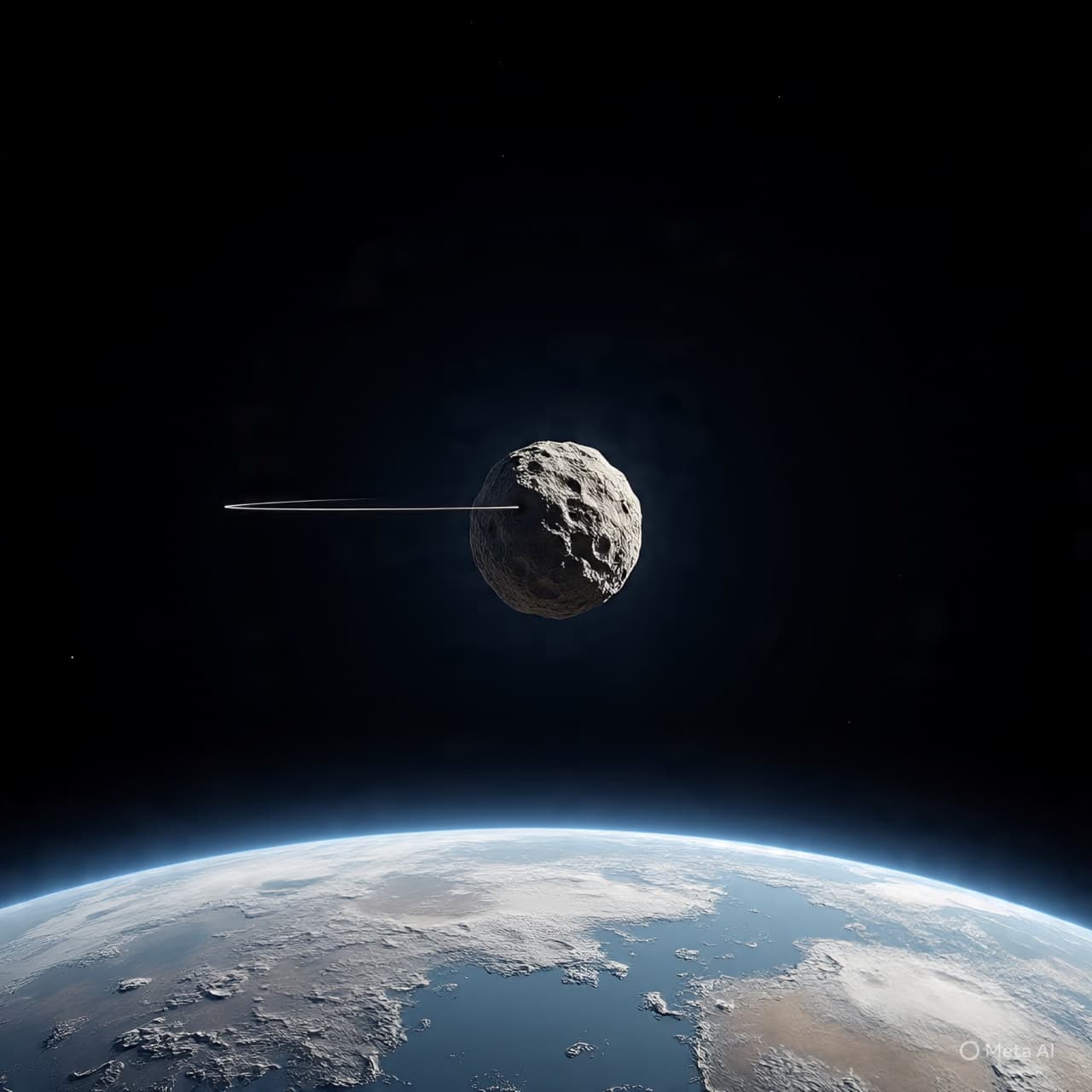
Now, after refining their calculations, NASA scientists say the answer appears reassuringly simple: the asteroid is expected to miss the Moon in 2032.
The story of how that conclusion emerged is a quiet example of how modern astronomy works. When a new asteroid is discovered, its orbit is initially estimated using only a small set of observations. These early measurements can contain uncertainties, like faint pencil lines on a map that still needs to be sharpened.
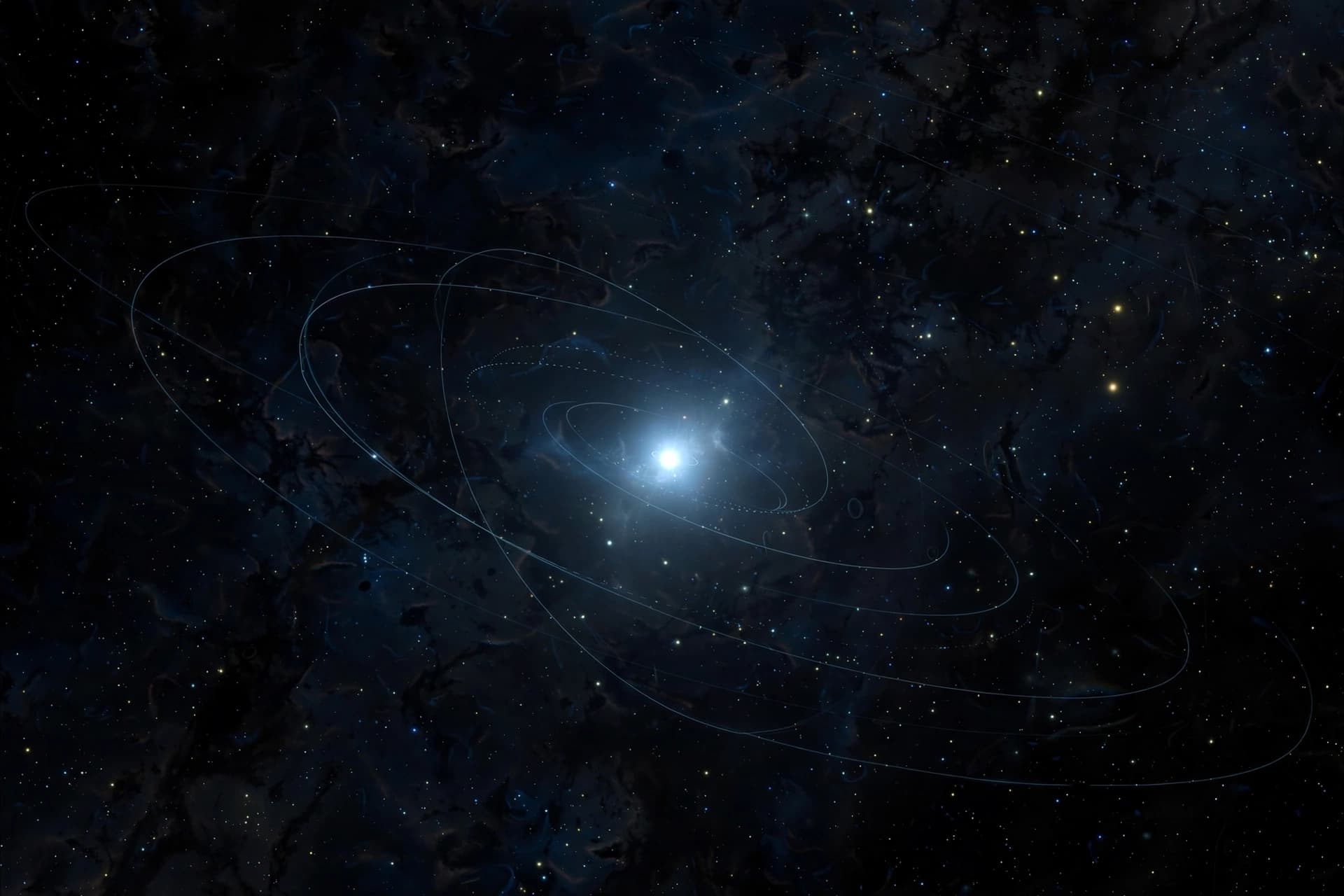
As additional observations accumulate—sometimes over days, months, or years—scientists gradually refine the asteroid’s orbital path. Each new measurement helps narrow the margins of uncertainty, allowing astronomers to predict where the object will travel decades into the future.
For asteroid 2024 YR4, that process unfolded in familiar fashion.
Early projections left a small possibility that the object’s path could intersect with the Moon during a future close approach in 2032. The odds were never large, but they were enough to keep astronomers watching closely as more data arrived from telescopes around the world.
With updated measurements, researchers were able to refine the asteroid’s orbit with greater precision. The new calculations now show that 2024 YR4 will pass safely by both Earth and the Moon, traveling along a trajectory that keeps it comfortably distant from any direct collision.
In the language of orbital mechanics, the asteroid’s path has simply become clearer.
Near-Earth asteroids are monitored continuously by networks of observatories and space agencies. Programs such as NASA’s planetary defense efforts track thousands of objects whose orbits bring them relatively close to our planet. Most of these bodies pose no danger, but keeping watch allows scientists to detect any changes early.
The Moon, too, occasionally receives visitors in the form of small impacts. Because it lacks an atmosphere, even modest objects can strike its surface and leave visible craters. Over billions of years, such impacts have shaped the familiar pockmarked face we see from Earth.
But in the case of 2024 YR4, no such encounter appears likely.
Instead, the asteroid will continue its long orbit around the Sun, passing through the inner solar system as it has likely done many times before human observers noticed it. Its brief moment of attention is part of a broader effort to understand the population of asteroids that share our cosmic neighborhood.
For scientists, each tracked object adds another piece to the map of the solar system’s moving landscape.
The process may seem routine, yet it represents an extraordinary achievement of modern astronomy. With telescopes scattered across Earth and increasingly sophisticated computer models, researchers can trace the future positions of small rocks millions of kilometers away.
These calculations allow scientists not only to rule out potential impacts but also to study how gravitational influences—from planets, moons, and even subtle forces such as sunlight—gradually reshape asteroid orbits over time.
In this way, the path of 2024 YR4 becomes part of a larger narrative about planetary defense and the careful monitoring of near-Earth space.
For the public, such stories sometimes begin with a hint of uncertainty—a question about whether an asteroid might strike a familiar celestial body. But they often end in quiet clarity, as improved observations replace speculation with precise measurements.
In the case of this particular asteroid, the conclusion appears reassuring.
NASA’s updated analysis indicates that asteroid 2024 YR4 will safely miss the Moon during its 2032 passage. Scientists will continue to track the object, as they do with thousands of others, ensuring that its orbit remains well understood.
Meanwhile, the Moon will continue its steady journey around Earth, untroubled by this passing traveler.
And somewhere in the darkness between planets, the asteroid will continue its orbit, another small wanderer following the patient rhythms of the solar system.
AI Image Disclaimer Graphics are AI-generated and intended for representation, not reality.
Sources NASA Space.com Live Science Sky & Telescope The Guardian
Published by Banx Network. This article is part of the Banx decentralized media programme, powered by the BXE token on the XRP Ledger.