
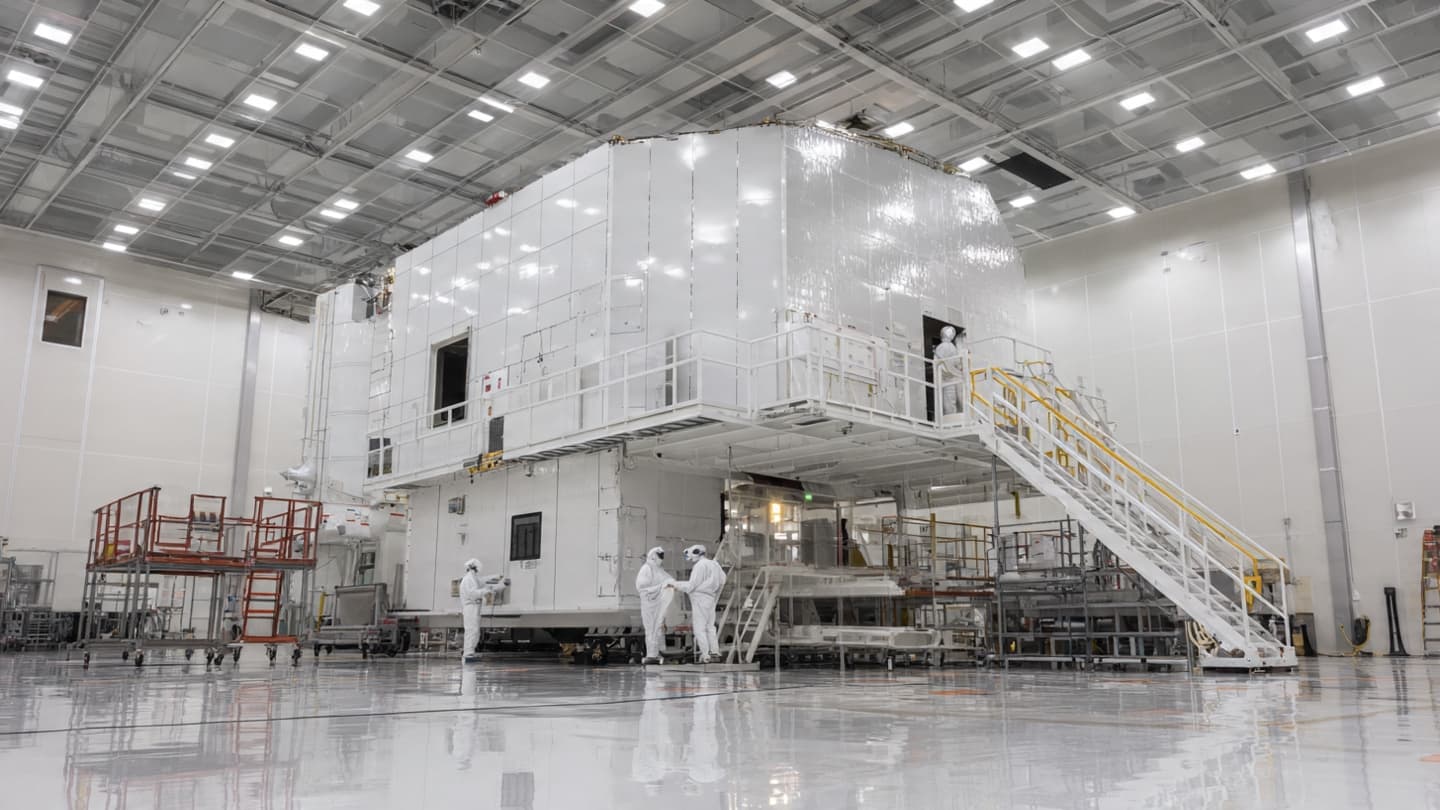
Every major space mission begins long before a rocket leaves the launch pad. It starts in laboratories, clean rooms, and years of patient engineering. NASA's Roman Space Telescope has now reached another important milestone, arriving in Florida ahead of its anticipated launch aboard a SpaceX Falcon Heavy rocket later this summer.
The Nancy Grace Roman Space Telescope, one of NASA's most ambitious upcoming observatories, was transported to Florida as preparations intensify for launch operations. The mission is designed to investigate some of the universe's deepest mysteries, including dark energy, exoplanets, and the large-scale structure of the cosmos.
Arrival in Florida marks the beginning of final processing activities at NASA's launch facilities. Engineers will conduct extensive inspections, system tests, and integration procedures before the observatory is attached to its launch vehicle.
Named after pioneering NASA astronomer Nancy Grace Roman, often called the "Mother of Hubble," the telescope is expected to complement and expand upon discoveries made by previous observatories, including the Hubble Space Telescope and the James Webb Space Telescope.
One of Roman's principal scientific goals is to study dark energy, the poorly understood phenomenon believed to drive the accelerating expansion of the universe. Scientists also expect the telescope to discover thousands of new exoplanets through advanced observational techniques.
The observatory's exceptionally wide field of view will allow researchers to survey vast regions of space more efficiently than many previous space telescopes. This capability could provide unprecedented insight into galaxy formation and cosmic evolution.
Launch preparations involving NASA, SpaceX, and mission partners will continue throughout the coming weeks as teams complete final readiness assessments ahead of the Falcon Heavy mission.
With the telescope now in Florida, the mission has entered its final chapter before launch, bringing scientists one step closer to opening another window onto the universe.
AI Image Disclaimer: Some images associated with this article have been created using AI for illustrative support.
Sources: NASA, Reuters, Associated Press, SpaceNews
Published by Banx Network. This article is part of the Banx decentralized media programme, powered by the BXE token on the XRP Ledger.



