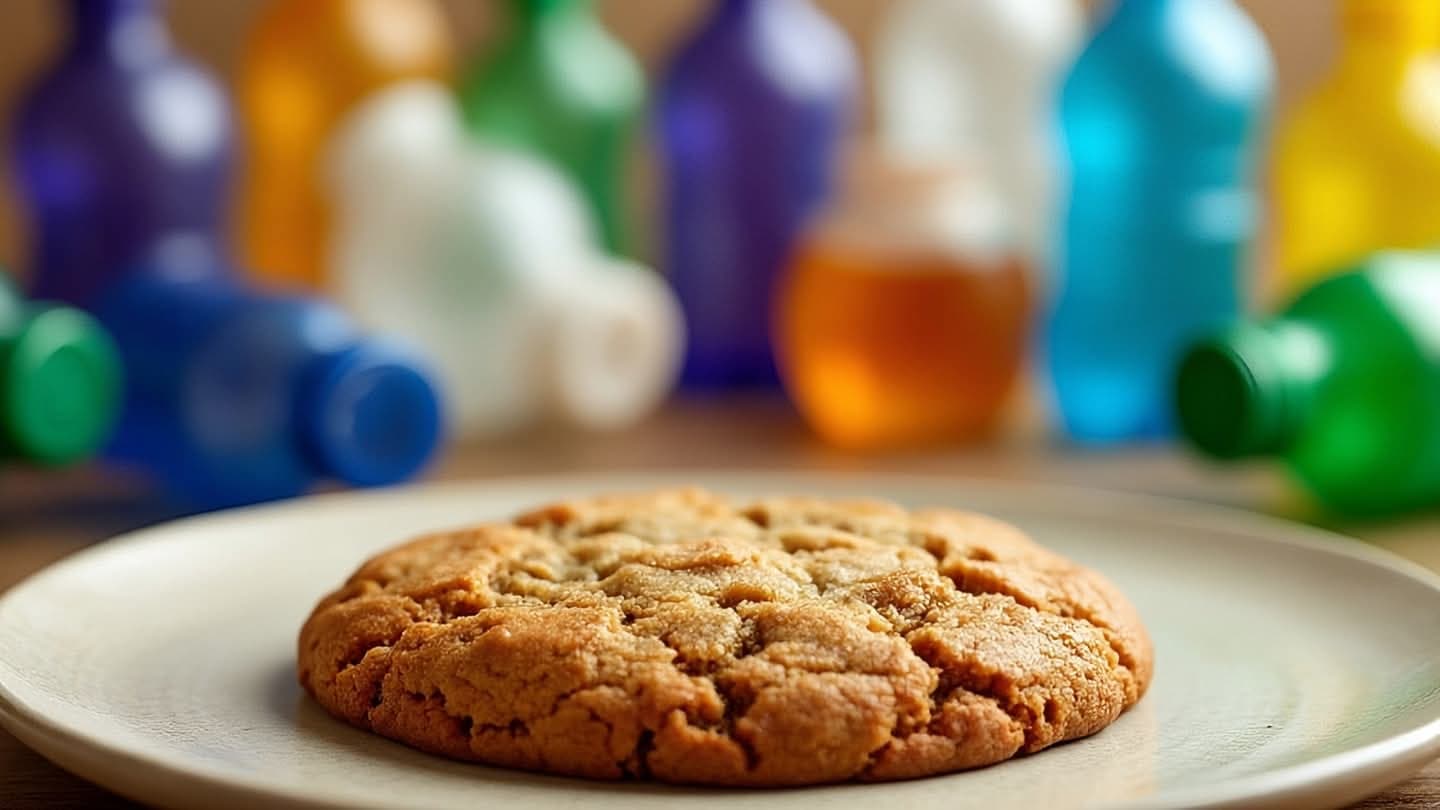
In the quiet hum of a laboratory, where innovation often whispers before it shouts, scientists are reimagining the very definition of sustenance. The idea that waste could become nourishment is no longer the stuff of science fiction but a tangible reality being explored by researchers. By transforming discarded plastic bottles into edible cookies, a team of innovators is addressing two of humanity’s most pressing challenges: environmental pollution and food security. This alchemy of chemistry and compassion offers a glimpse into a future where nothing is truly wasted.
The process begins with polyethylene terephthalate (PET), the common plastic found in water and soda bottles. Through a series of chemical reactions, researchers break down the polymer chains and reconstruct them into protein-rich ingredients. These ingredients are then baked into cookies that are not only safe for consumption but also nutritious. The resulting product is dense in calories and essential amino acids, making it an ideal candidate for emergency rations or long-duration space missions.
For NASA, the implications are profound. Space travel requires efficient use of resources, and the ability to recycle waste into food would significantly reduce the payload weight of missions to Mars and beyond. Instead of carrying tons of pre-packaged meals, astronauts could potentially convert their own packaging waste into sustenance. This closed-loop system aligns with the agency’s goals for sustainability and self-sufficiency in deep space exploration.
On Earth, the technology offers a potential lifeline for regions facing food shortages. While it may not replace traditional agriculture, these plastic-derived cookies could serve as a supplemental food source during crises. The ability to turn ubiquitous waste into calories provides a buffer against famine, particularly in areas where supply chains are disrupted by conflict or climate change. It is a pragmatic solution to a complex problem.
Critics may raise concerns about the psychological barrier of eating plastic-derived food. However, proponents argue that the chemical structure of the final product is identical to natural proteins, ensuring safety and digestibility. Public perception will likely shift as the technology becomes more widespread and its benefits more evident. Education and transparency will be key to gaining acceptance.
The environmental impact of this innovation cannot be overstated. By giving plastic a second life as food, we reduce the burden on landfills and oceans. It transforms a pollutant into a resource, challenging the linear model of "take, make, dispose." This circular approach is essential for a sustainable future, where waste is viewed not as an end but as a beginning.
As research continues, the focus remains on scaling up production and ensuring regulatory approval. Collaborations between space agencies, universities, and private companies are accelerating the development of this technology. The goal is to make it accessible and affordable, benefiting both astronauts and those in need on Earth.
The transformation of plastic bottles into cookies is a testament to human ingenuity. It reminds us that even in our waste, there is potential for renewal, offering hope for a more sustainable and food-secure world.
AI Image Disclaimer: Please note that any accompanying illustrations for this piece are AI-generated representations intended to evoke the mood of the described events.
Sources: NASA, Scientific American, The Guardian, Nature Journal
Published by Banx Network. This article is part of the Banx decentralized media programme, powered by the BXE token on the XRP Ledger.