
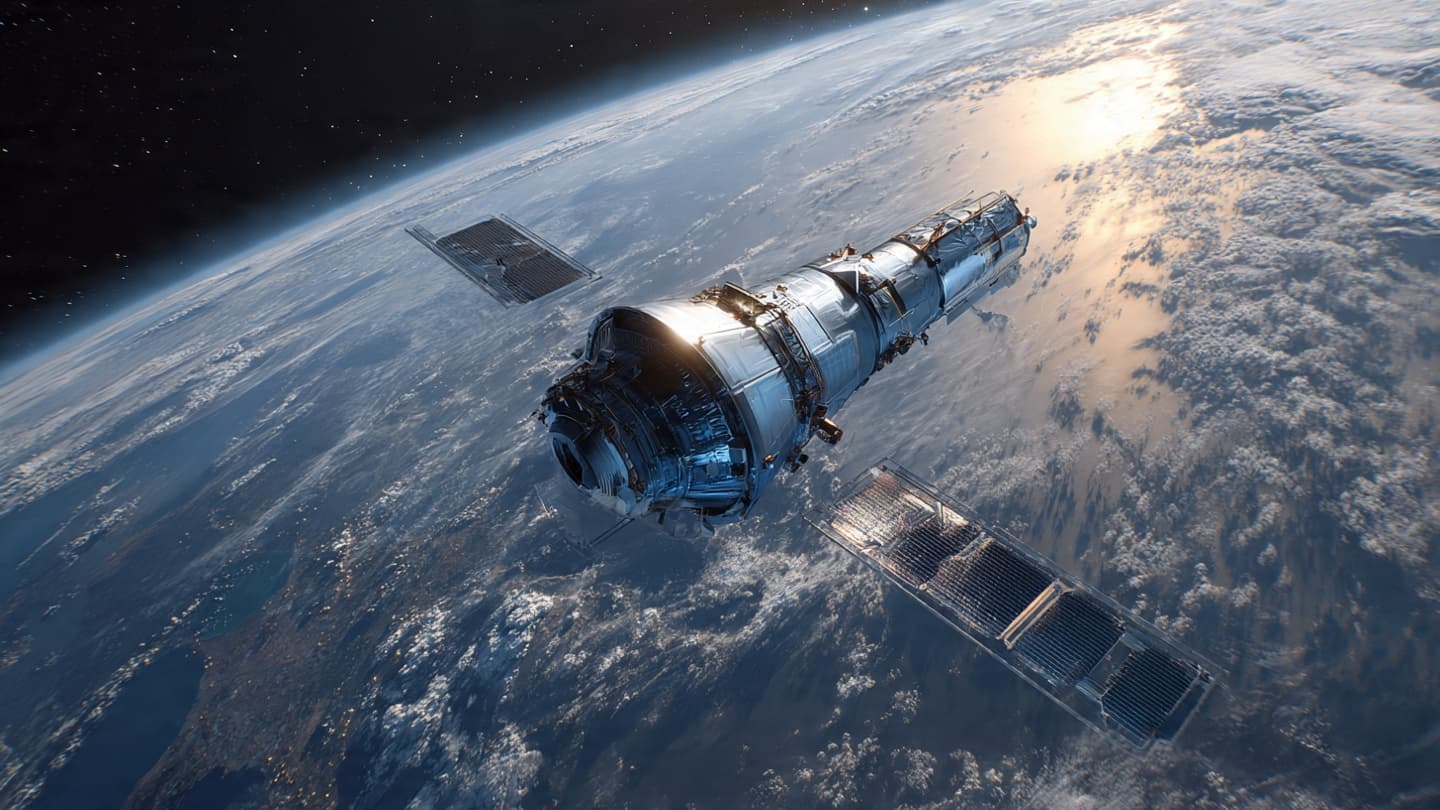
The universe rarely reveals its secrets all at once. Instead, it whispers through light, gravity, particles, and radiation, inviting scientists to piece together a vast cosmic story. A proposed mission known as the Lazuli Space Observatory aims to help researchers listen more carefully to those distant messages.
Astronomers have introduced plans for the Lazuli Space Observatory, a proposed mission designed to advance multi-messenger astronomy. The observatory would enable scientists to rapidly observe and analyze cosmic events detected through multiple forms of signals.
Multi-messenger astronomy represents one of modern science's most significant breakthroughs. Rather than relying solely on visible light, researchers combine information from gravitational waves, electromagnetic radiation, neutrinos, and other cosmic phenomena to better understand the universe.
The proposed Lazuli mission seeks to dramatically reduce observation response times. Researchers hope the observatory could quickly reposition itself to study transient cosmic events, such as neutron star collisions, supernova explosions, and gamma-ray bursts.
Rapid observations are particularly important because many cosmic phenomena evolve within hours or even minutes. Delays may result in scientists missing critical stages of these events, limiting opportunities for detailed analysis.
Recent advances in gravitational wave detection have already transformed astronomy. Observatories on Earth have successfully identified collisions involving black holes and neutron stars, opening entirely new windows into the cosmos.
Scientists believe a dedicated space-based platform such as Lazuli could complement existing observatories and significantly enhance international astronomical collaboration. Researchers from multiple institutions are contributing to mission development concepts.
Although the mission remains in the proposal stage, the project reflects astronomy's continuing ambition to observe the universe with greater speed and precision. If realized, Lazuli could help deepen humanity's understanding of some of the cosmos's most energetic events.
AI Image Disclaimer: The visual illustrations in this article were generated by artificial intelligence for explanatory and illustrative purposes.
Sources: arXiv, astronomical research teams, astrophysics publications
Published by Banx Network. This article is part of the Banx decentralized media programme, powered by the BXE token on the XRP Ledger.



