Technology often advances quietly, through incremental improvements hidden inside increasingly powerful devices. Yet occasionally, a new generation of computing hardware signals a broader shift. Nvidia's latest announcement suggests that artificial intelligence may soon become an even more integrated part of everyday computing.
Nvidia has introduced a new AI-focused superchip designed for consumer computers, aiming to bring advanced artificial intelligence capabilities directly to desktops and laptops. The company says the technology is intended to support increasingly complex AI applications without relying exclusively on cloud computing.
The new hardware reflects a growing trend within the technology industry: moving AI processing closer to users. By performing tasks locally on personal devices, companies hope to improve speed, reduce latency, and enhance privacy for certain applications.
Artificial intelligence features are rapidly becoming standard components in modern software. Tasks such as image generation, language assistance, video editing, and productivity enhancement increasingly depend on specialized AI hardware.
Industry analysts view Nvidia's latest chip as part of intensifying competition among semiconductor manufacturers seeking leadership in the expanding AI market. Major technology firms are investing heavily in processors optimized specifically for machine learning workloads.
For consumers, more powerful AI chips could enable advanced capabilities previously limited to data centers or high-performance workstations. These may include sophisticated content creation tools, real-time translation, and enhanced gaming experiences.
At the same time, experts caution that widespread AI adoption raises important discussions concerning energy consumption, data privacy, and responsible technology use. Hardware innovation alone does not determine outcomes; software ecosystems and regulatory frameworks also play significant roles.
As artificial intelligence continues to evolve, consumer computing appears poised for another transformation. Nvidia's latest announcement underscores how rapidly AI technologies are moving from specialized environments into everyday digital experiences.
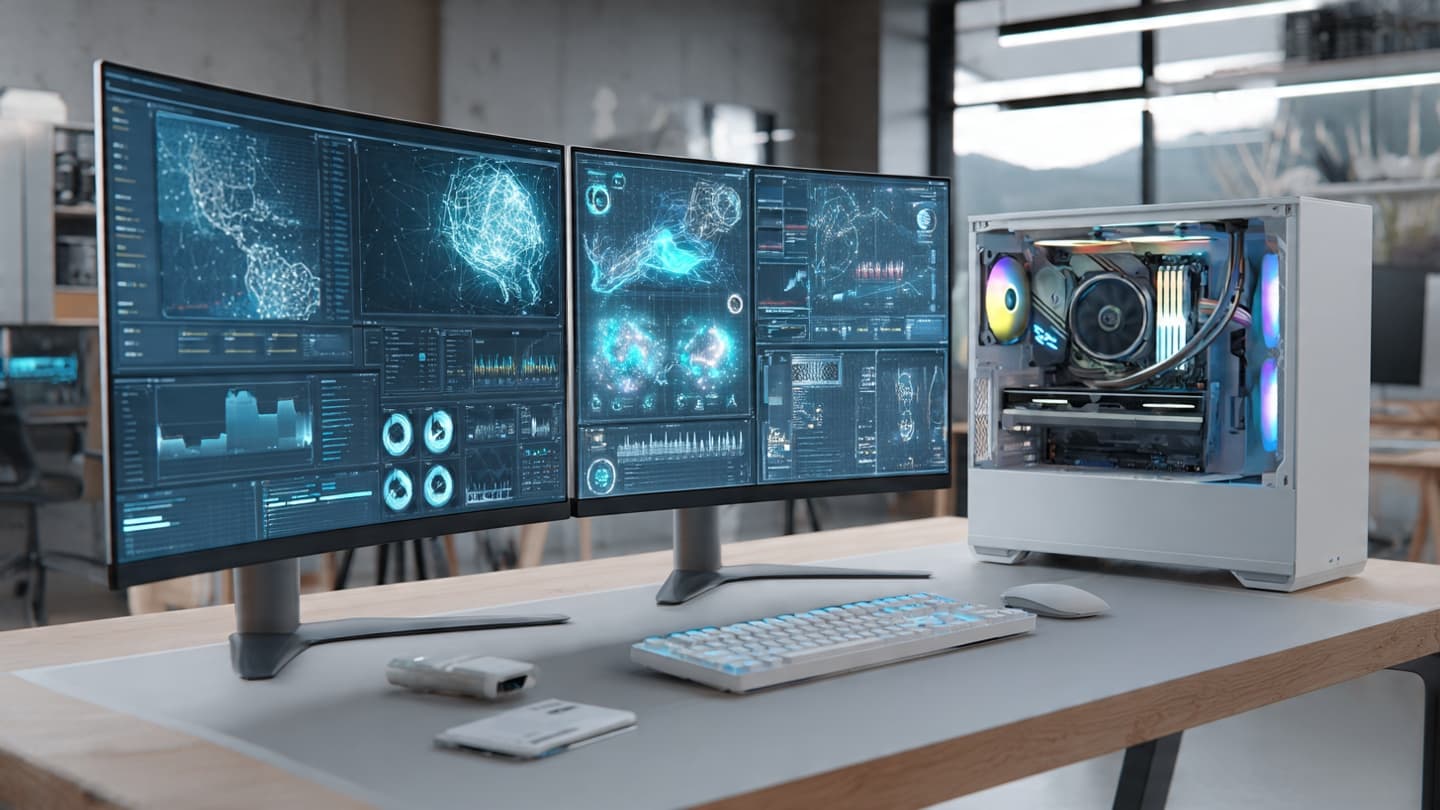
AI Image Disclaimer: Illustrations featured in this article are AI-generated and intended solely to visually represent the subject matter.
Sources: CBS News, Nvidia corporate announcements, industry analysts
Published by Banx Network. This article is part of the Banx decentralized media programme, powered by the BXE token on the XRP Ledger.