There is something profoundly human in the desire to leave a mark—to carve a name into a tree, to write it in a guestbook, to imagine that some trace of us might travel farther than our feet ever could. NASA has long understood this impulse, and it has offered the public a way to satisfy it that is both modest and enormous: a microchip, a rotorcraft, and a moon of Saturn that smells faintly of gasoline and rains liquid methane.
NASA announced this week that it is inviting people around the world to send their names to Titan, Saturn's largest moon, aboard the Dragonfly rotorcraft—the first science mission designed to fly and explore the surface of another world . Names submitted through the agency's website will be stored on a microchip carried by the spacecraft, and participants will receive a personalized digital boarding pass commemorating their place on the mission . The deadline for submissions is 11:59 p.m. Eastern time on January 15, 2027 .
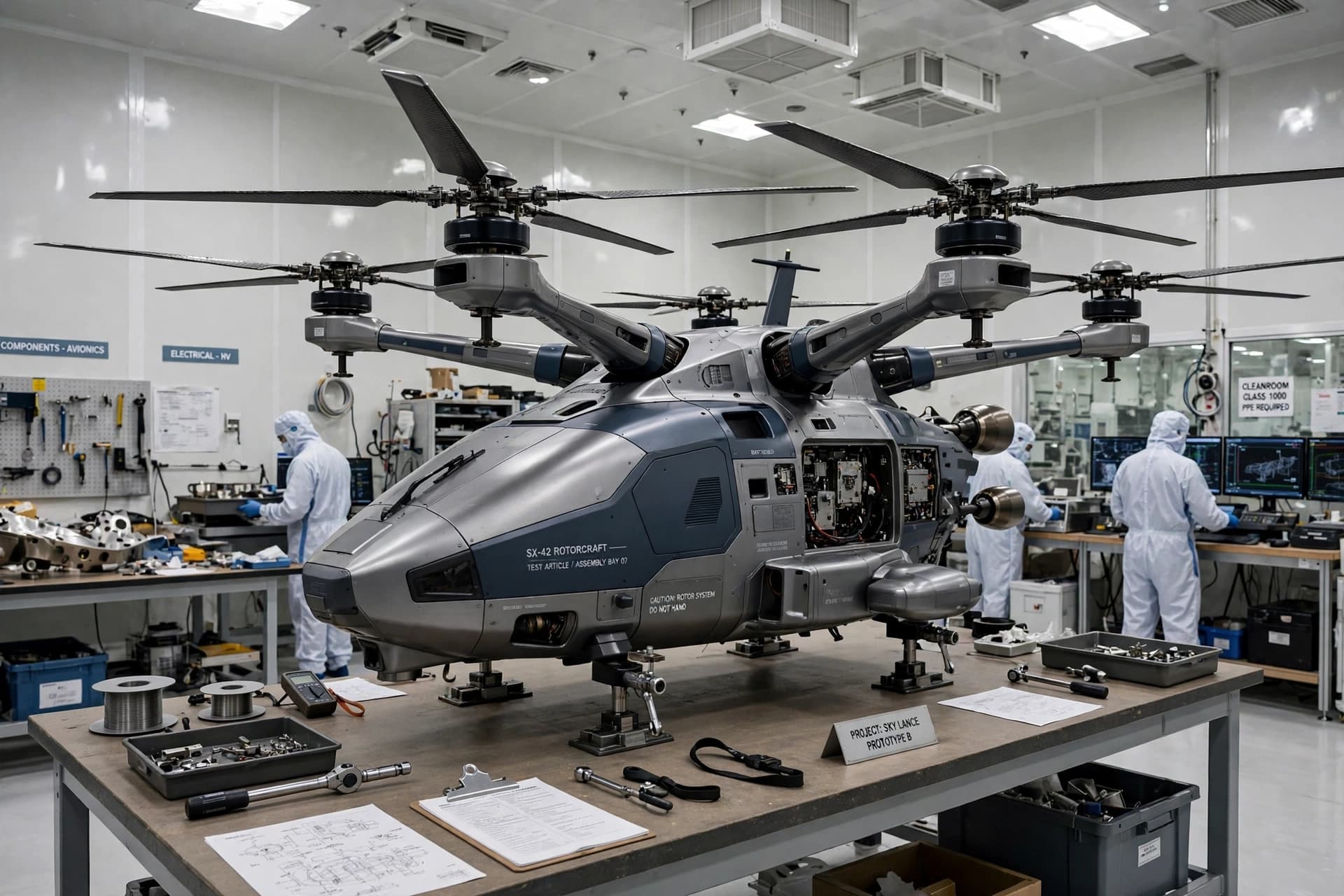
The mission itself is extraordinary in its ambition. Dragonfly is currently being assembled at the Johns Hopkins Applied Physics Laboratory in Laurel, Maryland, and is scheduled to launch in 2028 . It will arrive at Titan in 2034, then fly to different locations across the moon's surface, exploring its diverse environments and searching for clues about prebiotic chemistry—the chemistry that preceded biology . Titan is a world unlike any other in the solar system: it has a thick atmosphere, rivers and lakes of liquid methane, sweeping dunes, and a landscape rich in organic material . It is, in many ways, the closest thing to Earth that the solar system offers, and yet it is utterly alien.
Nicky Fox, associate administrator of NASA's Science Mission Directorate, framed the invitation in language that carried both wonder and a quiet invitation to belong. "NASA's Dragonfly mission will simply blow your mind," she said. "By flying the first-ever rotorcraft science mission, NASA will explore Saturn's largest moon, Titan, as we search for signs of habitability on a distant world that is most similar to our own. We are excited to bring humanity along for the journey of a lifetime" .
This is not the first time NASA has carried names into the cosmos. The Perseverance rover brought roughly 10.9 million names to Mars, and the Europa Clipper carries about 2.6 million names toward Jupiter's icy moon. The tradition is a way of making the vastness of space feel personal, of allowing someone in a kitchen in Ohio or a classroom in Kenya to feel, however briefly, like a passenger on a journey they will never physically take. The names do not change the science. They change the relationship between the science and the people who fund it, watch it, and wonder about it.
For those who submit their names, the boarding pass will be a small digital artifact, a souvenir of a journey that will not begin for two more years and will not end for eight. But the impulse behind it is ancient and unshakeable: the wish to be part of something larger than oneself, to send a small piece of identity into the dark and trust that it will arrive somewhere extraordinary.
Image Disclaimer: The images in this article were produced by artificial intelligence and are not photographs of the Dragonfly spacecraft or Titan.
Sources: NASA, NDTV, Hindustan Times
Published by Banx Network. This article is part of the Banx decentralized media programme, powered by the BXE token on the XRP Ledger.