There is a particular kind of silence that follows the roar of nature’s most violent whims, a hush that settles over broken roofs and scattered lives like a heavy blanket. In the sun-drenched landscapes of southern France, where vineyards usually stretch toward the sky in orderly rows, the air recently carried a different weight, one of shock and sudden displacement. The tornado that tore through the village of Pomas and its surrounding communes did not just damage structures; it disrupted the quiet rhythm of daily life, leaving behind a trail of debris that serves as a stark reminder of our fragility against the elements.
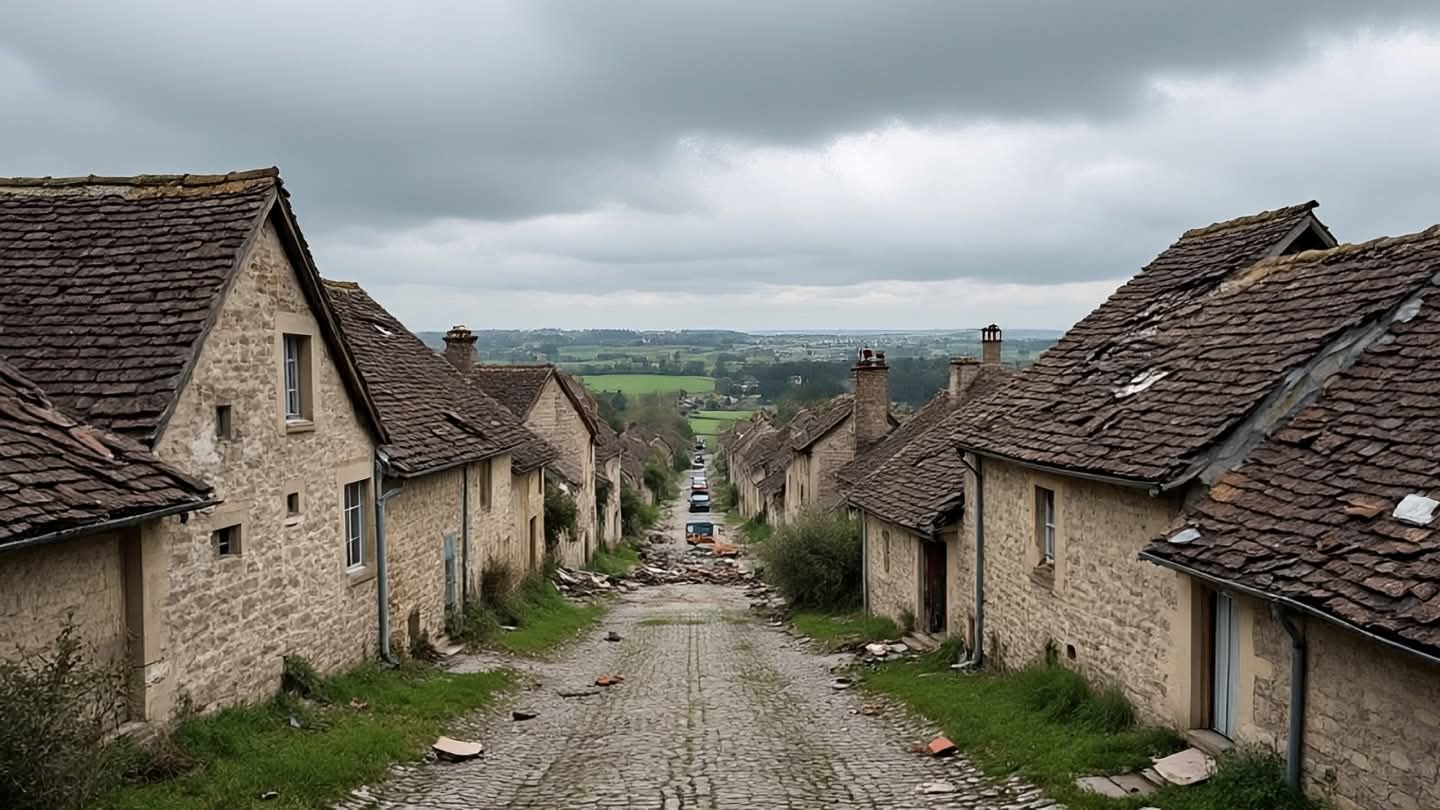
The storm, which struck with terrifying speed on a late August afternoon, left at least forty-one people injured, some critically, as rescue teams scrambled to navigate the wreckage. Homes that had stood for generations were stripped of their roofs, their interiors exposed to the open sky, while hundreds of families found themselves without electricity or shelter. The images circulating from the Aude department show a landscape transformed in minutes, where trees lie uprooted and streets are blocked by the remnants of what was once domestic comfort.
Local authorities responded with urgency, mobilizing emergency services to assess the damage and provide immediate aid to those affected. The scale of the destruction, impacting nearly three hundred homes, required a coordinated effort that drew resources from neighboring regions. As night fell, the glow of emergency lights replaced the usual warmth of household lamps, casting long shadows over a community in disarray. The physical toll was evident, but the emotional weight of such an event often lingers far longer than the cleanup process.
In the aftermath, neighbors helped neighbors, pulling together in a display of solidarity that is often born from shared adversity. The sense of community, so deeply rooted in French rural life, became a vital resource as people searched for loved ones and secured what little remained of their possessions. It is in these moments of crisis that the true character of a place is revealed, not in its architecture, but in the resilience of its people.
Meteorologists have noted that while tornadoes are less common in this part of Europe than in other regions, they are not unprecedented. The changing climate patterns have led to more frequent and intense weather events, challenging communities to adapt to new realities. This incident serves as a poignant case study in the increasing unpredictability of seasonal weather, prompting discussions about preparedness and infrastructure resilience in vulnerable areas.
As the initial shock subsides, the focus shifts to recovery and rebuilding. Insurance companies, local government bodies, and national agencies are beginning to assess the financial impact, but the cost cannot be measured solely in euros. The loss of personal heirlooms, the disruption of livelihoods, and the psychological impact on residents, especially children, represent a deeper ledger of loss that will take time to balance.
Yet, amidst the debris, there is a quiet determination. The people of Pomas and the surrounding villages are already looking forward, planning the repairs and restoring the order that was so abruptly taken from them. It is a slow process, one that requires patience and support, but it is driven by a hope that is as enduring as the land itself.
As the cleanup continues, the world watches with sympathy, recognizing that such natural disasters respect no borders. The story of southern France this week is one of loss, but also of the enduring human spirit that rises to meet the challenge of reconstruction, one brick at a time.
AI Image Disclaimer: Please note that any accompanying visuals for this report are AI-generated representations intended to illustrate the context of the event.
Sources: The Guardian CNN Le Monde Euronews
Published by Banx Network. This article is part of the Banx decentralized media programme, powered by the BXE token on the XRP Ledger.