The universe is in constant motion, sending fragments of its ancient history hurtling through the void. Most of these travelers burn up harmlessly in our atmosphere, creating fleeting streaks of light that we call shooting stars. Occasionally, however, a visitor survives the journey, making contact with our planet in a display of cosmic power. Today, a small asteroid met its end in the waters near Australia, a reminder that Earth is part of a dynamic solar system. This event, while minor in scale, offers a valuable opportunity to observe the natural processes that shape our world and test our monitoring capabilities.
The impact occurred over the ocean, minimizing any potential threat to populated areas. Such locations are ideal for asteroid entries, as the vast expanses of water absorb the energy of the collision without causing significant damage to infrastructure or life. Scientists rely on networks of sensors and satellites to detect these objects before they arrive, providing early warnings and tracking their trajectories. The successful detection of this asteroid highlights the progress made in planetary defense and space situational awareness.
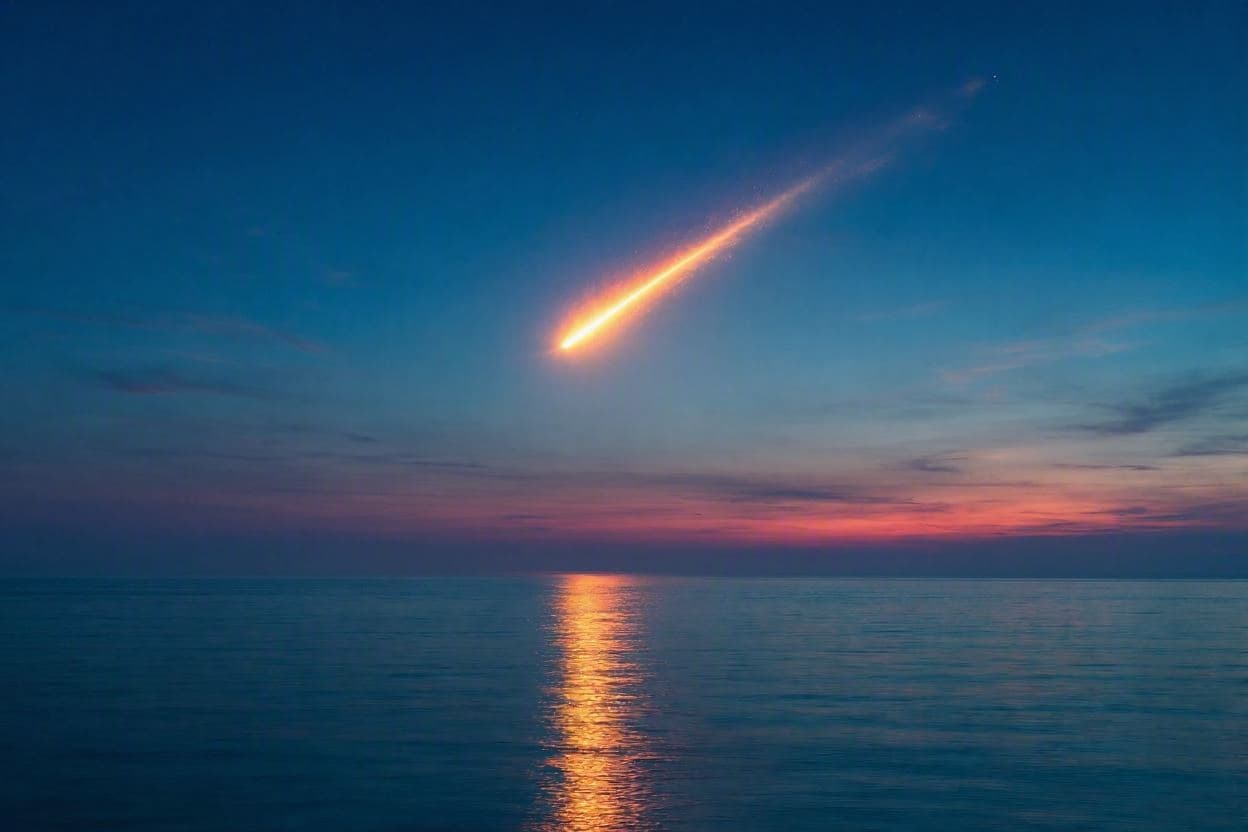
Observations from the region reported a bright fireball visible in the sky, followed by a sonic boom as the object broke apart in the atmosphere. These phenomena are typical of asteroid entries, where friction with the air generates intense heat and pressure. The resulting shockwave can travel long distances, sometimes rattling windows or startling wildlife, but rarely causing harm. For those lucky enough to witness it, the event is a spectacular display of natural physics, a brief moment where the boundary between space and Earth blurs.
The composition of the asteroid remains a subject of study. Most small asteroids are made of rock or metal, remnants from the formation of the solar system billions of years ago. By analyzing the debris or the spectral data captured during entry, scientists can learn more about the materials that make up our celestial neighborhood. Each impact provides a sample, albeit a dispersed one, that contributes to our understanding of planetary formation and the distribution of matter in space.
Australia’s location in the Southern Hemisphere makes it a key region for observing such events. With clear skies and extensive coastlines, it offers numerous vantage points for both amateur and professional astronomers. The country has a strong tradition of astronomical observation, contributing significantly to global efforts in tracking near-Earth objects. This latest impact adds to the dataset used to refine models of asteroid orbits and frequencies, helping us better predict future encounters.
While the term "asteroid impact" may sound alarming, events of this size are relatively common. Small rocks enter Earth’s atmosphere daily, most going unnoticed. It is only the larger, rarer objects that pose a genuine risk, and these are the primary focus of international monitoring programs. The regular occurrence of small impacts serves as a reassuring reminder that our planetary defenses are working, and that the sky is being watched with care and precision.
Public interest in such events often spikes when they occur, driven by a mix of curiosity and caution. Social media platforms fill with videos and photos, creating a shared experience of wonder. This engagement is beneficial, as it raises awareness about space science and the importance of supporting astronomical research. It turns a scientific observation into a communal moment, connecting people through their shared awe of the cosmos.
As technology improves, our ability to detect and analyze these objects will only grow. Future missions may even allow us to intercept asteroids before they reach Earth, turning potential threats into opportunities for resource extraction or scientific study. For now, we continue to watch the skies, appreciating the delicate balance that keeps our planet safe while remaining open to the surprises the universe sends our way.
The asteroid’s fiery end over the Australian ocean is a gentle reminder of our place in the solar system. It invites us to look up with curiosity rather than fear, trusting in the science that keeps us informed and prepared. Let us celebrate the beauty of these cosmic visitors.
AI Image Disclaimer: The images associated with this article are AI-generated visualizations created for illustrative purposes.
Sources: NASA Jet Propulsion Laboratory Australian Bureau of Meteorology Space.com
Published by Banx Network. This article is part of the Banx decentralized media programme, powered by the BXE token on the XRP Ledger.