
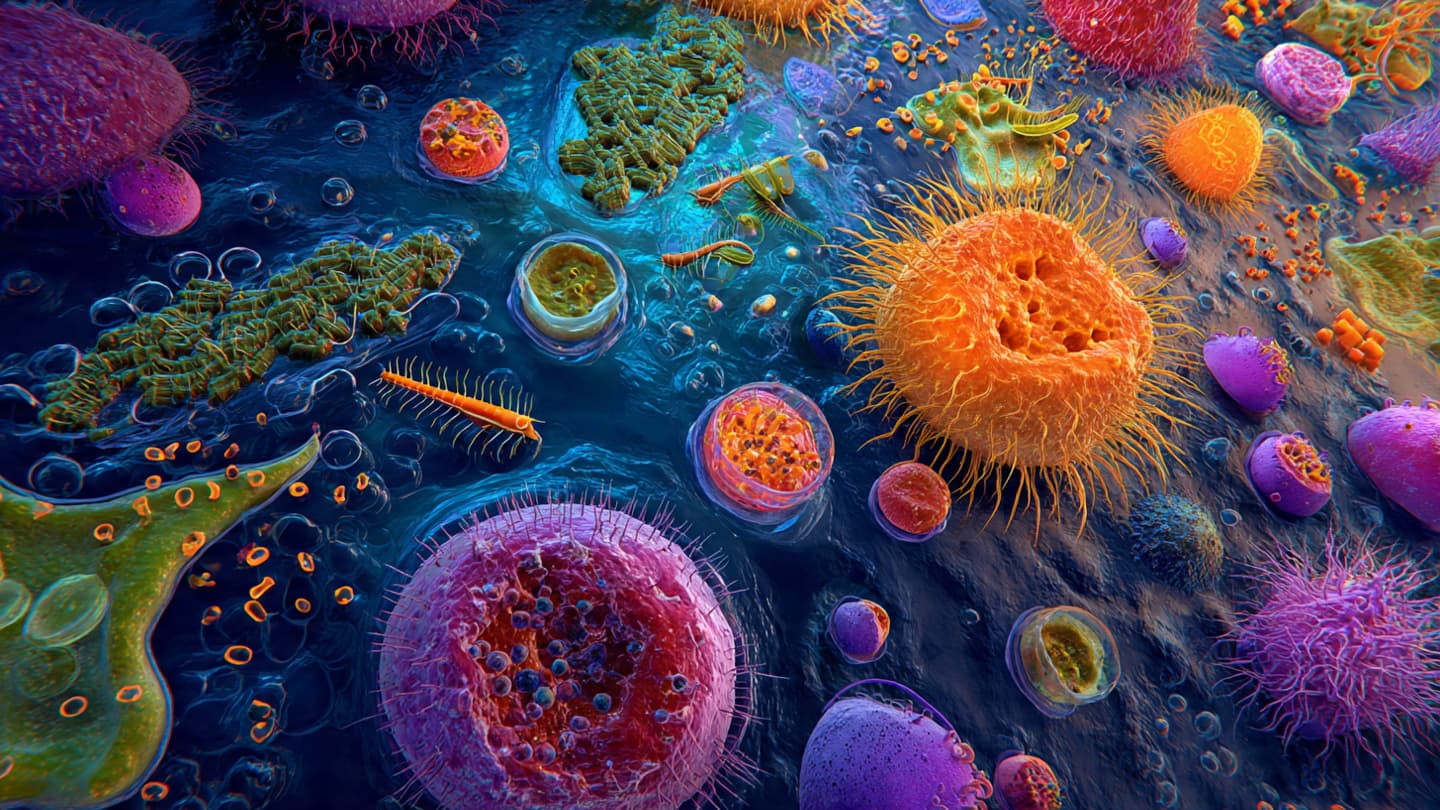
Life on Earth displays remarkable diversity, from towering forests and complex ecosystems to microscopic organisms invisible to the naked eye. A recent study has highlighted this diversity once again through the discovery of a single-celled organism exhibiting behavior that researchers describe as cannibalistic.
The organism was observed consuming members of its own species under particular environmental conditions. While the behavior may sound unusual, scientists note that competition for resources can drive a wide variety of survival strategies across biological systems.
Researchers conducted detailed observations using advanced microscopy and laboratory analysis. These methods allowed them to document interactions occurring at scales far smaller than those encountered in everyday life.
Single-celled organisms play important roles in ecosystems, contributing to nutrient cycling, food webs, and environmental balance. Despite their simplicity, many display surprisingly sophisticated behaviors related to movement, communication, and resource acquisition.
The newly documented behavior may help scientists better understand how microorganisms respond to environmental stress. In habitats where resources become scarce, survival mechanisms can influence population dynamics and evolutionary outcomes.
Biologists emphasize that cannibalism is not limited to larger animals. Various forms of the behavior have been documented throughout nature, though the mechanisms and ecological significance often differ between species.
The discovery also highlights the importance of studying microbial life. Although microscopic organisms are frequently overlooked, they represent a substantial portion of Earth's biodiversity and influence many ecological processes.
Advances in imaging technology continue transforming the field of microbiology. Researchers are now able to observe interactions that were once impossible to document directly, opening new windows into hidden biological worlds.
As scientists continue examining the organism and its behavior, the findings contribute to a broader understanding of adaptation and survival. Even among the smallest forms of life, nature demonstrates an ability to surprise and challenge expectations.
AI Image Disclaimer: Illustrations associated with this article are AI-generated visual representations based on scientific descriptions and concepts.
Source Verification Check: Discover Magazine, Nature, Science Magazine, American Society for Microbiology
Published by Banx Network. This article is part of the Banx decentralized media programme, powered by the BXE token on the XRP Ledger.



