Long before Earth became a world of oceans, forests, and living systems, it was a place of fire and transformation. In that distant past, the ingredients of life may not have formed entirely here—but arrived quietly, carried across space by ancient travelers.
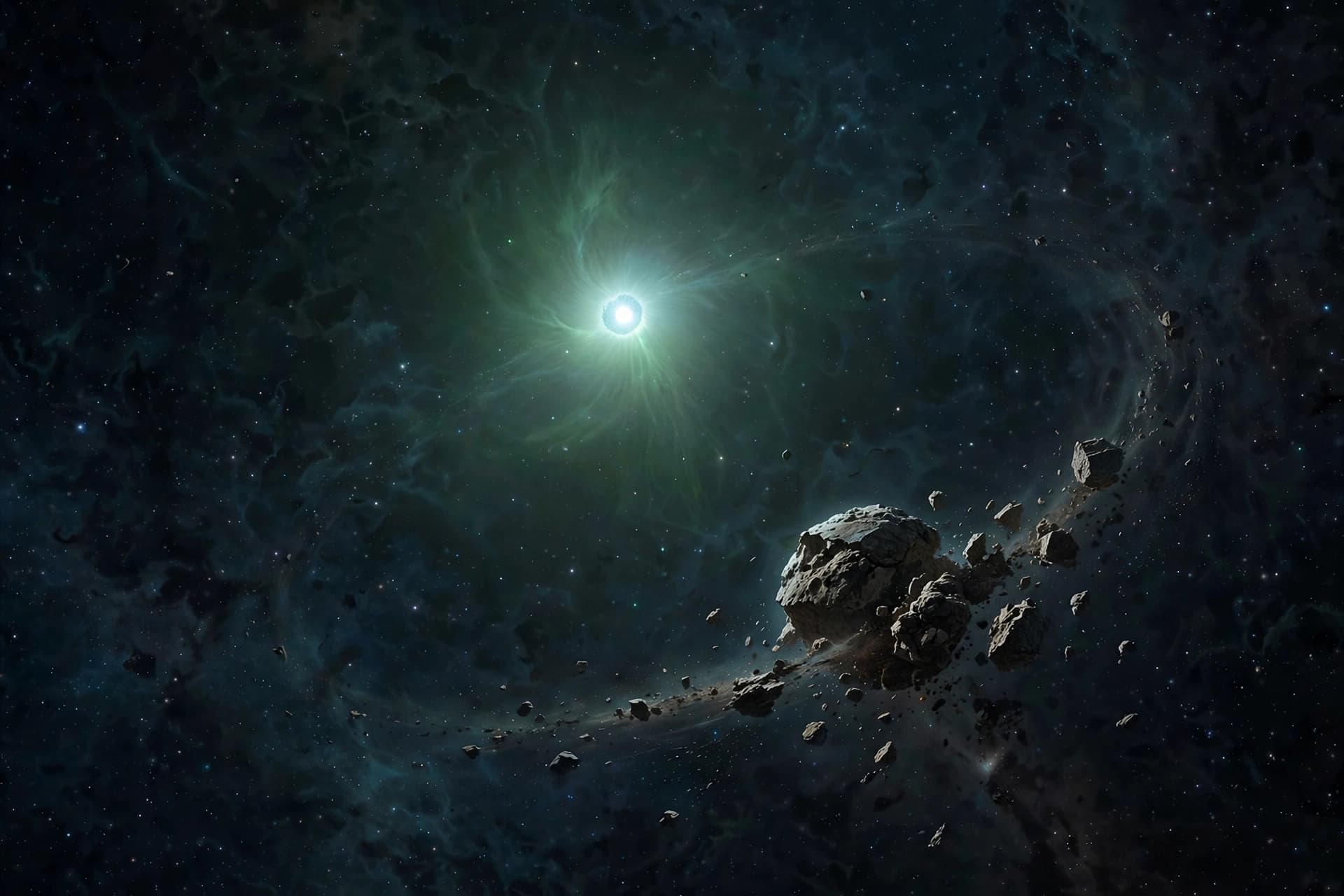
One such traveler, the asteroid , has now offered scientists an extraordinary clue.
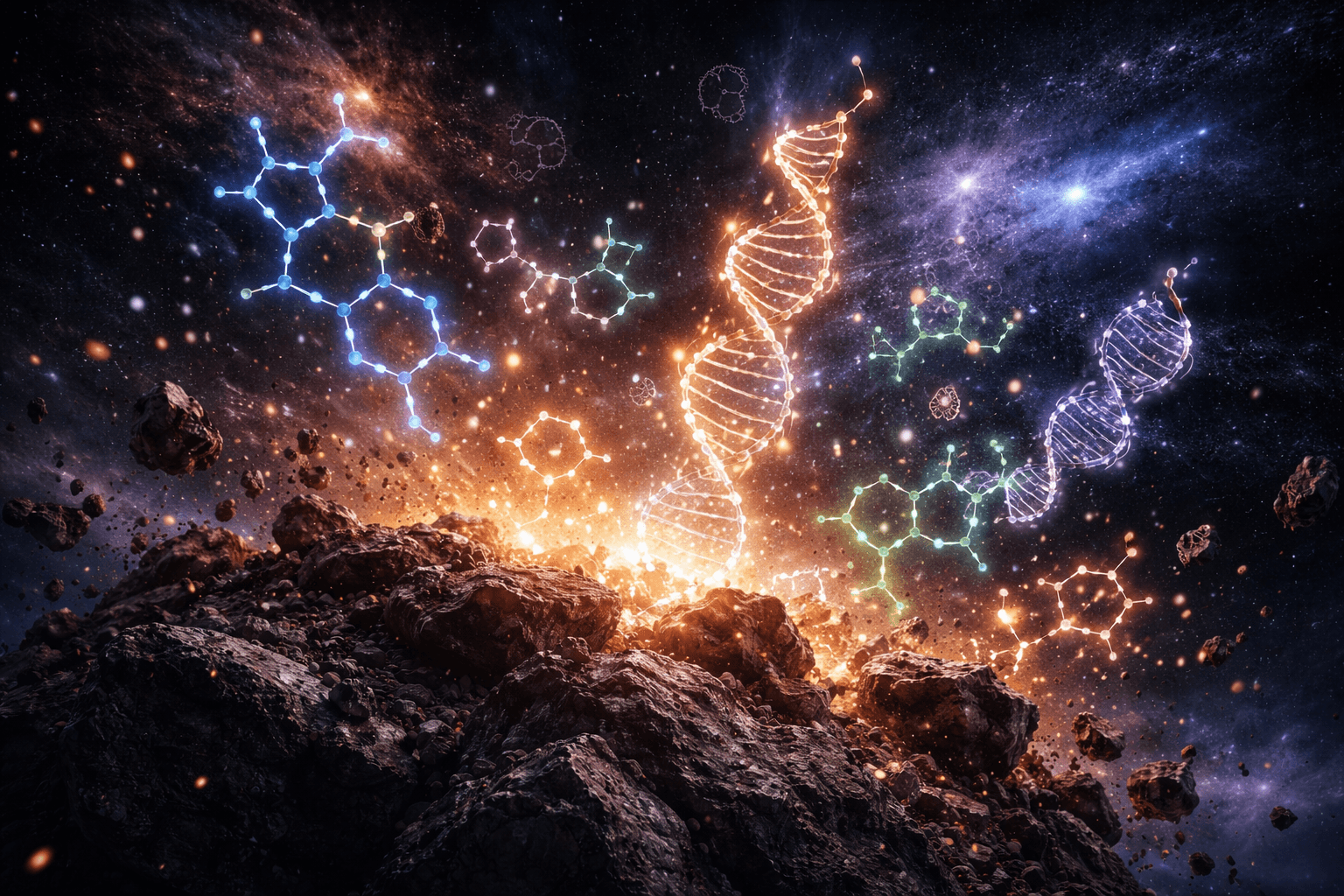
Samples returned from Ryugu have revealed the presence of all five fundamental building blocks of genetic material—molecules essential to both and . These include nucleobases that form the letters of life’s code, raising profound questions about how life may have first emerged on Earth.
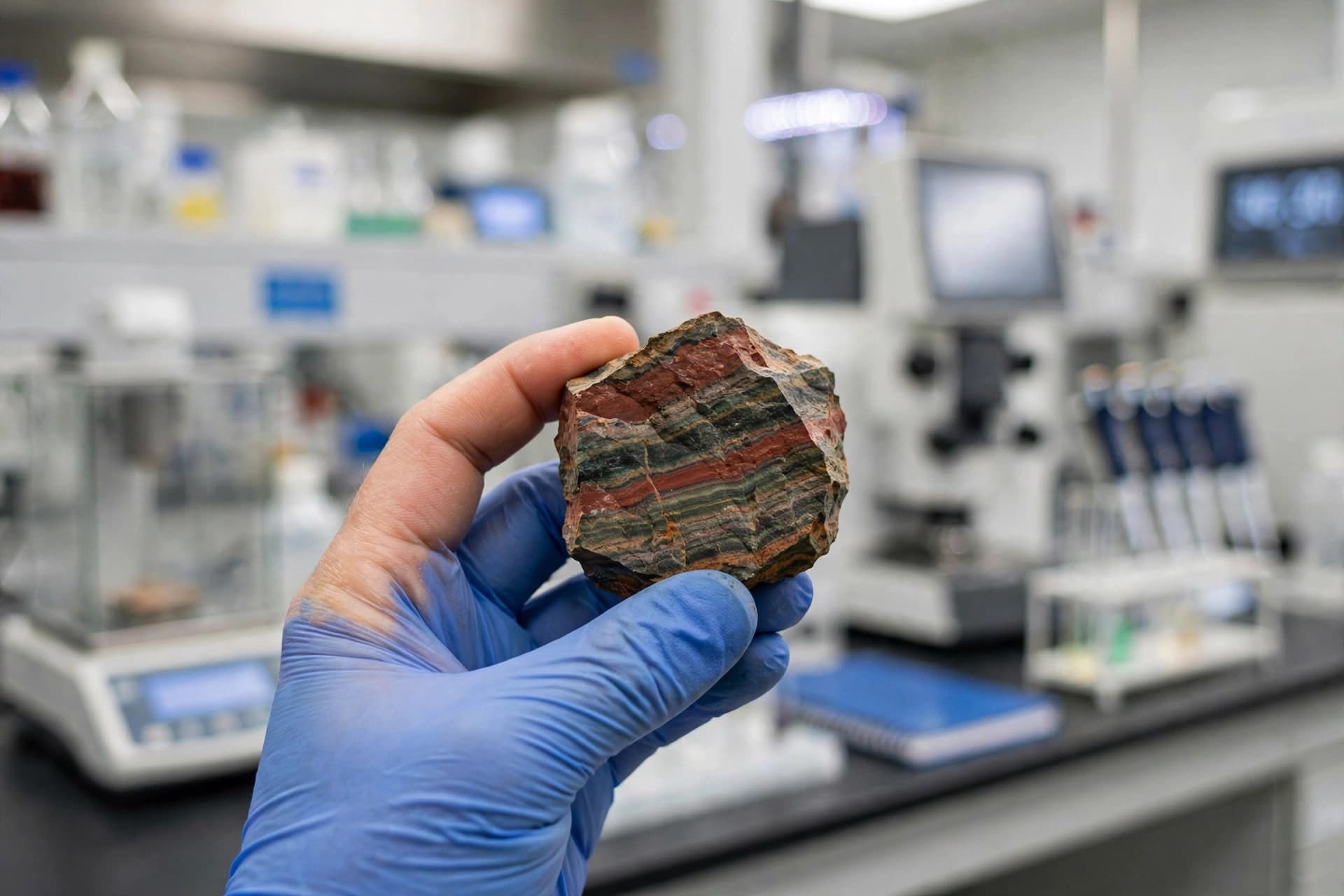
The samples were collected by Japan’s , which successfully retrieved pristine material from the asteroid’s surface and delivered it back to Earth. Unlike meteorites that land on Earth and risk contamination, these samples were carefully preserved, offering a clearer glimpse into the chemistry of the early solar system.
Within this cosmic dust, scientists identified adenine, guanine, cytosine, thymine, and uracil—the five nucleobases that form the backbone of genetic systems. Their presence suggests that the raw materials for life may be more widespread in the universe than previously understood.
For decades, researchers have debated whether life’s building blocks formed on Earth or were delivered from space through asteroids and comets. The findings from Ryugu lend weight to the idea that at least some of these essential molecules may have extraterrestrial origins.
In the cold vacuum of space, chemical reactions unfold slowly but persistently. Carbon-rich asteroids like Ryugu act as natural laboratories, where simple compounds can evolve into more complex organic molecules over millions of years.
When such objects collide with young planets, they may deliver these ingredients, seeding environments where life could eventually arise.
Yet, the presence of these molecules does not mean life itself exists beyond Earth—at least not directly. The leap from organic chemistry to living systems remains one of science’s greatest mysteries. Still, discoveries like this narrow the gap, suggesting that the transition may not be as rare as once thought.
If the building blocks of DNA and RNA can form in space and travel across vast distances, then the story of life may begin not on a single planet, but as part of a larger cosmic process.
Ryugu, a small and ancient asteroid drifting through space, now carries a message far larger than itself—a quiet reminder that the ingredients for life may be scattered across the universe, waiting for the right conditions to come together.
AI Image Disclaimer Visuals are created with AI tools and are not real photographs.
Source Check Credible sources covering the topic “Asteroid Ryugu contains all 5 DNA and RNA building blocks”:
Nature Communications NASA Science Magazine Space.com The Guardian
Published by Banx Network. This article is part of the Banx decentralized media programme, powered by the BXE token on the XRP Ledger.