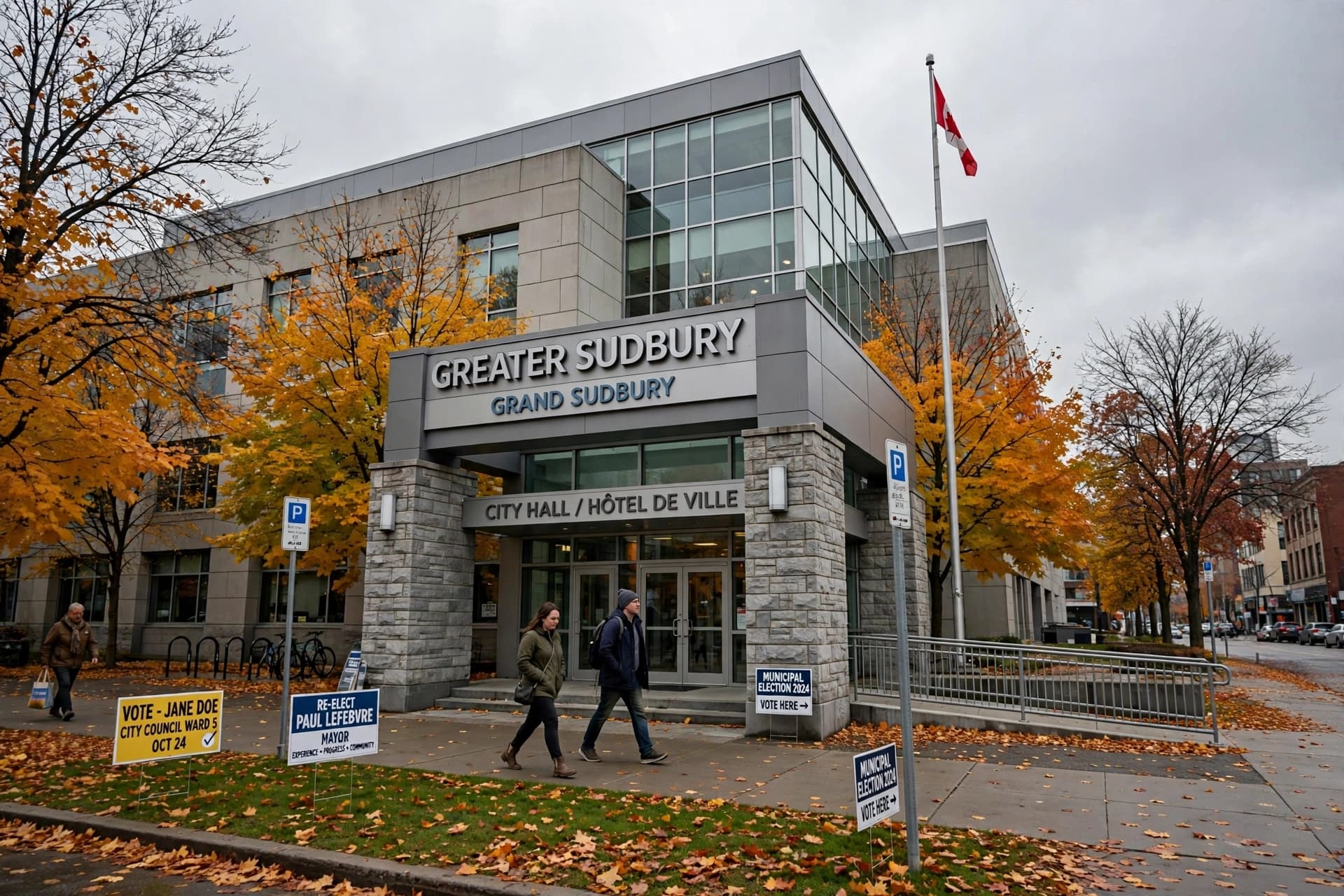
Municipal elections are quiet dramas of arithmetic and hope. On Monday night in Greater Sudbury, the numbers arrived in two waves—first the digital ballots, then the paper ones counted into Tuesday morning—and when the last of them settled, the city had chosen continuity at the top and change beneath it. Paul Lefebvre will serve a second term as mayor, carrying 62.6 percent of the vote, or 33,978 ballots .
His nearest rival, Miranda Rocca-Circelli, finished with 27.1 percent, or 14,709 votes. Bob Johnston placed third with 3.5 percent, and Troy Crowder followed with 3 percent . The margin was decisive, but the context was not simple. Lefebvre's first term included contested decisions—the location of a new community arena, a sanctioned homeless encampment at Energy Court, and his public positions on the addiction crisis . He campaigned on what he called "continuing the momentum," pointing to population growth and major arts and entertainment projects, including a cultural hub and downtown arena with a combined projected cost exceeding $265 million .
Rocca-Circelli, in her statement to CBC News, focused on oversight. She said her first priority would be restoring the Office of the Auditor General, which council closed in 2025. "That removed a critical safeguard," she said, "just as residents face rising taxes, growing debt, and major capital commitments" . Lefebvre's office responded that the office cost nearly $500,000 annually to operate and that the city was moving to oversight models used by most Ontario municipalities .
Beneath the mayoral result, the council itself shifted. Seven of twelve wards will be represented by new councillors when the term begins . Glen Duffy took Ward 2. Marcel Montpellier won Ward 3. Natalie Tessier claimed Ward 8. Shawn Poland took Ward 9. Cora DeMarco won Ward 10. Mike Bleskie unseated an incumbent in Ward 11. Jeff MacIntyre took Ward 12, where the ballot had still carried the name of Colin McKerral, who died in September after ballots were prepared . Five incumbents held their seats: Mark Signoretti, Pauline Fortin, Michael Parent, Rene Lapierre, and Natalie Labbée .
The new council will be sworn in on November 24, with its first meeting of the term on December 1 . What awaits them is the ordinary, unglamorous work of a city: budgets, infrastructure, the slow negotiation between growth and the people who already live here. Lefebvre framed his vision in fiscal terms—growing the tax base by attracting industrial and commercial development, which pays higher rates than residential property. "Community vitality is just as important as your infrastructure," he said .
Elections are, in the end, a way of asking a place what it wants to become. Greater Sudbury answered with a mix of recognition and appetite for something different—a mayor given another term, and a council chamber filled with unfamiliar faces.
The results were released by the city. The new term begins in late November.
Images in this article are AI-generated and are not photographs of the candidates or events described.
Sources: CBC News, CTV News Northern Ontario, The Sudbury Star, Radio-Canada
Published by Banx Network. This article is part of the Banx decentralized media programme, powered by the BXE token on the XRP Ledger.