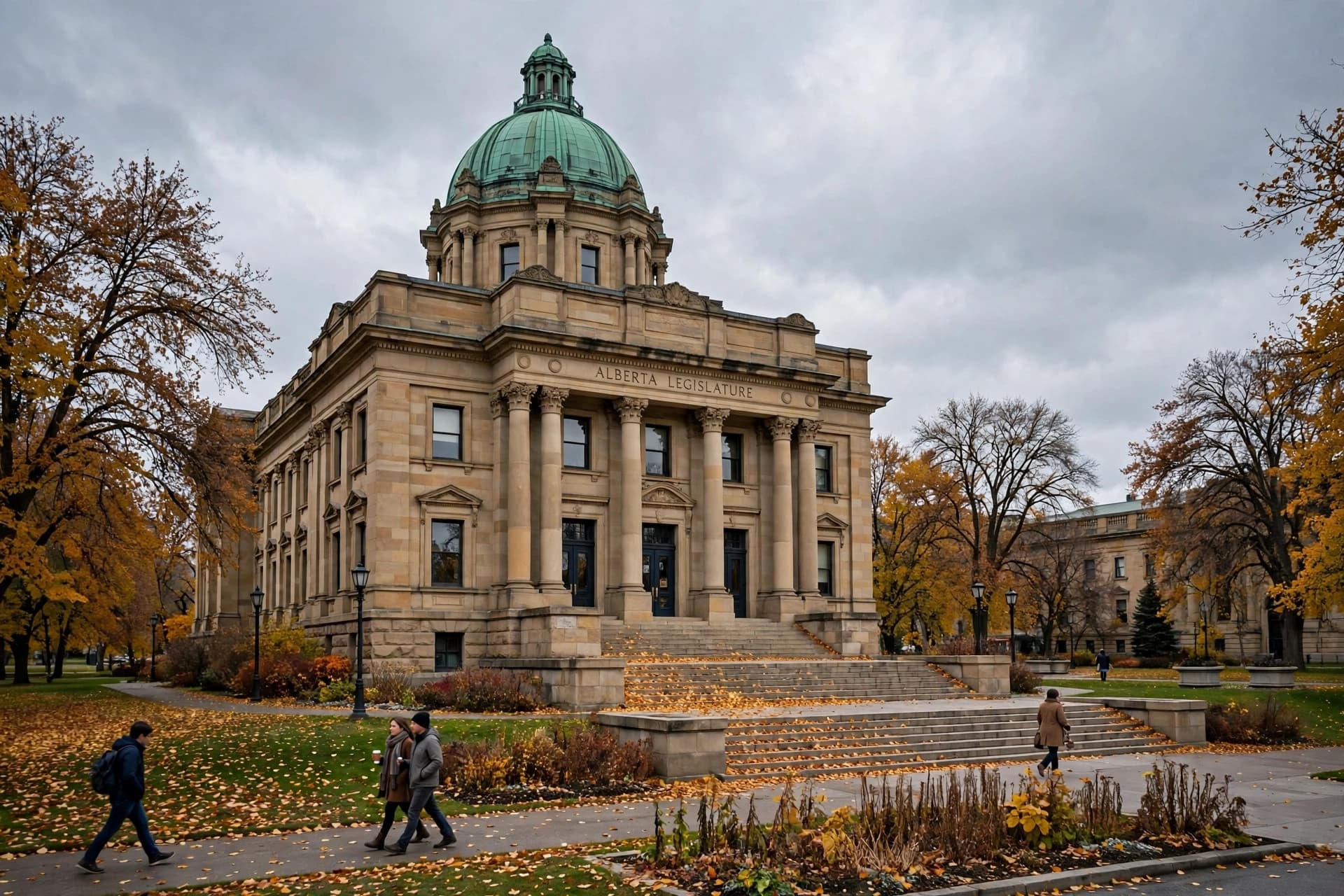
There is a particular kind of quiet that settles over a legislature when a long-debated idea finally becomes a bill. On Tuesday in Edmonton, that quiet arrived with the first piece of legislation of the fall sitting—a proposal that would reshape how Alberta's public institutions approach the question of who gets hired, and why. The answer, as the government frames it, should rest on merit alone.
Justice Minister Mickey Amery tabled Bill 33, the Justice Statutes Amendment Act, which would amend the Alberta Human Rights Act to prevent provincial bodies from considering protected characteristics—such as gender identity, race, religion, or disability—in hiring and promotion decisions . The prohibition would extend to the provincial public service, Crown corporations, publicly funded post-secondary institutions, school boards, and municipalities. It would also bar mandatory diversity, equity, and inclusion training, requiring that workplace education be "ideologically neutral and focused on job-related duties and skills" .
Premier Danielle Smith framed the change in straightforward terms. "Hiring decisions should be about who is best qualified for the job," she said in a government release, "and these changes will help ensure that fairness is at the heart of hiring" . Amery echoed that language, describing public-sector hiring as something that should rest on "merit, qualifications and competence" .
The legislation would remove the provision in the Human Rights Act—Section 10.1—that currently permits policies and programs aimed at ameliorating conditions for disadvantaged groups . Officials acknowledged during a technical briefing that the government does not possess data on how many people were hired through DEI practices, and that no consequences have been outlined for institutions that fail to comply . Limited exemptions would be set out in regulations, and the law would also apply to some private or non-profit organizations receiving government funding, with the Human Rights Commission determining applicability on a case-by-case basis .
What the bill does not do, officials said, is prevent post-secondary institutions from tailoring programs for particular students—training for Indigenous teachers, doctors, or lawyers, for instance, would continue . Voluntary DEI training would also remain permissible. The change is narrower than it might first appear, aimed at the machinery of hiring and mandatory instruction rather than the broader culture of an institution.
Still, the symbolism carries weight. For supporters, the bill represents a return to a principle that feels both simple and foundational: that the person best suited for a job should be the one who gets it. For critics, the removal of a tool designed to address historical disadvantage raises its own questions—about what fairness means when the starting lines have never been even, and whether neutrality is itself a kind of choice.
The bill must still pass through the legislature. Its path will be watched closely, not only in Alberta but beyond, as a marker of how far the pendulum has swung.
The images in this article are AI-generated and are not photographs of the individuals or events described.
Sources: CBC News, Edmonton Sun, National Post, Government of Alberta
Published by Banx Network. This article is part of the Banx decentralized media programme, powered by the BXE token on the XRP Ledger.