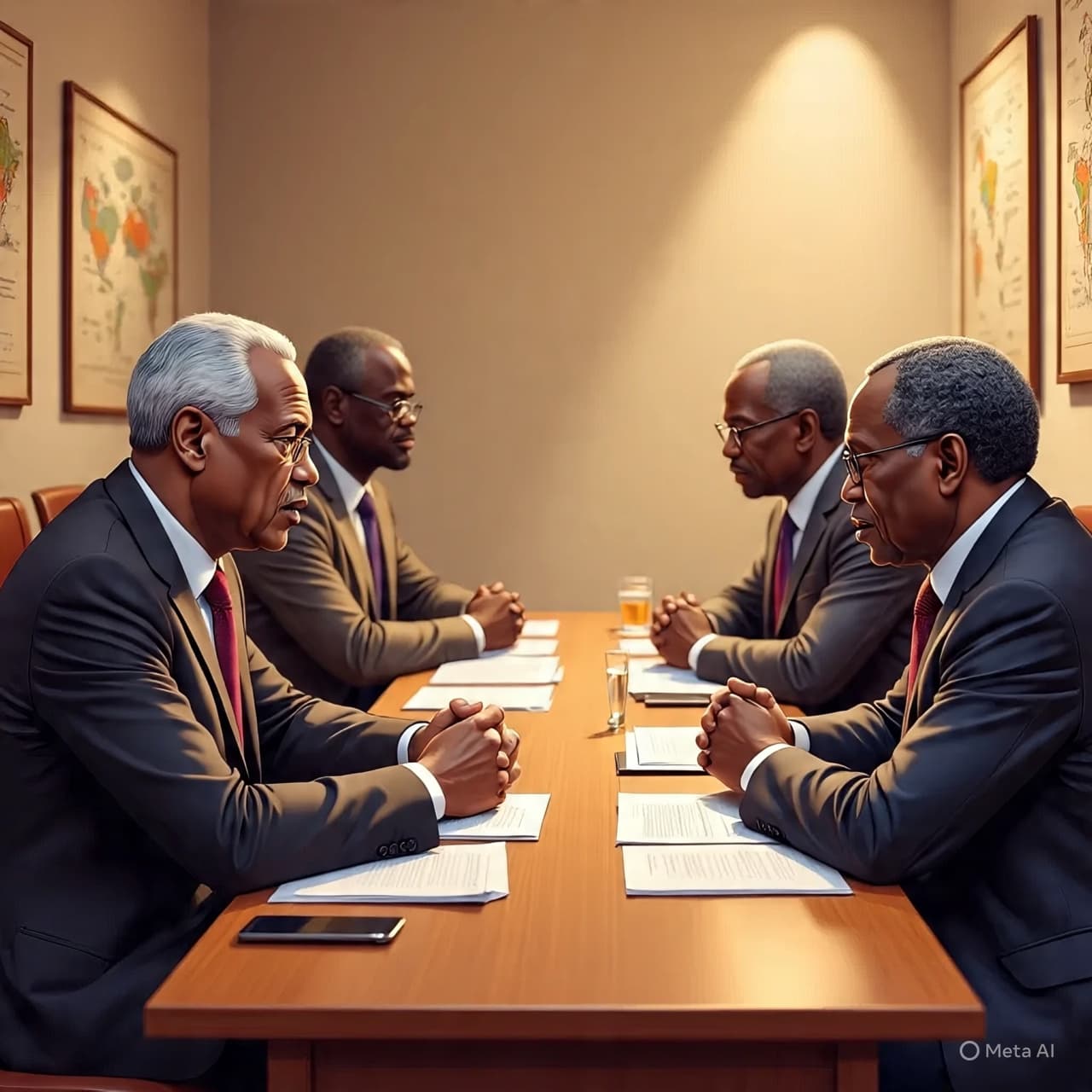
There is a quiet heaviness in the air whenever history resurfaces, as if the past itself is inhaling before it speaks. In the Caribbean and across parts of Africa, that breath has gathered again — not in anger, but in a measured insistence that stories left unresolved can no longer be held in silence. The recent momentum behind renewed reparations demands directed at the United Kingdom feels less like a sudden political surge and more like the slow return of a tide that had always promised to come back. Across Kingston, Bridgetown, Port of Spain, and in capitals throughout the African Union, leaders are framing this moment in language that blends memory with mathematics: a moral debt, they argue, can have real-world consequences. Their position is steady but not incendiary — that legacies of slavery and colonial extraction shaped economic trajectories still felt today, and that acknowledgment, without structural follow-through, is little more than a sentimental gesture. Yet the discussion has evolved beyond simple transactions. Caribbean governments are emphasizing development programs rather than direct payouts, advocating for educational investment, healthcare support, and debt restructuring. African delegations speak of sustainable financing and institutional partnerships that recognize historical imbalance without freezing nations inside their past. It is a request for repair rather than revenge, recalibration rather than retaliation.
Britain’s response has been careful, reflective in tone yet limited in scope. Officials express willingness to engage in “dialogue,” but carefully avoid commitments tied to compensation. The conversation, in its current form, reads like two sides speaking at slightly different tempos: one asking to rewrite the architecture of an unequal inheritance, the other offering to examine the blueprints without pledging reconstruction. Still, the movement persists because it fits within a broader global reckoning. Former colonies worldwide are re-evaluating the weight of inherited histories, asking whether apologies without frameworks can ever lead to genuine redress. For the Caribbean and African states stepping forward together, unity offers a strategy — and a statement — about collective memory and shared futures. By the end of the week, paperwork will continue, delegations will meet behind closed doors, and diplomatic language will be carefully measured. But beneath that procedural choreography lies something more elemental: the recognition that history does not vanish simply because time has passed. It waits, sometimes patiently, for the moment when nations decide they are ready to speak to it honestly.
Published by Banx Network. This article is part of the Banx decentralized media programme, powered by the BXE token on the XRP Ledger.