There is a particular tension in labour law between the right to strike and the obligation to protect public welfare. When the two collide, the question becomes not merely legal but moral: how much disruption is tolerable, and who gets to decide? In Manitoba, a new law introduced in 2024 has forced that question into sharp relief. It allows the province’s labour minister to intervene in essential services agreements reached between employers and unions, and it was used this month to halt a strike by Dynacare laboratory workers hours after it began. Now, the Manitoba Labour Board is weighing whether the law was applied appropriately—and whether the precedent it sets is one the province can live with.
The union representing 350 Dynacare technologists and technicians, the Manitoba Association of Health Care Professionals, says the process is lawful but ought not to be. “This is truly the first test of this new legislation, and clearly it’s problematic,” said Jason Linklater, the union’s president. “The entire labour community should be very concerned, not only that it exists, but that it was used this way. This is really a red flag” . The hearing, which began after the labour board ordered workers back on the job on September 8, is examining whether Dynacare workers should be designated essential .
The dispute centers on a fundamental disagreement about what constitutes a threat to health and safety. In March, Dynacare and the union reached an agreement deeming the workers non-essential . The province, however, appealed that agreement days after the union voted overwhelmingly in favour of a strike . Lawyers for the province argued that any stoppage would lead to “catastrophic consequences,” citing Dynacare’s role in performing about 40 per cent of lab testing in Manitoba annually and identifying 15 critical results in routine tests every day . The union countered that the public system’s 82 Shared Health labs could handle critical testing, and that talk of catastrophe was hyperbole .
Labour experts say the law’s language is the crux of the problem. Adam King, assistant professor of labour studies at the University of Manitoba, noted that the minister’s broad, unilateral power to intervene without providing specific evidence of danger creates a “chilling effect” on other unions. “Unions can never be certain [an essential services agreement] is the final word if the minister can just then intervene,” King said . David Camfield, also of the University of Manitoba, pointed to the “bureaucratic loops” that can throw off a union’s bargaining timeline—as happened in the Dynacare case, where the government intervened just before the strike was set to begin .
The timing of the intervention has drawn particular scrutiny. The province had months to challenge the company-union agreement but waited until days before the strike . The labour board has said the timing is irrelevant to its decision on whether the workers are essential . But for the union, the timing is evidence of a process designed to undermine bargaining rather than protect public health. “We should be bargaining and Dynacare is not bargaining with us,” Linklater said .
The stakes extend beyond Dynacare. The Manitoba law is less restrictive than similar legislation in British Columbia, where the minister can only intervene to prevent “immediate and serious danger” . The Manitoba law says essential services must be maintained if needed to “prevent a threat” to health, safety, or welfare—a broader threshold that the union argues could be used to halt strikes “in many instances, if not all instances” . King suggested the language needs to be tightened, with the minister obligated to provide evidence that a review is necessary and the process completed within a short timeframe .
The labour board is expected to deliver its decision by October 1 . If it determines the workers are essential, Dynacare and the union will be ordered to negotiate an essential services agreement establishing what services must continue during a work stoppage . For now, the workers remain on the job, without a collective agreement since March 31, earning what the union says is 20 to 50 per cent less than their counterparts in the public system . The case has become a test not only of a single law but of how Manitoba balances the rights of workers against the responsibilities of government—a balance that, once shifted, is difficult to restore.
The Manitoba Labour Board is hearing arguments on whether Dynacare lab workers should be designated essential after the province intervened to halt their strike. The union says the 2024 law allowing the intervention is “problematic” and could set a troubling precedent for labour rights. A decision is expected by October 1.
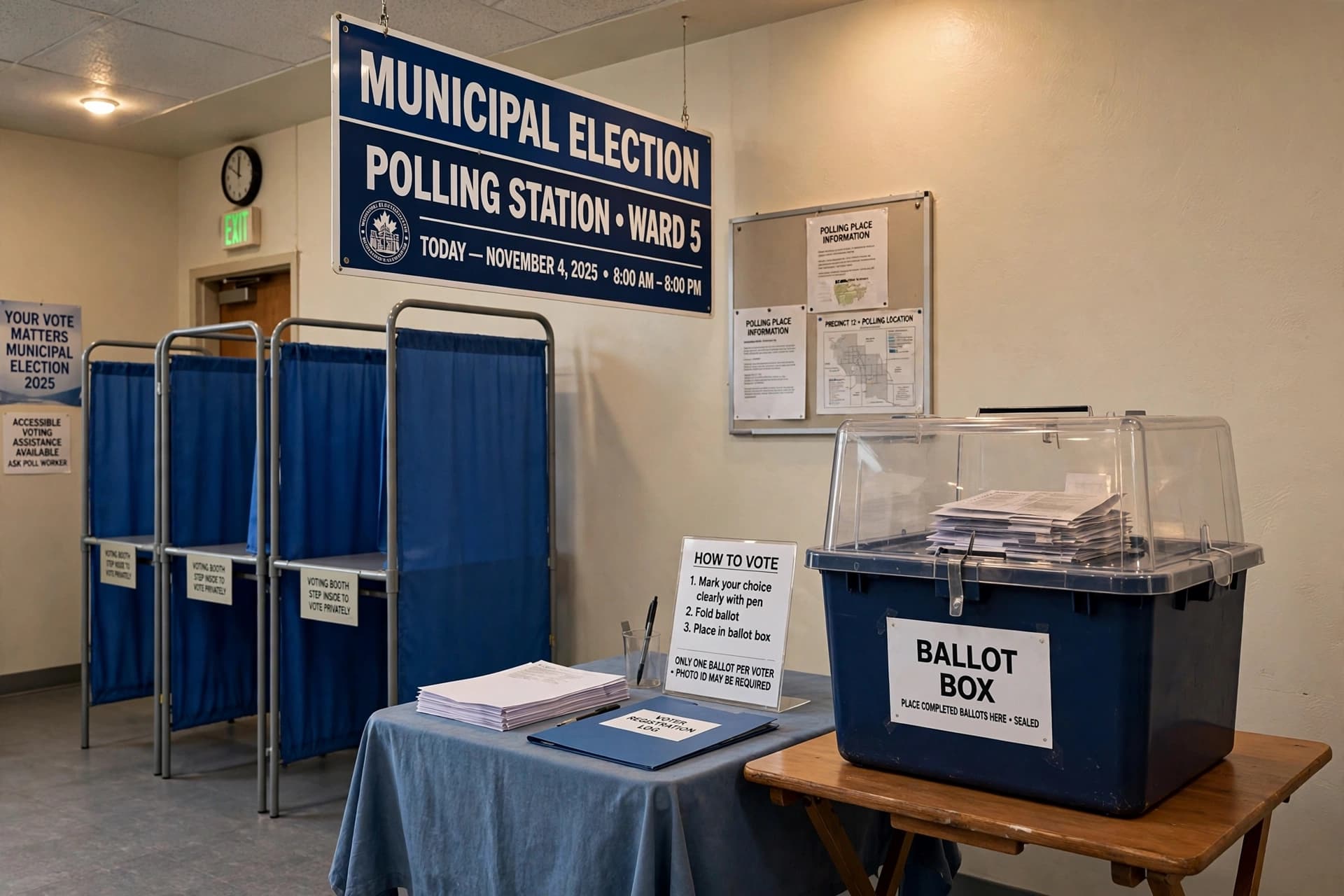
AI Image Disclaimer: The images in this article are AI-generated and are for illustrative purposes only.
Sources: CBC News, Radio-Canada, The Canadian Press, Winnipeg Free Press, CTV News
Published by Banx Network. This article is part of the Banx decentralized media programme, powered by the BXE token on the XRP Ledger.