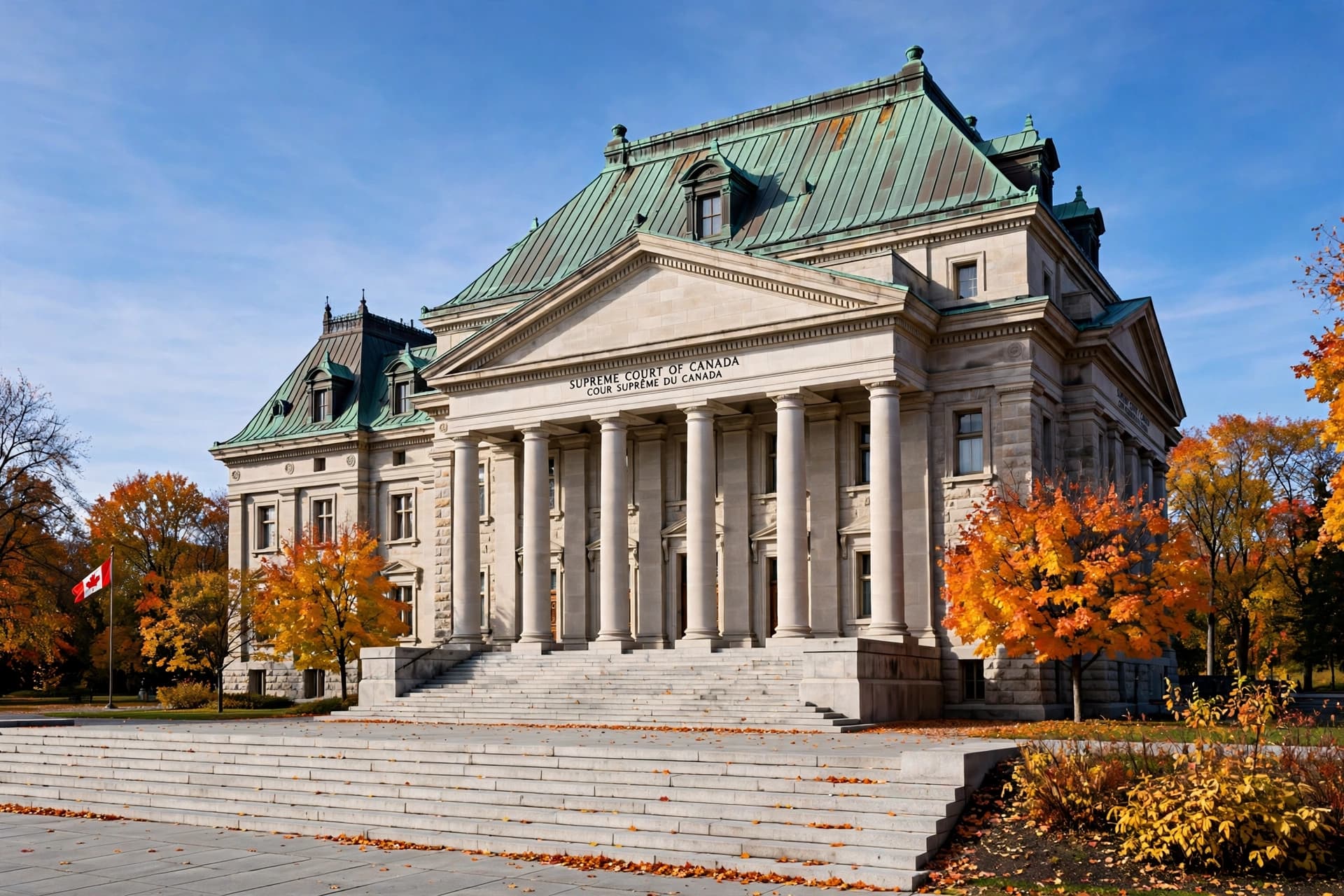
There are legal questions that settle a matter, and legal questions that settle a principle. The Supreme Court of Canada's decision this week to hear the government's appeal of the Emergencies Act rulings belongs to the second category. Two courts have now found that the Trudeau government's invocation of the Act in February 2022 was unreasonable and violated the Charter. The Federal Court of Appeal, in January, upheld the lower court's finding that the convoy protests, however disruptive, "fell well short of a threat to national security" . The government has spent years and millions of dollars defending the decision. Now, the highest court in the land will decide whether the lower courts were right, and in doing so, it will draw a line around what a government can do when it believes the country is under threat.
The facts are not in dispute. In February 2022, after weeks of protests in Ottawa and blockades at border crossings, the Liberal government invoked the Emergencies Act for the first time since it replaced the War Measures Act in 1988 . The Act gave law enforcement extraordinary powers to remove and arrest protesters and allowed the government to freeze the finances of those connected to the protests. The Federal Court, in 2024, found that the government did not have reasonable grounds to believe the situation constituted a threat to national security, and that the economic orders infringed the freedom of expression and the right against unreasonable search and seizure . The Federal Court of Appeal agreed, and the government sought leave to appeal to the Supreme Court .
What makes the case significant is not only the specific events of 2022 but the precedent it will establish. The Emergencies Act was drafted with narrow terms precisely to constrain the executive's use of extraordinary powers, powers that amount to a temporary amendment of the Constitution . The Federal Court of Appeal's decision found that the government failed to demonstrate it had reasonable grounds to believe a national emergency existed within the meaning of the Act, or that existing laws were unable to resolve the situation . If the Supreme Court upholds that finding, it will affirm that the threshold for invoking emergency powers is high and that the courts will hold governments to it. If it overturns, the boundaries become less clear.
The government's position has been that the protests posed a security threat and that the measures taken were targeted, proportional, and temporary . The Public Safety Minister's spokesperson said the government remains committed to ensuring the safety and security of Canadians in the face of threats to public safety . The Canadian Civil Liberties Association, which challenged the invocation, called the Federal Court of Appeal's decision "a massive and historic victory for the rule of law and the rights and freedoms of all Canadians" . Howard Sapers, the CCLA's executive director, acknowledged that the Act could be used appropriately in extreme circumstances, but said the precedent now establishes that it can also be used inappropriately, and that there are consequences when it is .
There is a particular irony in the timing. The appeal arrives as the government of Prime Minister Mark Carney is pursuing its own expansive legislative agenda, including Bill C-39, which would accelerate approvals for major projects and has drawn criticism from scientists and legal scholars. The question of how far a government can go, and what checks exist when it goes too far, is not confined to the events of 2022. It is a question that recurs, in different forms, with each new assertion of executive authority.
For the people whose bank accounts were frozen, whose lives were disrupted by the invocation of the Act, the Supreme Court's decision will be the final word. For the country, it will be something else: a statement about the limits of emergency power, written by the judges who are charged with defining them. The Court has not yet set a date for the hearing. When it does, the arguments will be made, the evidence reviewed, and a judgment rendered. What remains to be seen is whether that judgment will make the boundaries clearer, or whether it will leave them, as they have been for four years, contested.
Image Disclaimer: The visuals accompanying this article are AI-generated and are not actual photographs of the Court, the parties, or the events described.
Sources: CBC News, Federal Court of Appeal, Canadian Constitution Foundation
Published by Banx Network. This article is part of the Banx decentralized media programme, powered by the BXE token on the XRP Ledger.