Museums often feel like places where time has settled into certainty, where bones and labels quietly agree with one another. Visitors walk past ancient remains believing the stories beside them have already been decided. Yet science, like memory, sometimes returns to old objects with new questions, and occasionally, those questions change the story entirely.
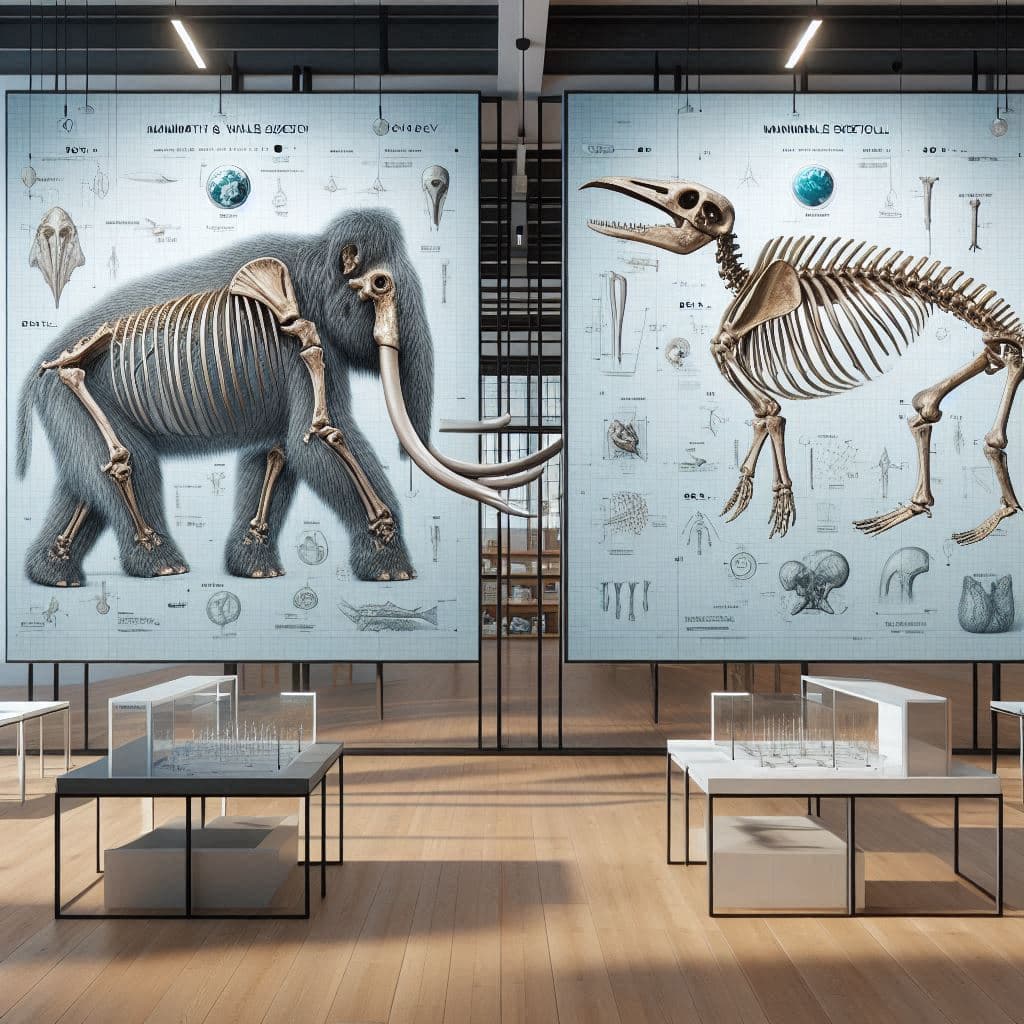
Such was the case when bones long displayed as belonging to a mammoth were reexamined and found to tell a different tale. At first glance, the error seemed understandable. Massive, weathered, and ancient, the remains fit comfortably into the public imagination of Ice Age giants roaming frozen lands. For years, they rested under that assumption, reinforcing a familiar narrative of prehistoric life.
Closer study, however, began to suggest otherwise. Advances in anatomical comparison and modern imaging techniques allowed researchers to look beyond surface impressions. The structure of the bones, once thought to echo a land-dwelling giant, aligned more closely with a creature of the sea. What had been presented as mammoth remains were, in fact, bones from a giant whale.
This quiet revelation did not arrive with scandal, but with humility. Scientists explained that early identifications were made with limited reference material and incomplete understanding of fossil variation. Whale bones, especially those eroded by time and environment, can resemble those of large terrestrial mammals when found far from the ocean or fragmented by geological processes.
The correction highlights how scientific knowledge evolves. Museums and researchers increasingly revisit older collections, not to undermine the past, but to refine it. Each reassessment reflects a willingness to let evidence speak again, even if it gently contradicts what was once believed.
For the public, the discovery adds a new layer of wonder rather than diminishing it. A giant whale, once swimming through ancient seas, carries its own sense of scale and mystery. The bones do not lose their importance; they simply change their voice.
As institutions update displays and explanations, the episode serves as a reminder that history is not fixed in glass cases. It is shaped by ongoing dialogue between observation, technology, and patience. In the end, the bones remain ancient and remarkable, even as their true identity comes back into focus
AI Image Disclaimer Graphics are AI-generated and intended for representation, not reality.
Sources National Geographic; BBC; Smithsonian Magazine; Scientific American; Nature
Published by Banx Network. This article is part of the Banx decentralized media programme, powered by the BXE token on the XRP Ledger.