In the profound silence of the early cosmos, where time itself was still finding its rhythm, a colossus began to take shape. Astronomers have identified a galaxy so massive and mature that it challenges our understanding of how the universe evolved in its infancy. This celestial giant, weighing in at five thousand times the mass of the Milky Way, appears to have formed with startling speed, defying the gradual growth models that have long guided cosmological theory.
The discovery was made using data from the James Webb Space Telescope, which peers back through billions of years of cosmic history. The galaxy, observed as it existed less than a billion years after the Big Bang, possesses a stellar mass that should theoretically take much longer to accumulate. Its existence suggests that the processes of star formation and galactic assembly were far more efficient and vigorous in the early universe than previously imagined.
This finding acts as a mirror, reflecting the limitations of our current simulations. For decades, scientists believed that galaxies grew slowly, merging with smaller neighbors over eons to reach their present sizes. However, this "cosmic giant" implies that some structures may have collapsed directly from dense pockets of dark matter and gas, bypassing the slow grind of incremental accretion. It is a reminder that nature often finds shortcuts that human models fail to predict.
The implications for dark matter are equally significant. To hold such a vast amount of stars together against the expansion of the universe, this galaxy must be embedded in a halo of dark matter of unprecedented density. Studying its gravitational effects allows researchers to probe the nature of this invisible substance, offering clues about how it clumped together in the universe’s first moments. It is a laboratory for physics that cannot be replicated on Earth.
As we look deeper into the past, each new discovery reshapes the narrative of cosmic origins. This galaxy is not an anomaly to be dismissed but a beacon guiding us toward a more nuanced understanding of galactic evolution. It invites scientists to refine their theories, incorporating mechanisms that allow for rapid, massive growth in the high-energy environment of the early cosmos.
The technical achievement of detecting such a distant object is also worth noting. It required the combined power of advanced infrared instruments and sophisticated data analysis techniques. The light from this galaxy has traveled for over thirteen billion years, stretching and reddening as the universe expanded. Capturing it is akin to hearing a whisper from the dawn of time, faint yet unmistakably clear.
For now, this cosmic giant stands as a testament to the unexpected wonders of the universe. It reminds us that our knowledge is always provisional, subject to revision by the next great observation. As telescopes continue to scan the deep sky, we can expect more surprises, each one pulling back another layer of the mystery surrounding our origins.
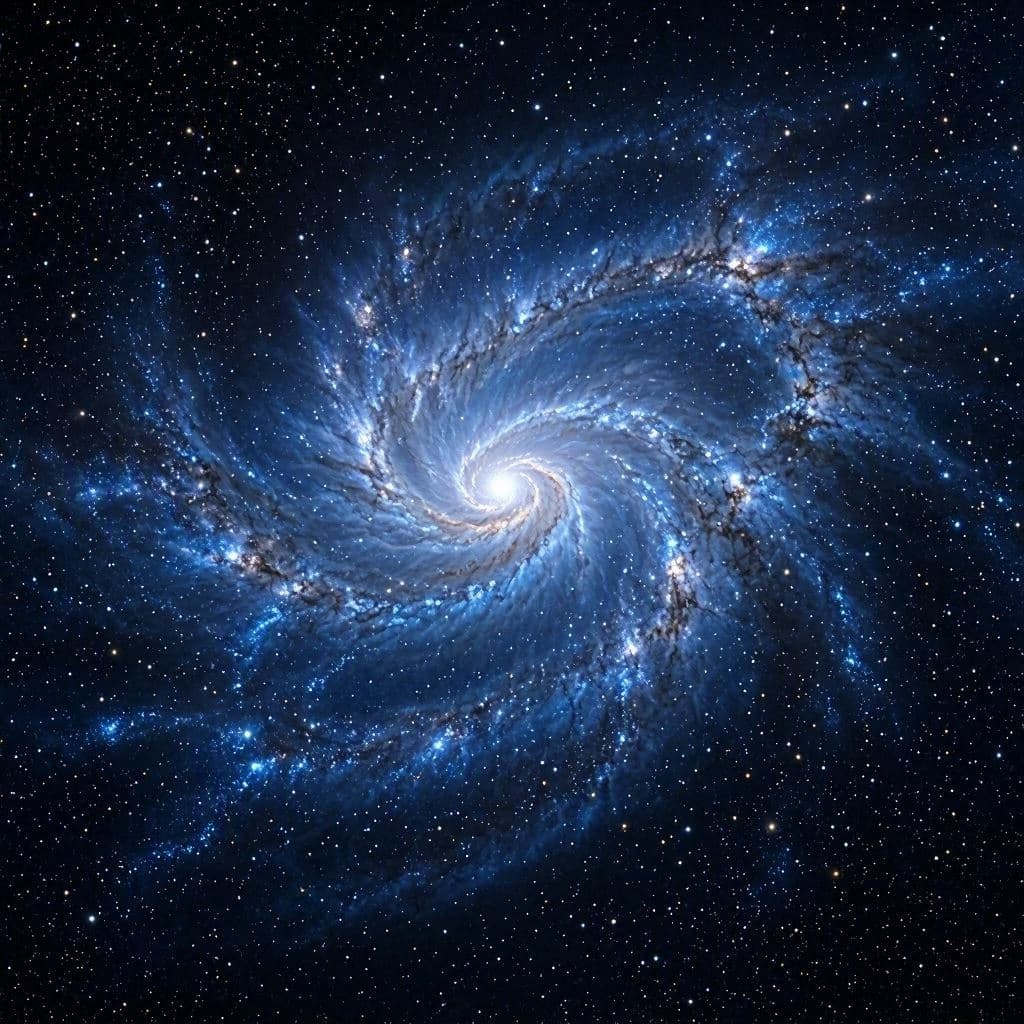
AI Image Disclaimer: The visual representations in this article are AI-generated illustrations designed to convey the scale and luminosity of early-universe galaxies.
Sources: NASA, ESA, Nature Astronomy
Published by Banx Network. This article is part of the Banx decentralized media programme, powered by the BXE token on the XRP Ledger.