There are moments in astronomy that shift not only our view of the sky but also our understanding of what the cosmos can be. This week, scientists working with the NASA/ESA Hubble Space Telescope announced the discovery of something extraordinary: Cloud‑9, a new type of celestial object that lacks stars yet brims with gas and dark matter. Though silent and unseen in ordinary light, this relic is a fresh chapter in the ongoing story of how galaxies form — and sometimes fail to ignite.
From the outset, Cloud‑9 defies expectation. It was first flagged in radio surveys conducted years earlier by ground‑based facilities, including China’s Five‑hundred‑meter Aperture Spherical Telescope (FAST) and follow‑ups by the Very Large Array and Green Bank Telescope. But it was only when Hubble’s Advanced Camera for Surveys peered at the object that astronomers could definitively confirm the striking absence of stars within this vast cloud of neutral hydrogen.
Known technically as a Reionization‑Limited H I Cloud, or RELHIC, Cloud‑9 is thought to be a primordial building block from the early Universe — a massive clump of gas dominated by dark matter that never accumulated enough mass to begin star formation. In some respects, this makes it a failed galaxy, a fossil of cosmic evolution that never blossomed into the starry grand design we associate with typical galaxies.
According to the research team, Cloud‑9 sits on the outskirts of the nearby spiral Messier 94 (M94) and spans roughly 4,900 light‑years across, with its gas core weighing about one million times the mass of our Sun. However, the dark matter at its heart — estimated at around five billion solar masses — likely exerted gravitational influence without triggering the dense gas collapse necessary for star birth.
“This is a tale of a failed galaxy,” said principal investigator Alejandro Benitez‑Llambay of the University of Milano‑Bicocca, emphasizing that discoveries such as Cloud‑9 help validate long‑held theoretical predictions about the existence of dark matter–dominated structures that never lit up with stars.
Researchers emphasize that while objects like Cloud‑9 are rare and difficult to detect — easily outshone by nearby luminous galaxies — they provide a remarkable window into the dark, unseen components of the cosmos. By studying them, astronomers can glean fresh clues about how the earliest galaxies formed (or didn’t), and how dark matter shaped the young Universe’s architecture.
Cloud‑9’s quiet presence now invites deeper exploration: might other such relics be scattered around galactic neighbors? And could these silent beacons offer new tests of dark matter physics? For now, Hubble has delivered a reminder that even in the vast silence of space, the absence of light can be as revealing as its glow.
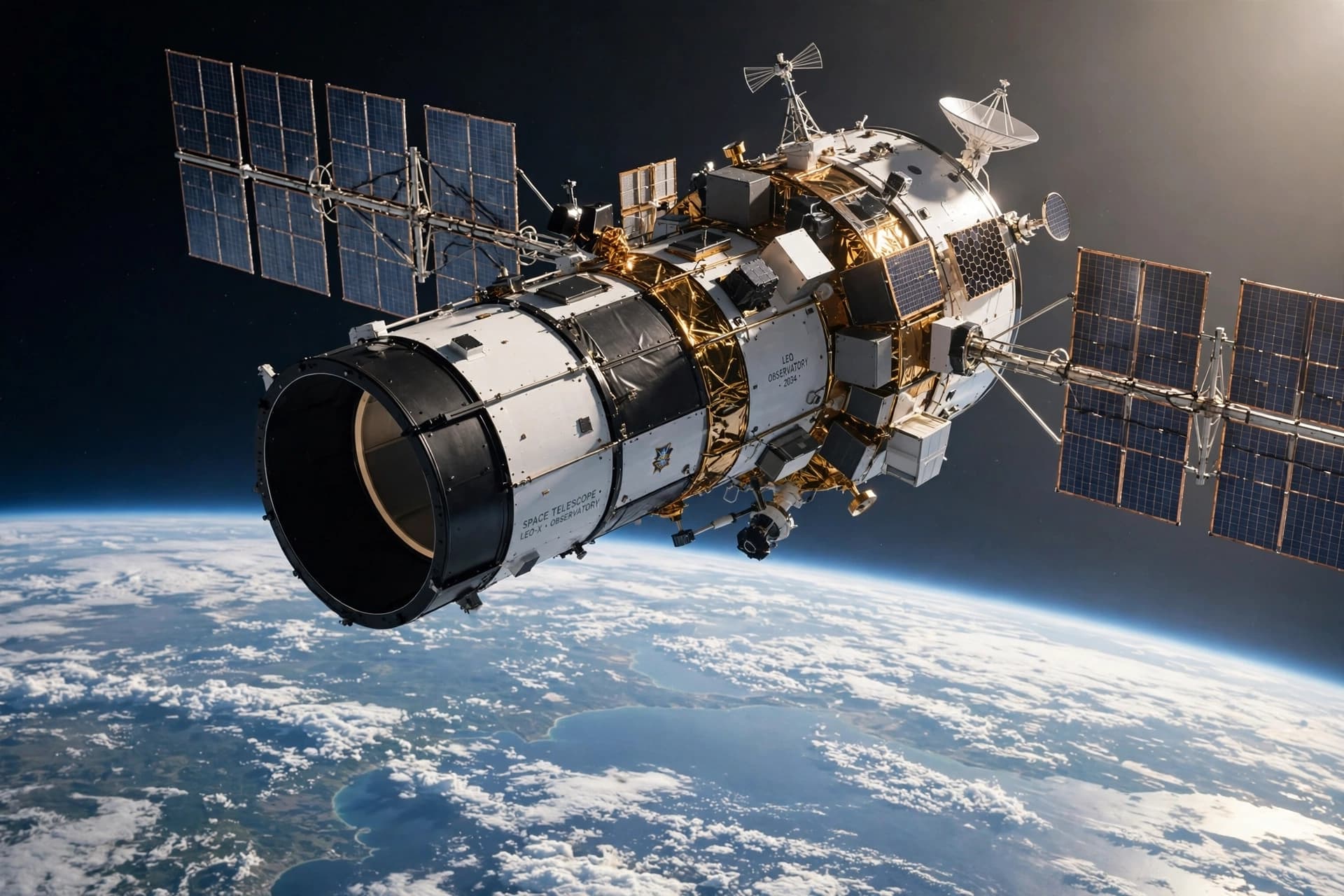
AI Image Disclaimer Visuals are AI‑generated concept illustrations and not actual photographs.
Sources ESA/Hubble, NASA Hubble mission team reporting on the new object Cloud‑9 and its significance, supported by technology.org and Live Mint science coverage.
Published by Banx Network. This article is part of the Banx decentralized media programme, powered by the BXE token on the XRP Ledger.