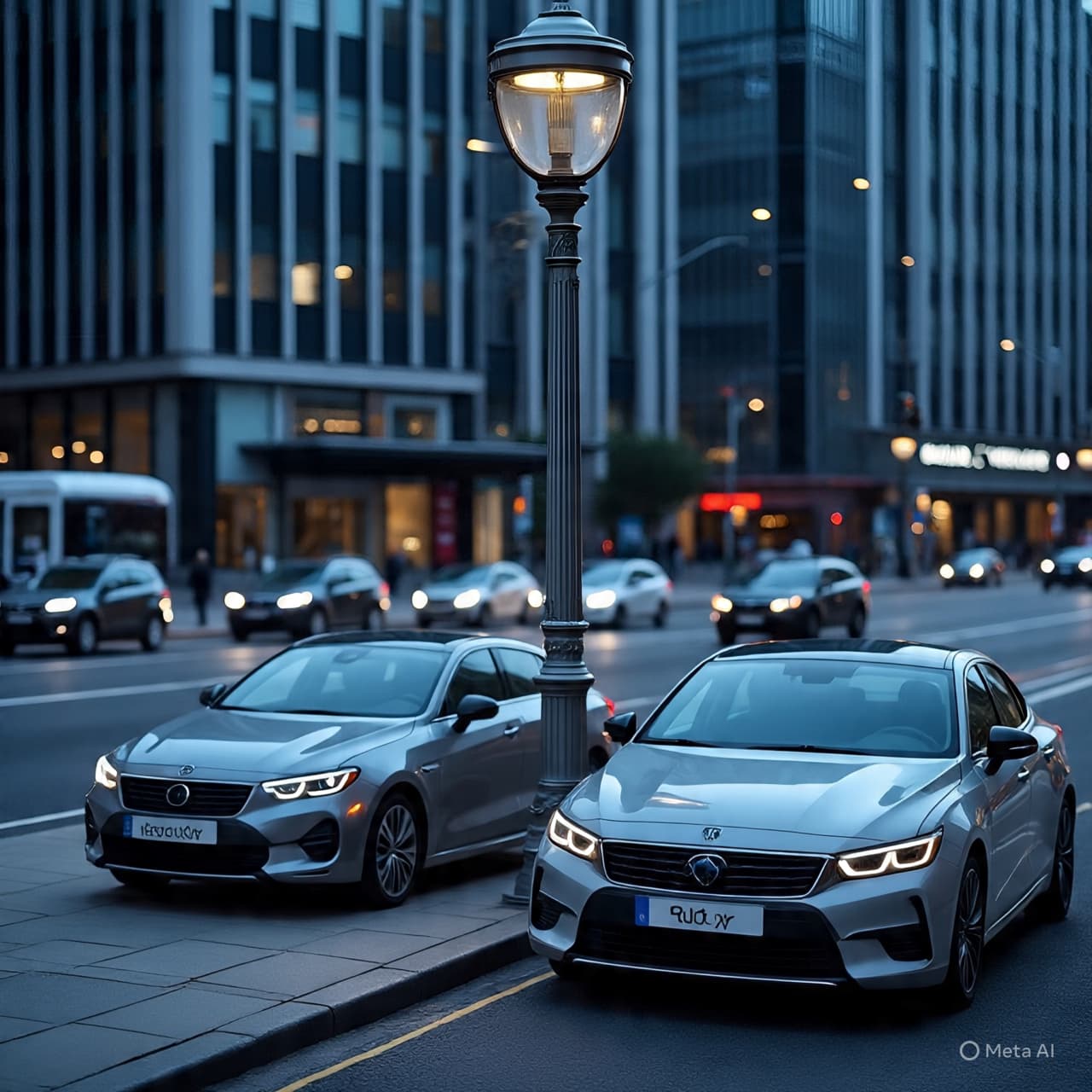
In the quiet hum of London’s streets, a new kind of race is unfolding—not of engines roaring, but of algorithms steering autonomous vehicles with silent precision. Uber, the familiar name that once transformed how we hailed rides, is now testing its agility against both human expectation and corporate competition, partnering with Baidu to trial robotaxis in the heart of the city. It is a moment that feels both inevitable and surreal: the pulse of technology threading through the cobblestones, hinting at a future where mobility is as much about software as steel.
This collaboration between Uber and Baidu is more than a mere experiment; it is a reflection of a global shift in transportation. As Lyft eyes similar trials, the market watches closely, gauging not just technological prowess but investor sentiment. Uber’s stock has responded with an upward tick, a quiet acknowledgment that innovation, even when wrapped in uncertainty, carries a magnetic appeal. The testing in London, a city known for both its charm and complexity, offers fertile ground for understanding how autonomous systems interact with the unpredictability of human traffic, weather, and urban rhythm.
Yet, the story extends beyond stock charts and tech headlines. It raises subtle questions about trust and adaptation: can passengers surrender control to a machine with the same ease they once handed a driver the wheel? Can a city embrace the quiet, almost invisible presence of self-driving vehicles without the friction of skepticism? As Uber and Baidu navigate these trials, the dialogue between human expectation and technological capability continues, each journey a narrative of cautious optimism and careful observation.
For investors, the move signals ambition; for city dwellers, it represents a tentative peek into tomorrow. The implications for urban mobility, labor, and environmental impact linger like soft shadows, reminding us that every innovation carries layers beyond its immediate promise. The quiet streets of London are the proving grounds, not just for vehicles, but for ideas, confidence, and the evolving dance between human experience and machine intelligence.
Ultimately, this chapter in urban transport is unfolding with subtlety. Uber’s gains, Lyft’s pursuit, and Baidu’s engineering together sketch a landscape where technology tests patience as much as potential. The narrative is ongoing, and for those observing, it is a reminder that progress often moves quietly, yet leaves footprints in markets, streets, and daily life alike.
AI Image Disclaimer Visuals are AI-generated illustrations, created for conceptual representation and not actual photographs.
Sources
Reuters Associated Press Bloomberg The Guardian Investor’s Business Daily
Published by Banx Network. This article is part of the Banx decentralized media programme, powered by the BXE token on the XRP Ledger.