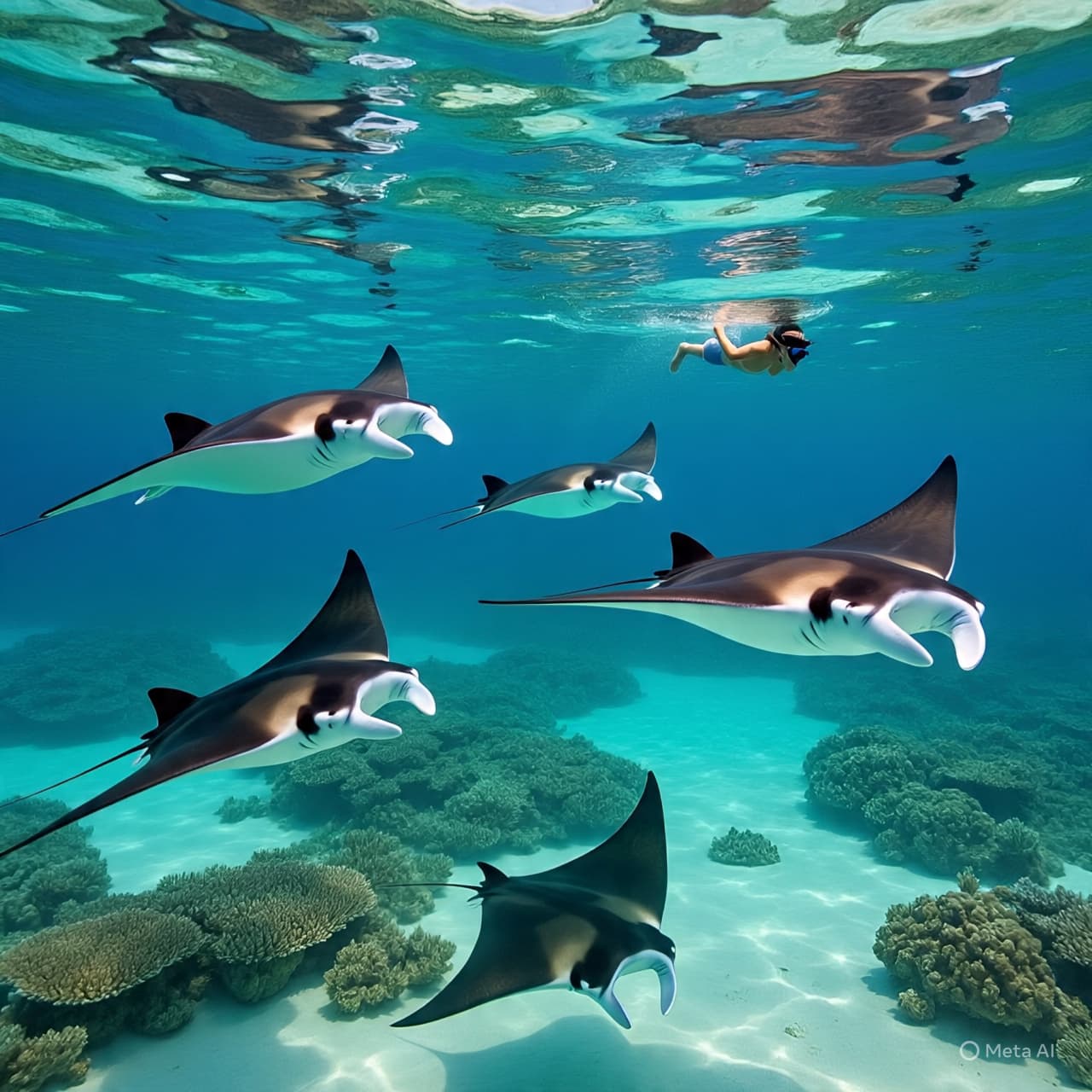
There are moments on this earth that feel like turning a page into a forgotten chapter — where the hush of water and the rhythm of fins create a language all their own. Imagine drifting quietly at the edge of the sunlit shallows, the surface above shimmering like a distant memory, and below you a creature moves with the grace of unfolding silk. In such an encounter, where the sea seems to breathe in gentle motions, we find ourselves not merely observers but humble guests in a realm older than any story we’ve told. Swimming with manta rays is one of those experiences that invites reflection, wonder, and reverence for the subtle poetry of life beneath waves.
Manta rays are among the ocean’s most graceful inhabitants — broad‑winged fish that glide through the water with effortless motion, filter‑feeding on microscopic plankton and sometimes gathering at “cleaning stations” where smaller fish remove parasites from their vast bodies. These gentle giants can grow to impressive breadths, yet they carry no threat to humans; their peaceful presence is a lesson in calm movement and unobtrusive existence. In popular destinations like Nusa Penida near Bali or along the coral‑rich waters of Komodo and the Maldives, snorkelers and divers descend into the blue to share a moment of stillness with these majestic creatures, often seeing them glide within a few meters as if offering a silent greeting.
The experience itself is shaped by a kind of quiet anticipation. Before entering the water, guides often encourage guests to approach with gentle respect — to keep movements calm, to avoid sudden splashes, and to allow the manta rays to choose their proximity rather than chase them. With mask and fins, we become part of the rhythm of the sea, hovering above coral gardens as these winged fish sweep by in graceful arcs, their patterns and colors an ocean tapestry. Some encounters take place by daylight, where sunlight filters through clear blue layers to illuminate the dance below; elsewhere, especially in sites like Hawaii, night dives attract plankton with gentle lights, bringing manta rays up from deeper waters to feed in captivating aquatic choreography.
Despite the breathtaking beauty of these moments, there is an underlying awareness that this connection must be honored with care. Conservation groups and local operators promote codes of conduct — encouraging respectful distance, quiet approaches, and education on the rays’ lives and habitats — so that tourism supports rather than disturbs these fragile ecosystems. Such guidelines remind us that our presence in the sea is not merely for spectacle but for shared stewardship of the marine world.
To swim with manta rays is to step into an invitation from nature to slow down, breathe with the ocean’s cadence, and reflect on the wonders that unfold beyond our everyday horizon. It is an encounter that lingers in memory, not for the thrill of proximity alone, but for the gentle reminder that beauty often speaks in quiet currents, in the unhurried passage of wings through water.
And in the realm of tourism, this offer of connection has practical ripples: destinations from Indonesia to the Maldives host responsible manta‑swimming excursions that blend adventure with marine awareness, welcoming visitors who seek both awe and respect for these remarkable animals.
AI Image Disclaimer Visuals are created with AI tools and are not real photographs.
Source Check (5 credible sources) National Geographic Manta Ray Advocates Hawaii (specialist eco tourism guide) Wanderlust Magazine (travel and nature) Wikipedia — Manta ray (general biology) Visit Maldives / Manta Trust sustainable interaction info
Published by Banx Network. This article is part of the Banx decentralized media programme, powered by the BXE token on the XRP Ledger.