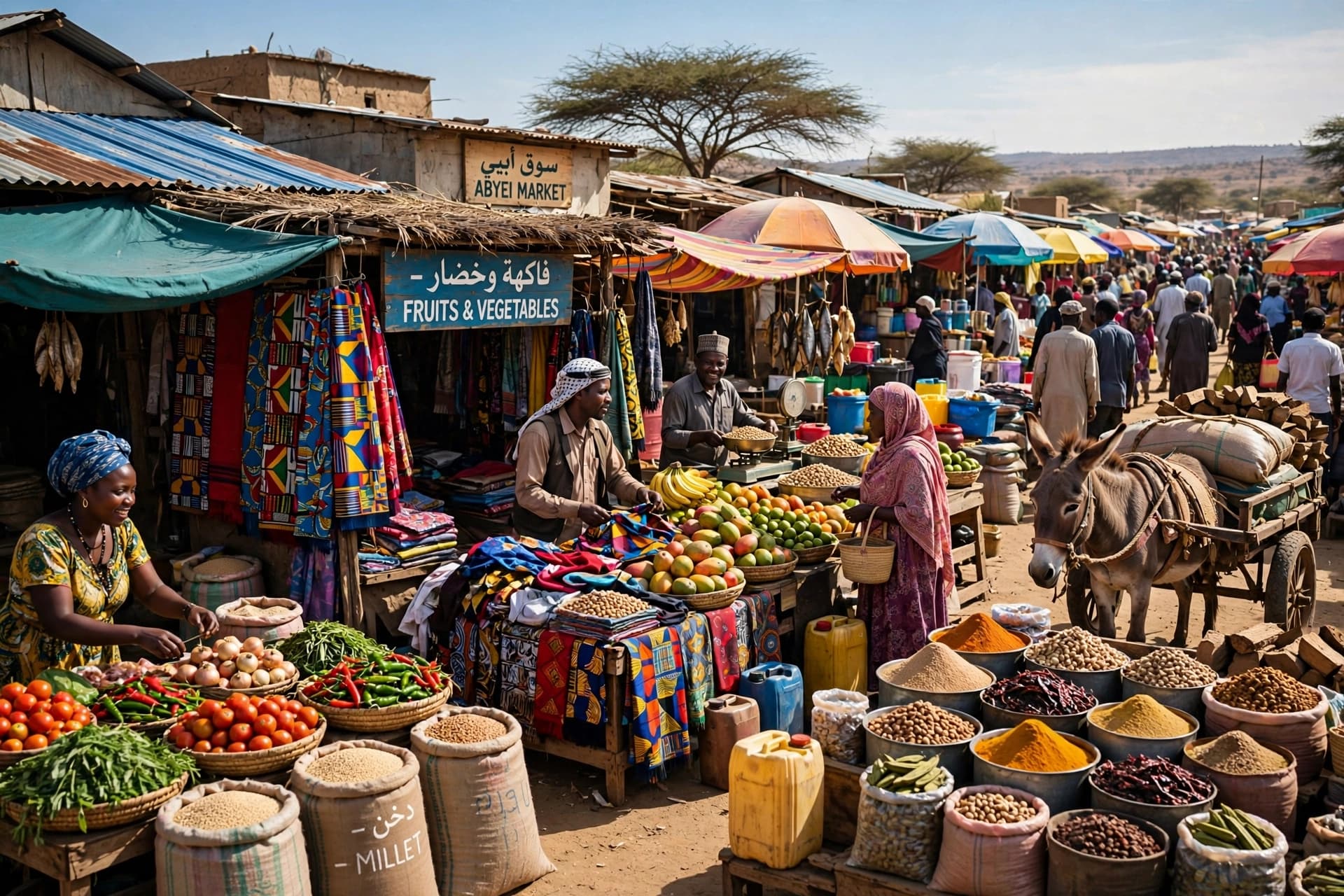
There is a particular cruelty in an attack on a market, a place where people gather not for politics or protest but for the ordinary commerce of survival, for sugar and flour and the small transactions that make a day possible. On Monday, a drone strike hit the Amiet market in the disputed Abyei region between Sudan and South Sudan, killing at least 153 people and wounding dozens more. The death toll is expected to rise as rescue workers continue to recover bodies from the wreckage.
The attack targeted a fuel depot within the market, triggering a massive fire that hindered emergency efforts and left some bodies burned beyond recognition. Abyei's acting information minister, Yohana Akol Ngor, said the victims were buried in two mass graves, one east of the market and another nearby, and that others remained missing. An eyewitness described hearing five large explosions before the fuel depot caught fire, and seeing 28 bodies that had been burned. About 8,000 people were displaced by the attack.
South Sudan accused the Sudanese army of carrying out the strike, and summoned Sudan's ambassador to protest. A Sudanese military source confirmed the army executed the raid, alleging the market functioned as a fuel supply point for the rival Rapid Support Forces, and maintaining that it does not intentionally target non-combatants. The RSF and Sudan's armed forces did not immediately respond to requests for comment.
The attack is part of a broader escalation in Sudan's civil war, which began in April 2023 and has killed tens of thousands and displaced more than 14 million people. Drones have become the primary tactical weapon in the conflict, with both the army and the RSF receiving advanced unmanned aerial systems from foreign allies. The United Nations condemned the strike, with a spokesperson saying the organization remains "alarmed by the relentless drone attacks across Sudan" and the damage they are causing to critical infrastructure and civilian life.
For the people of Abyei, a territory rich in oil and contested for decades, the attack is the latest chapter in a long history of violence that has never fully resolved. The market was a place of exchange, a point where goods and people from both sides of the border met. Now it is a crater of ash and rubble, and the survivors are left to bury their dead and wonder whether the next drone will come for them.
AI Image Disclaimer: The images accompanying this article are generated by artificial intelligence and are intended for illustrative purposes only.
Sources: Australian Broadcasting Corporation, Anadolu Agency, VRT, GBC Ghana Online
Published by Banx Network. This article is part of the Banx decentralized media programme, powered by the BXE token on the XRP Ledger.