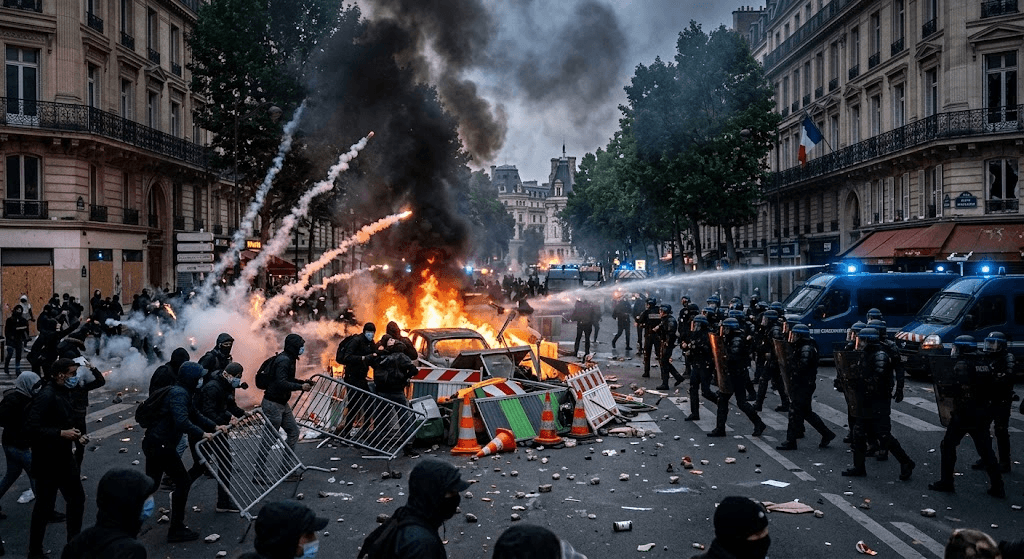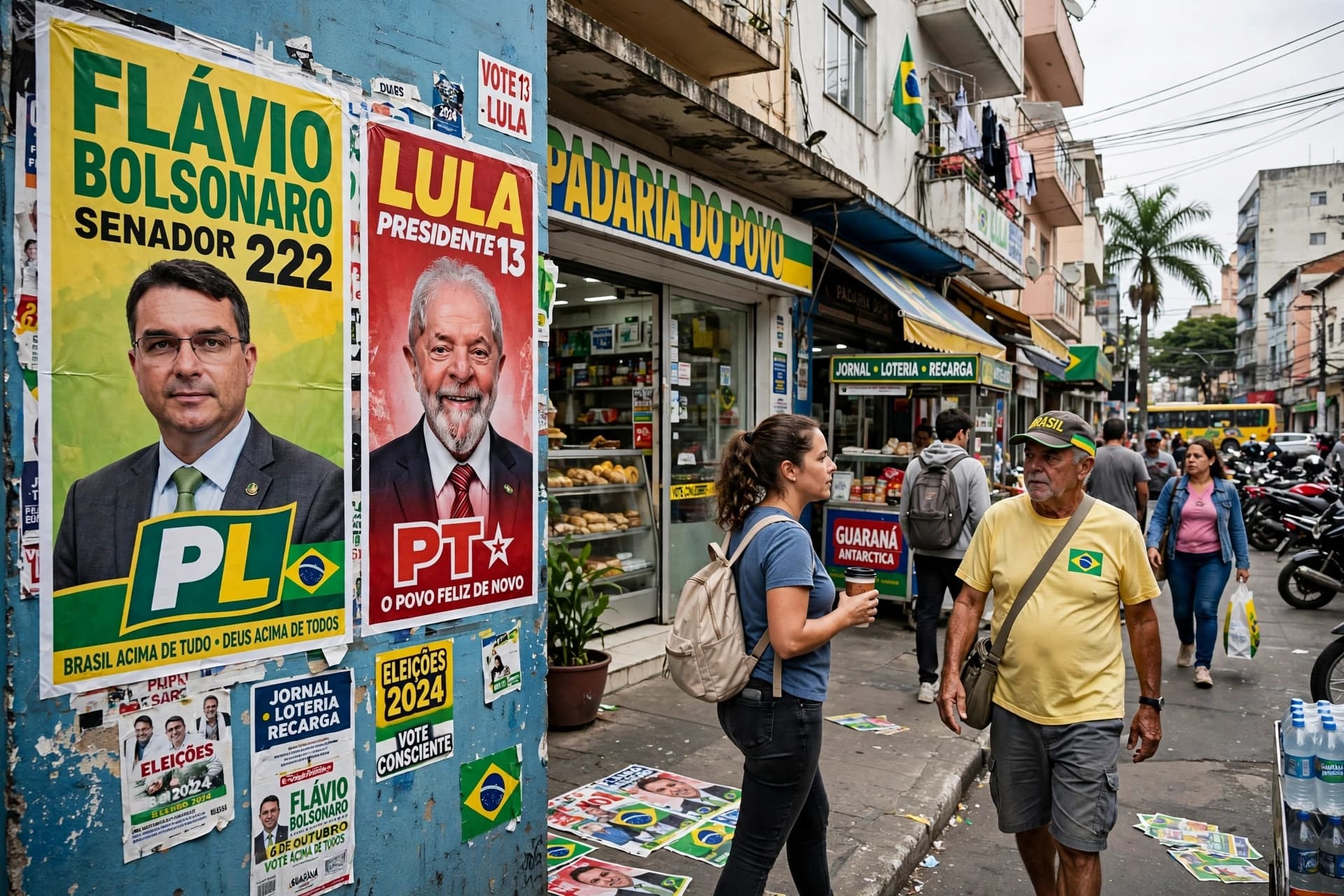
There is a particular surprise that arrives when the polling data has told a different story—a surprise made sharper by the confidence that preceded it, by the assumption that the trajectory was known. In Brazil, that surprise has arrived. Flávio Bolsonaro, the 45-year-old senator and eldest son of the imprisoned former president, won the first round of Brazil's presidential election on Sunday with 47 percent of the vote, defeating incumbent Luiz Inácio Lula da Silva, who received 45 percent. In absolute numbers, Bolsonaro won nearly 2.5 million more votes than Lula—56.1 million to 53.8 million—leaving the 80-year-old president facing a runoff on October 25 that analysts describe as an uphill battle .
The surge was part of a broader rightward shift across Latin America's largest democracy. Bolsonarista candidates won key governorships, including Tarcísio de Freitas in São Paulo and Sérgio Moro in Paraná. The Bolsonaro family itself expanded its footprint: Michelle Bolsonaro, the former first lady, won a Senate seat, as did Flávio's brother Carlos. Two other relatives won seats in the lower house. The Liberal Party now holds 28 of the Senate's 81 seats, and with other hard-right parties, commands a majority of 43. Nikolas Ferreira, a young Bolsonarista social media figure, became the most-voted congressman in Brazilian history with over three million votes .
What drove this shift? Analysts point to several factors. First, security has become the dominant concern for Brazilian voters. A Quaest poll in August found that 33 percent of Brazilians considered violence the country's main problem—more than twice the percentage who mentioned the economy. Flávio Bolsonaro campaigned hard on a tough-on-crime platform, promising to lower the age of criminal responsibility and designate Brazil's largest criminal groups as terrorist organizations . Second, Lula's popularity has eroded. While his first two terms were marked by a commodities boom that funded major social programs, his third term has been defined by polarization and a sense that the Workers' Party has exhausted its capacity for renewal. "The result was a vote for Bolsonarismo and a vote against the Workers' Party," said political scientist Carolina Botelho .
Third, there is the revanchism of the Bolsonaro base. Many of Jair Bolsonaro's supporters believe his conviction for plotting a coup was unjust, and Flávio has positioned himself as the heir to that movement while presenting a more moderate personal style than his father. As VRT journalist Annelies Beck noted, "He is tough on crime and security and criminality are important themes in Brazilian society. His conservative vision of society also appeals to many Brazilians, and he is very pro-business" . The first round was not a victory, but it was a demonstration of strength. The runoff will determine whether the right's momentum carries Flávio Bolsonaro to the presidency—or whether Lula can find the votes to stop it.
AI Image Disclaimer: All images in this article are AI-generated and are intended for illustrative purposes only.
Sources: The New York Times, The Guardian, VRT, CNN, O Globo, O POVO, Agência Brasil
Published by Banx Network. This article is part of the Banx decentralized media programme, powered by the BXE token on the XRP Ledger.