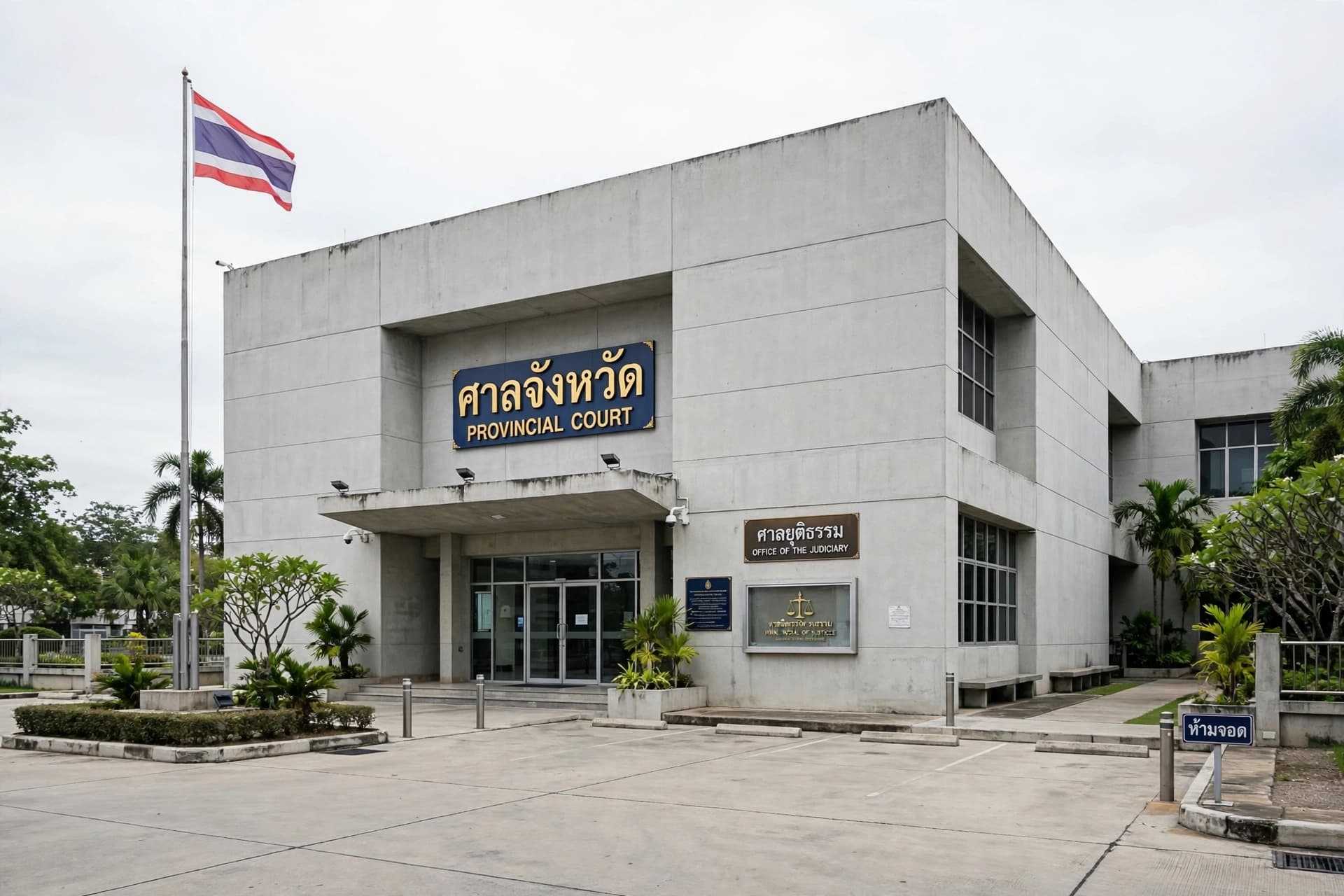
There are rooms where grief and anger must sit quietly side by side, where the protocols of law dictate that sorrow be contained within the boundaries of a courtroom. In Pattaya Provincial Court on Monday, a father traveled nearly six hundred kilometers from Thailand's rural northeast to do what no parent should ever have to do: look directly at the person accused of killing his only child. The distance was measured in miles, but the weight of it was measured in something far less quantifiable.
Simon Peter Carman, a forty-five-year-old Australian, appeared in shackles at the procedural hearing, charged with the premeditated murder of seventeen-year-old Thanchanok Donhomla, known to those who loved her as Cake . The teenager's body had been discovered in a suitcase near railway tracks on the outskirts of Pattaya in late June, days after security footage showed her walking hand-in-hand with Carman into his condominium and, hours later, showed him leaving alone with a large suitcase . On Monday, Carman pleaded guilty to concealing her body but continued to deny the murder charge, insisting that the teenager had threatened him with a knife and that he acted in self-defense .
For Thanchanok's family, the courtroom encounter was the first time they had been permitted to see the accused in person since her death. Her father, Tongchai Donhomla, sat just meters away as Carman repeated his claim that Cake was responsible for her own death . "I feel angry, and got angrier listening to Simon denying the charges, not admitting to the crime, even daring to claim self-defence, saying he was threatened," Donhomla told reporters afterward. "I want to punch him" .
The family's anguish was compounded by what they described as Carman's refusal to apologize. When Thanchanok's cousin, Khanitta Nongkhampoon, confronted him directly after the judge left the courtroom, asking why he had killed her, Carman replied that he had not harmed Cake and did not know how she died . The court heard that an autopsy found the teenager had suffered a broken jaw and died from suffocation and an internal brain injury . "You are so evil, you did wrong but have no remorse," Khanitta told him, according to the Associated Press. "You cannot give us even just an apology" .
The legal proceedings in Thailand carry the weight of ultimate consequence. Premeditated murder carries the possibility of the death penalty, and the family has made clear they will seek the harshest punishment available . They have also filed a civil claim seeking approximately seventy thousand dollars in compensation, though Thanchanok's cousin told the ABC that the lawsuit was never about money. "Nobody wants money from this," she said. "They want the person's life back" . The family's grief, expressed in a language of loss that transcends borders, has become a quiet demand for justice that no verdict may fully satisfy.
Carman, who had been living in Thailand long-term, was arrested at Bangkok's Suvarnabhumi Airport on June 27 as he attempted to board a flight to Australia . He initially denied all charges, claiming he did not know the girl's age and that she had followed him home from the beach . His defense, as presented to the court, rests on the assertion that Thanchanok grabbed a knife during a dispute over money and that her death occurred during a struggle in which he only sought to restrain her .
Monday's hearing was procedural, designating witnesses for trial sessions scheduled for December. But for the family who traveled from Kalasin province, it was something else entirely—a reckoning with the man who, in their eyes, took a daughter, a cousin, a young woman who had gone to Pattaya for a holiday to see the beach and visit friends . Thanchanok had been in the seaside city for only a few days before she died. Her family says she was not a sex worker, and they have rejected characterizations that suggest otherwise .
The courts will reconvene in December, when prosecutors will present witnesses and Carman is expected to testify in his own defense . The family will return, if they are able, to sit in the same room again. For now, they carry what they have been given: a first glimpse of the accused, a plea of guilty to hiding a body, and the long wait for a judgment that may or may not feel like justice. In the space between anger and grief, there is only the slow work of bearing witness.
AI Image Disclaimer: The images accompanying this article are AI-generated and are intended solely for illustrative purposes.
Sources:
· The Age · Associated Press (via The Star) · Nine News · ABC News
Published by Banx Network. This article is part of the Banx decentralized media programme, powered by the BXE token on the XRP Ledger.