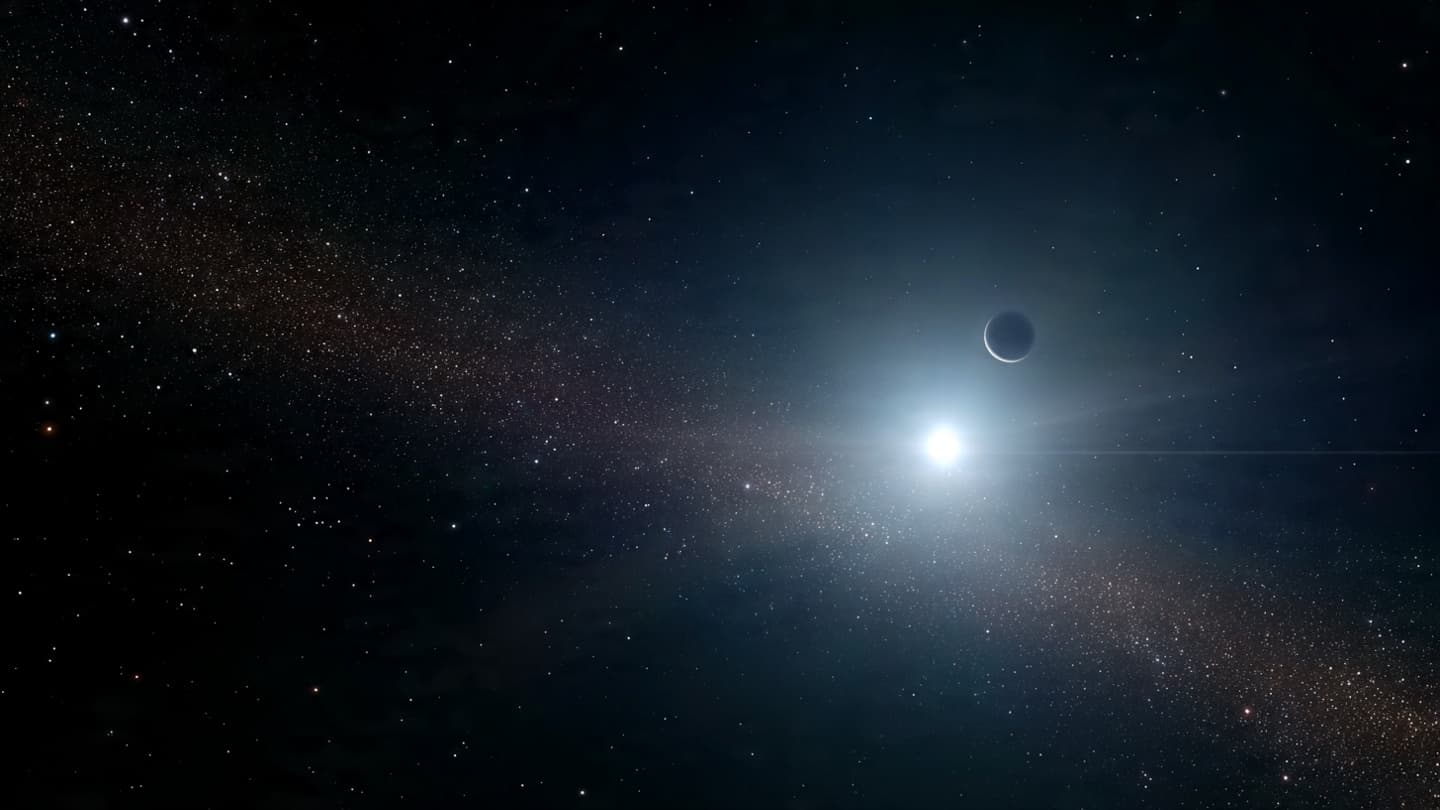
The solar system is often portrayed as a familiar neighborhood of planets, moons, and asteroids. Yet beyond the orbit of Neptune lies a vast frontier where sunlight grows faint and many celestial objects remain only partially understood. It is within this distant realm that astronomers have reported evidence suggesting the presence of a thin atmosphere surrounding a remote object far from Earth.
The finding has attracted attention because atmospheres are typically associated with larger planetary bodies. Discovering even a tenuous gaseous layer around an object in the outer solar system provides scientists with new clues about the behavior and evolution of these distant worlds.
Researchers reached their conclusions through careful observations using advanced telescopes and analytical techniques. By studying how light interacted with the object during specific astronomical events, scientists were able to infer the existence of a surrounding atmospheric layer.
Objects located beyond Neptune experience extremely cold temperatures and unique environmental conditions. As a result, understanding their physical characteristics helps researchers build a more complete picture of the solar system's history.
Scientists believe that thin atmospheres in these regions may be influenced by seasonal changes, surface composition, and interactions with solar radiation. Even subtle variations can offer valuable information about how such bodies evolve over time.
The discovery also highlights the growing capabilities of modern astronomy. Improvements in observational technology have enabled researchers to detect details that would have been extremely difficult to observe only a few decades ago.
Beyond its immediate scientific significance, the finding contributes to broader efforts to understand planetary formation. The outer solar system contains remnants from the early stages of solar system development, making it a valuable area for research.
Astronomers expect additional observations to refine current models and determine how stable the atmosphere may be. Future studies could reveal whether similar characteristics exist on other distant objects as well.
As exploration continues, the outer reaches of the solar system remain a source of discovery. Each new observation helps illuminate regions that once appeared little more than faint points of light in the darkness of space.
AI Image Disclaimer: The accompanying illustration is AI-generated and serves solely as a visual interpretation of the scientific topic discussed.
Sources (Verification Check) NASA European Space Agency (ESA) Nature Astronomy
Published by Banx Network. This article is part of the Banx decentralized media programme, powered by the BXE token on the XRP Ledger.