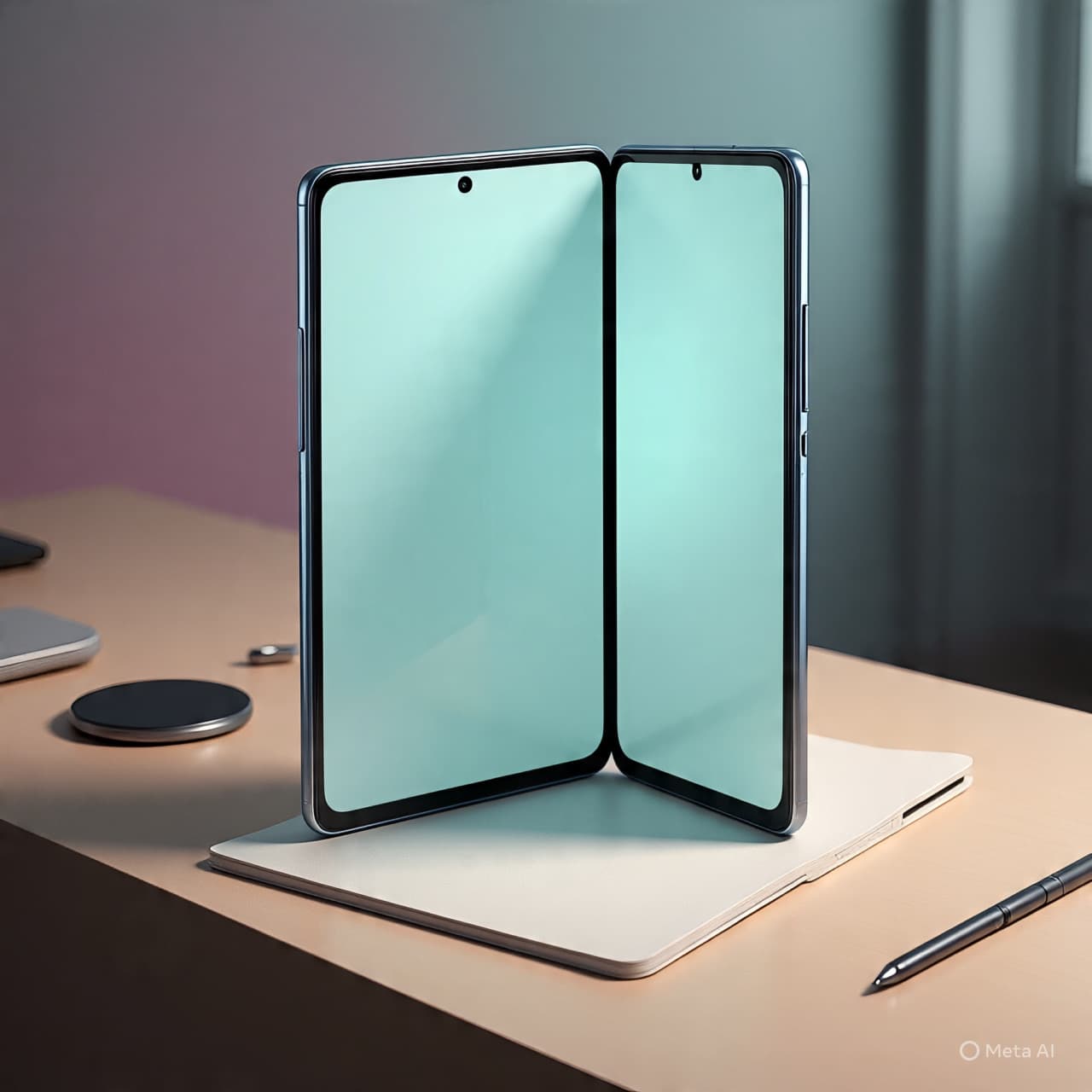
Some mornings begin like any other, with a slow rise of sunlight, a cup of coffee, and the often quiet ritual of checking the world through our screens. But on January 30, 2026, the digital hum was punctuated by an unusual flicker — a device unlike most, a shape that folds not once, not twice, but thrice, seemed to capture the collective imagination. It promised a bridge between the pocketable and the expandable, the familiar and the adventurous. And despite the nearly $3,000 price tag, when the Galaxy Z TriFold became available online, it slipped out of Samsung’s virtual storefront faster than most had expected.
Samsung’s latest foldable — the Galaxy Z TriFold — is a bold testament to the evolving ideas of what a phone can be. With two hinges and three panels, it unfolds into a tablet-like experience with a 10-inch display while folding back into a pocket-ready form. Priced at about $2,899, it stands at the higher end of the smartphone spectrum, a price point that makes many pause before deciding. Yet the very uniqueness of the device seemed to stir something akin to wonder among early adopters, a attraction to novel form that transcends conventional expectations.
Within minutes — some reports suggest as few as 20 — the phone was marked “sold out” across Samsung’s U.S. online channels and select retail options. The quick disappearance sparked conversations about scarcity and demand, innovation and exclusivity. Was it the blend of advanced specs, including expansive screen real estate and high-end camera capabilities, that lured buyers? Or perhaps it was the idea of holding in one’s hand a device that feels like both a phone and a promise of the future.
What’s clear is that this sell-out wasn’t merely about numbers on a price tag; it was about desire — the sort that finds expression in early-morning site visits, the rapid refreshing of web pages, and the collective gasp as the “out of stock” message appears. That such a premium device could vanish so quickly reveals a landscape where novelty can still inspire commitment, even when it asks for a significant investment.
For now, Samsung hasn’t shared how many units were available in this initial launch, leaving room for speculation about supply limits versus consumer enthusiasm. But in the quiet aftermath, the TriFold’s fleeting online presence stands as a gentle reminder: technology’s allure often lies not just in what it costs, but in what it suggests — a glimpse of what might come next.
And as orders are placed for future batches and waitlists grow, the story of the Galaxy Z TriFold continues — not as a headline alone, but as a moment that gently shifts the horizon of possibility in the mobile world.
AI Image Disclaimer
Visuals are created with AI tools and are not real photographs.
Source Check — Credible Reports
Reliable news outlets are reporting on this topic:
PhoneArena — Samsung’s Galaxy Z TriFold sells out despite high price.
Android Central — Rapid sell-out of the Galaxy Z TriFold at ~$2,899 in the U.S.
FilmoGaz — TriFold phone sells out online minutes after launch.
Wirefly — Premium TriFold phone vanishes from shelves quickly.
GeekSpin — Samsung offers Galaxy Z TriFold at $2,899 in U.S. launch.
Published by Banx Network. This article is part of the Banx decentralized media programme, powered by the BXE token on the XRP Ledger.