
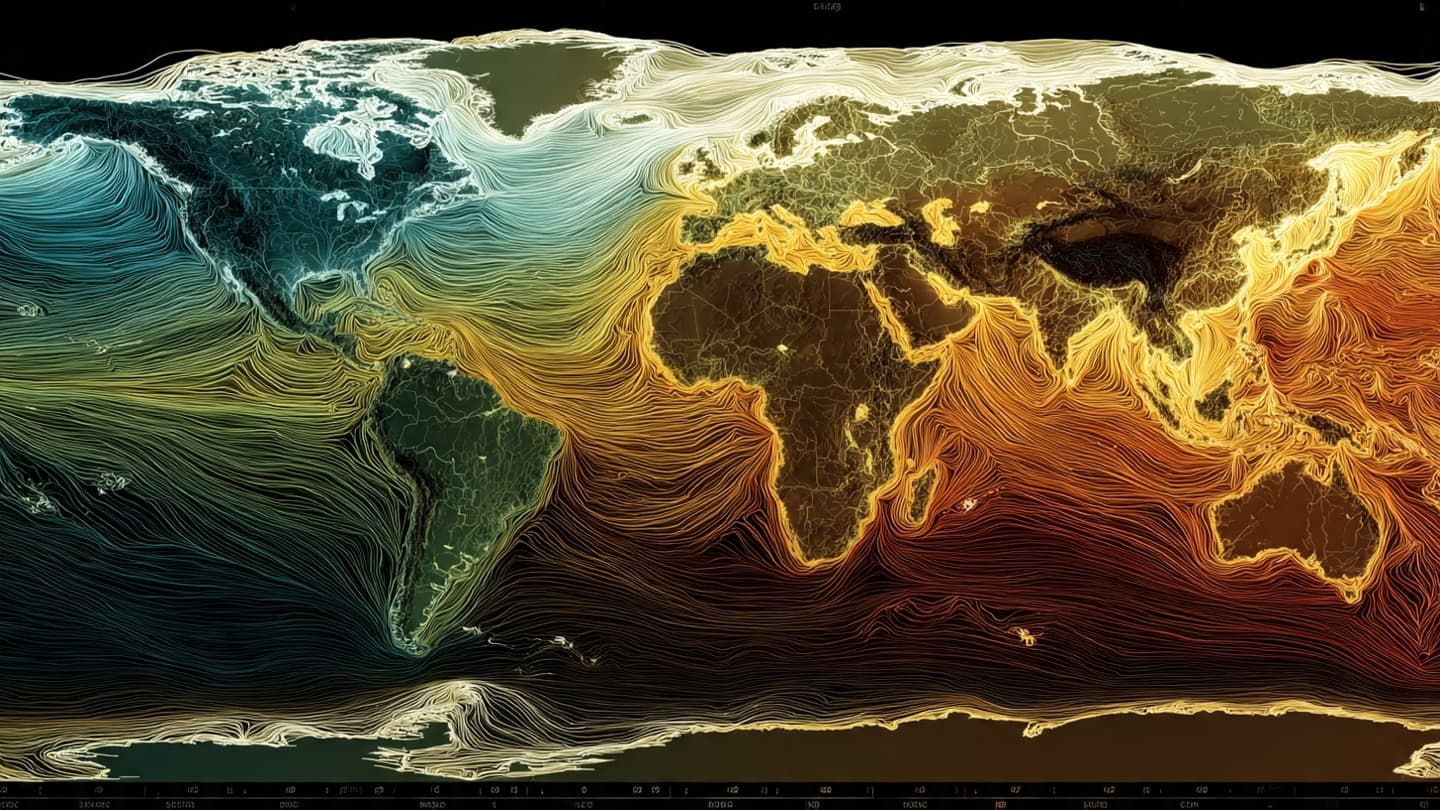
Climate forecasting has always balanced uncertainty with pattern recognition, yet recent projections for 2026 to 2030 suggest a narrowing range of possibilities. The expectation of sustained near-record global temperatures reflects a world increasingly shaped by accumulated atmospheric change.
Body: Meteorological agencies have analyzed ensemble climate models that combine oceanic, atmospheric, and land-surface data. These models consistently show that global temperatures are likely to remain at or near historical highs throughout the next several years.
One of the key drivers behind this projection is the persistence of greenhouse gases already present in the atmosphere. Even if emissions were reduced immediately, the climate system would continue responding to past accumulation due to its inherent inertia.
Ocean heat content also plays a significant role in shaping these forecasts. Large bodies of water absorb and release heat slowly, which means that warming trends can persist even during short-term atmospheric fluctuations.
In addition, natural climate variability such as El Niño and La Niña cycles may amplify or slightly moderate temperatures in individual years, but they do not significantly alter the long-term trajectory. This creates a baseline expectation of sustained warmth with intermittent peaks.
Regional effects are expected to differ widely. Some parts of the world may experience prolonged drought conditions, while others face increased rainfall or storm intensity. These variations underscore the uneven distribution of climate impacts.
Scientists continue to stress the importance of adaptation strategies alongside mitigation efforts. Infrastructure resilience, agricultural planning, and water resource management are increasingly central to national and local policy discussions.
Closing: The forecast for 2026 to 2030 does not present a single dramatic shift, but rather a continuation of a warming pattern already in motion. The significance lies in its persistence, shaping environmental and societal planning across multiple sectors.
AI Image Disclaimer: Visual materials in this article are AI-generated and intended for conceptual illustration.
Sources (media names only): Reuters, Met Office UK, NOAA, World Meteorological Organization, Science Daily
Published by Banx Network. This article is part of the Banx decentralized media programme, powered by the BXE token on the XRP Ledger.



