
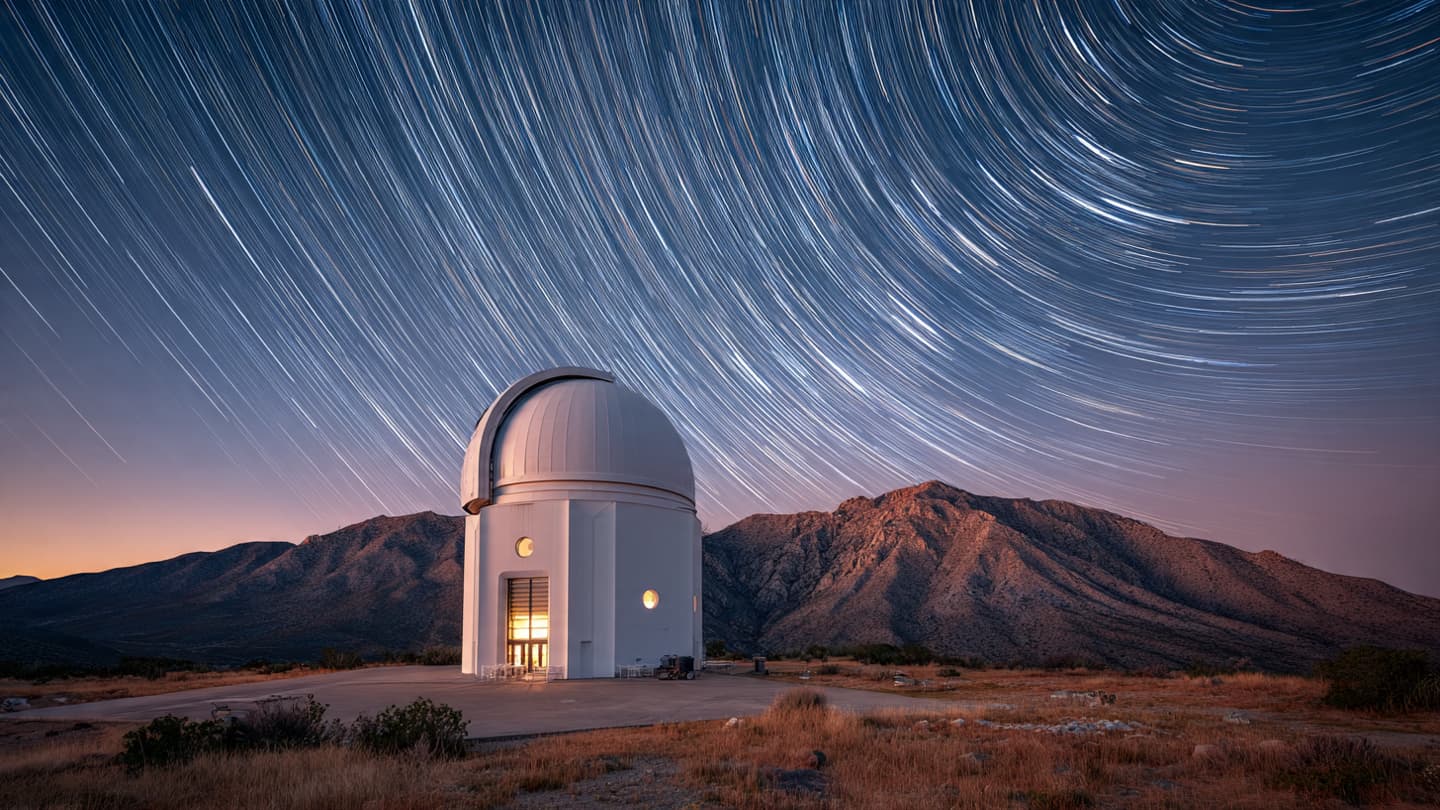
Humanity has long observed the heavens as if gazing at a still painting. Yet the universe is not motionless. Stars explode, asteroids drift, and galaxies evolve across timescales both brief and immense. The Vera C. Rubin Observatory's ambitious time-lapse survey aims to capture this cosmic motion in unprecedented detail.
Scientists expect Rubin Observatory's decade-long Legacy Survey of Space and Time to transform astronomical research by repeatedly imaging the southern sky and creating an extensive time-lapse record of the universe.
Unlike traditional astronomical surveys that capture isolated observations, Rubin's project will continuously revisit the same regions of the sky over ten years. This approach will allow researchers to track changes across billions of celestial objects.
The resulting dataset is expected to include approximately 20 billion galaxies and countless stars, asteroids, and transient phenomena. Researchers believe this comprehensive archive will become one of the most valuable resources in modern astronomy.
One major scientific objective involves investigating dark matter and dark energy, two poorly understood components believed to comprise most of the universe. By observing the distribution and motion of galaxies, astronomers hope to refine existing cosmological models.
The survey will also strengthen planetary defense initiatives by identifying and tracking near-Earth asteroids. Scientists anticipate the discovery of millions of previously unknown solar system objects throughout the mission.
Time-domain astronomy represents another important area of research. Supernovae, variable stars, black hole activity, and other transient events can now be studied on scales previously unattainable through conventional observing strategies.
The project's enormous data output presents significant computational challenges. Advanced algorithms and artificial intelligence systems are being developed to classify and prioritize observations in near real time.
Researchers emphasize that many of Rubin Observatory's most important discoveries may involve phenomena that scientists have not yet anticipated. History has repeatedly shown that new observational capabilities often reveal entirely unexpected aspects of the universe.
As preparations continue, the time-lapse universe project stands as a testament to humanity's enduring curiosity and its desire to understand the dynamic cosmos surrounding our planet.
AI Image Disclaimer: The visual materials associated with this article are AI-generated and intended solely for illustrative purposes.
Sources Verified: Vera C. Rubin Observatory, Max Planck Society, National Science Foundation, Reuters
Published by Banx Network. This article is part of the Banx decentralized media programme, powered by the BXE token on the XRP Ledger.



