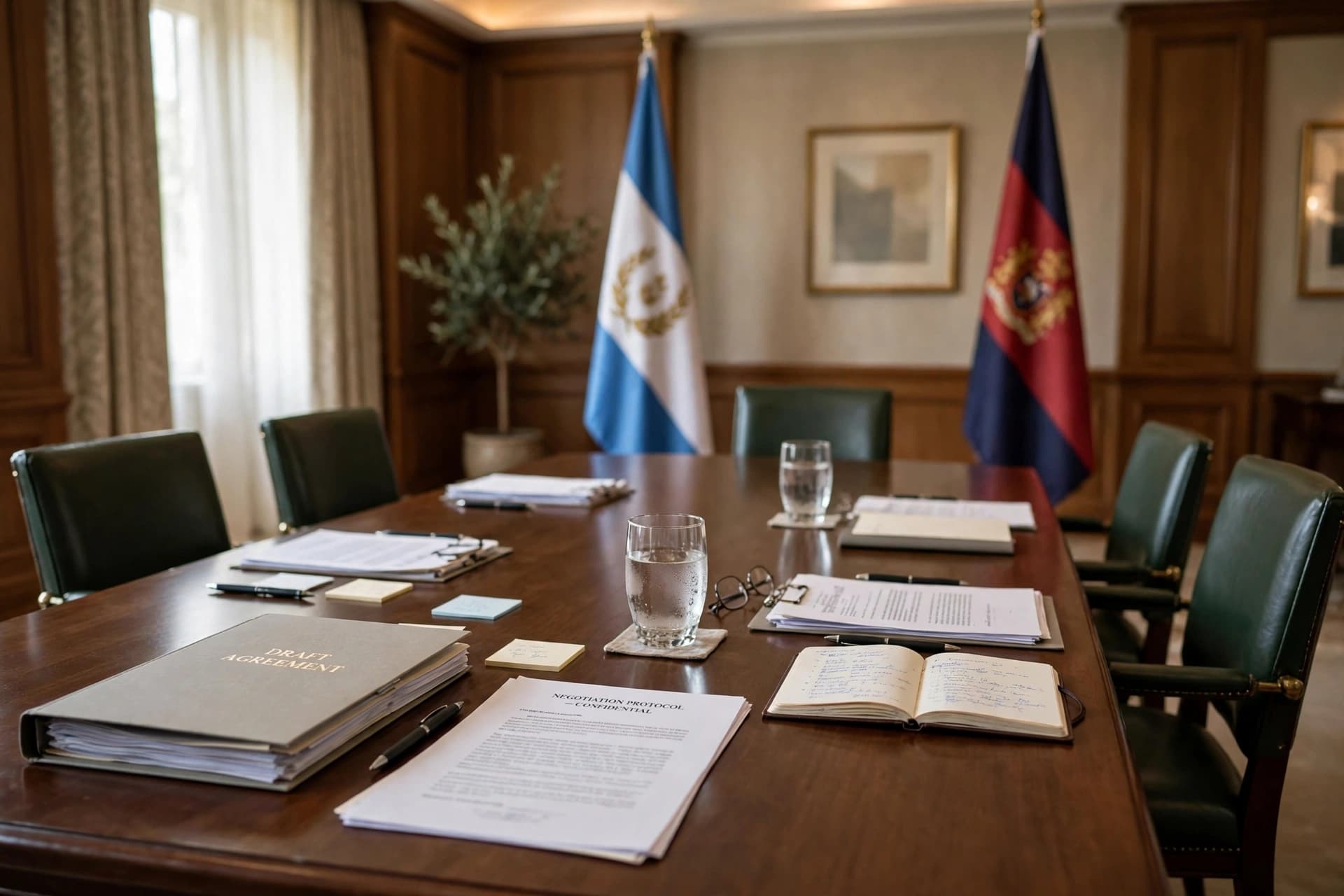
There is a particular kind of exhaustion that comes from negotiating with someone who holds all the leverage and knows it. For months, Canadian cabinet ministers have been engaged in trade talks with the United States, and the reports that have emerged from those conversations suggest a mood that is less hopeful than resigned. The phrase one minister used, speaking on condition of anonymity, was "now or maybe never"—a description of the window, not of the outcome .
The skepticism is not about whether President Donald Trump wants a deal. Several ministers told CTV News they believe he does, driven by political pressure from the midterms and the auto tariffs that have become a flashpoint in Senate races in states like Michigan . The doubt is whether he is capable of making the concessions Canada needs. The red lines are clear: auto tariffs, French language and culture, and Canada's ability to trade with other countries. Sources expect movement on the latter two. Autos remain the hardest .
Two ministers described the message from "the centre" as a reminder that "there's a window" and an instruction to stay disciplined . But others were less certain that Canada should hand Trump any kind of win before the midterms. One noted that the president has not stopped his rhetoric on Canada, including a claim at a Michigan rally that Canada has been "ripping off" the United States for years, without evidence .
The deeper problem, as multiple sources described it, is trust. The abrupt end to negotiations in August, followed by additional U.S. tariffs on August 22, led Prime Minister Mark Carney to accuse the White House of launching a trade "war" and to suggest that America signs agreements "in pencil" . When asked this week whether he trusts Trump to sign in pen this time, Carney said he did not know, and would not say whether he trusts the president . That is not the language of partnership. It is the language of a relationship that has been damaged and may not be repaired.
Adding to the unease was a report that U.S. Ambassador Pete Hoekstra told an off-the-record business lunch that Canada could be blamed if midterm results in Michigan and Maine go against the president . The embassy said the comments were taken out of context but declined to elaborate. For Canadian officials, the remark, if accurately reported, captures the difficulty of the position: even if a deal is reached, there is no guarantee it will hold, and if no deal is reached, things could get worse .
The ministers who spoke to CTV News conveyed a skepticism that is not cynical but weary. One said there are "too many free radicals" on the American negotiating team compared with Trump's first term. Another said simply, "the trust is gone" . These are not the words of people who believe a breakthrough is imminent. They are the words of people who understand that the window, if it exists, is narrow, and that the consequences of missing it are not abstract.
For Canada, the calculation is uncomfortable. A deal with uncertain durability may be better than no deal at all. But a deal that cannot be trusted is not a foundation; it is a temporary shelter. The ministers know this. The Prime Minister knows this. And the window, whatever its size, is not something Canada controls.
Image note: The images in this article were generated using artificial intelligence and do not depict the actual individuals or meetings described.
Sources: CTV News, CP24
Published by Banx Network. This article is part of the Banx decentralized media programme, powered by the BXE token on the XRP Ledger.