The first glimpse of a distant world often arrives not with dramatic motion, but with quiet light. Against the darkness of space, a thin crescent slowly widens, revealing the familiar outline of Mars from an entirely new perspective. It is a reminder that exploration is as much about patience as it is about discovery, with each image marking another step along a much longer journey.
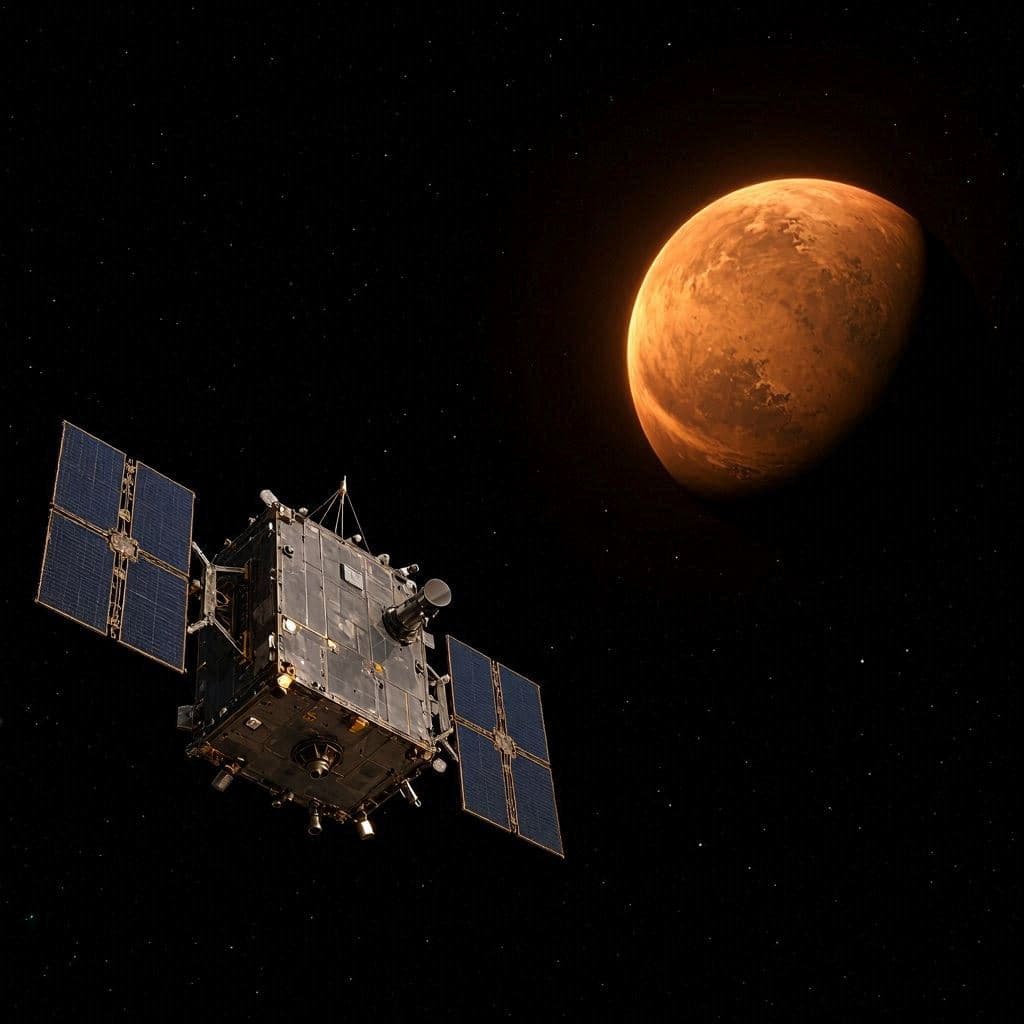
NASA recently released a composite image captured by its Psyche spacecraft during its approach to Mars between May 2 and May 15, 2026. The sequence shows the illuminated crescent of the Red Planet gradually expanding as the spacecraft drew closer for a carefully planned gravity-assist flyby.
The images were obtained using Psyche's multispectral imager, which documented Mars from a high phase angle. Because the spacecraft approached from the planet's night side, only a slender portion of the Martian surface reflected sunlight toward the camera, creating a delicate crescent rather than a fully illuminated disk.
As the spacecraft continued its approach, Mars gradually filled more of the camera's field of view. Eventually, the planet became too large for a single full-frame image, allowing the mission team to transition from distant observations to detailed, high-resolution views of the Martian surface and atmosphere.
The flyby served an essential engineering purpose beyond producing striking imagery. Mars' gravity accelerated the spacecraft and adjusted its flight path, enabling Psyche to continue its journey toward the metal-rich asteroid Psyche while conserving onboard propellant. This gravitational assist is a common yet highly precise technique used in deep-space exploration.
Mission scientists also used the encounter to calibrate the spacecraft's scientific instruments. Observations collected during the flyby provide valuable opportunities to refine imaging techniques and verify instrument performance before Psyche begins its primary scientific investigation after arriving at its asteroid destination, currently planned for 2029.
By combining the images captured before, during, and after the closest approach, NASA created a time-lapse sequence illustrating the changing appearance of Mars throughout the encounter. Beyond its visual appeal, the sequence documents the geometry of the spacecraft's trajectory and demonstrates the capabilities of its onboard imaging system.
As Psyche continues its voyage through the solar system, the growing crescent of Mars stands as both a scientific record and a visual milestone. The mission now proceeds toward its primary destination, where researchers hope to deepen understanding of one of the solar system's most unusual metallic worlds.
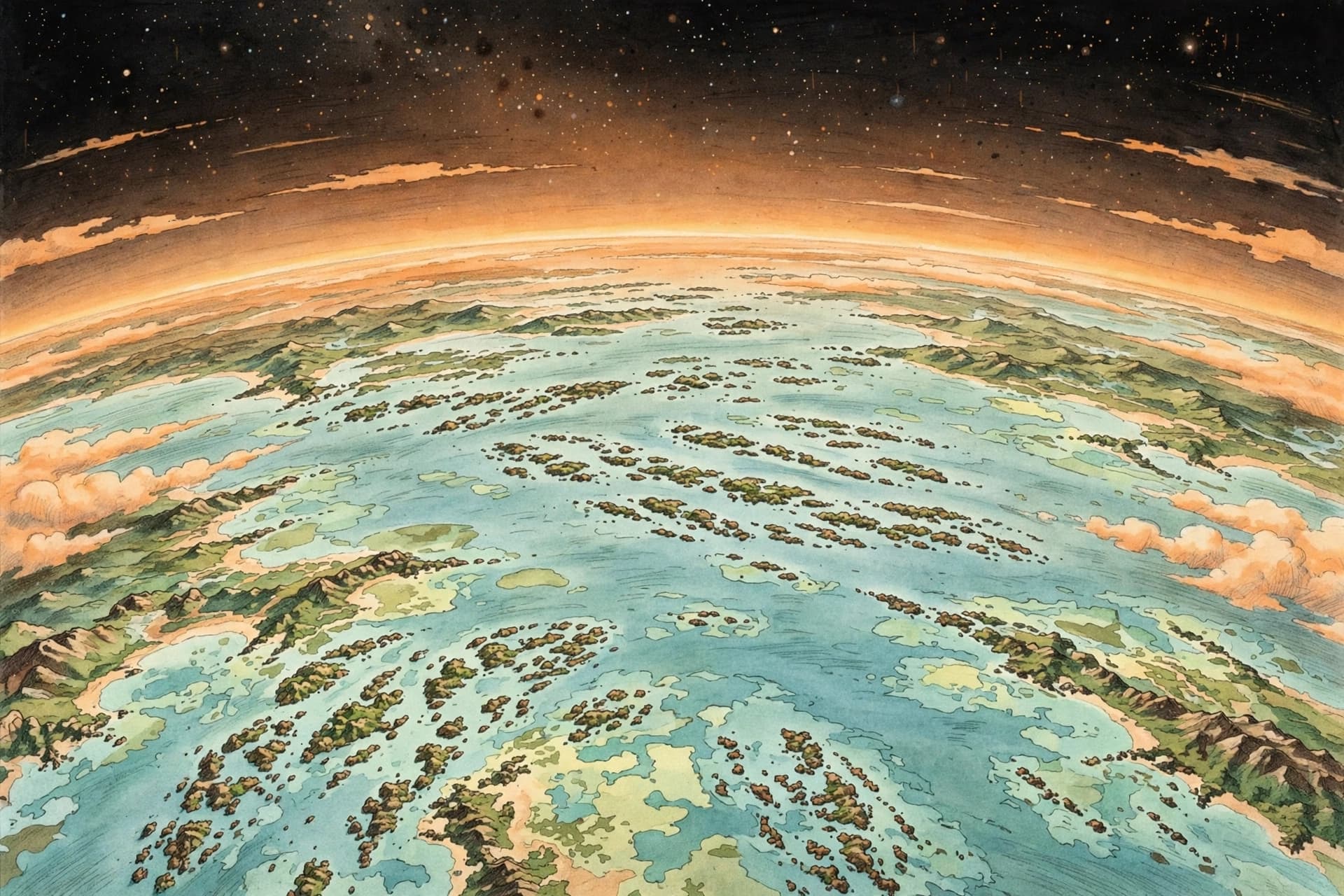
AI Image Disclaimer: The accompanying visuals are AI-generated illustrations inspired by verified scientific information and are not actual mission photographs.
Sources (verified):
NASA NASA Jet Propulsion Laboratory (JPL) NASA Science Reuters Phys.org
Published by Banx Network. This article is part of the Banx decentralized media programme, powered by the BXE token on the XRP Ledger.