There is a profound quiet that settles over a riverbed, a stillness that belies the turbulent history buried beneath its stones. In the gentle flow of a California creek, time seems to move slowly, washing over sediment and secrets alike. Yet, within this serene landscape, a discovery has emerged that bridges the gap between the present moment and a distant, frozen past, reminding us that history is often just beneath our feet.
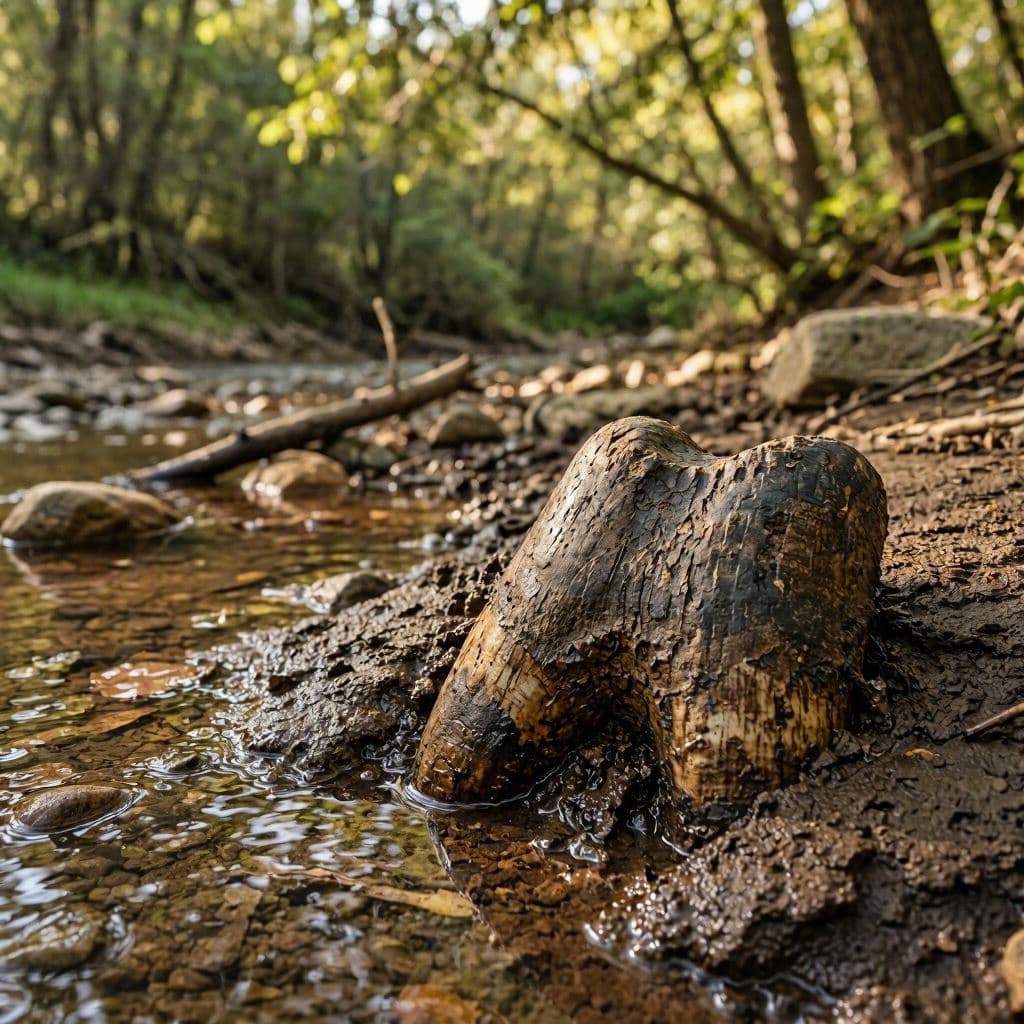
A hiker’s keen eye spotted something unusual protruding from the bank—a large, weathered object that did not belong to the modern world. Upon closer inspection, it was revealed to be a massive tooth, preserved against the odds by the cool, anaerobic conditions of the creek bed. This was no ordinary fossil; it was a relic from the Ice Age, belonging to a mastodon, a creature that once roamed these very lands thousands of years ago.
The discovery sends a ripple of excitement through the paleontological community, not just for its size, but for what it represents. Mastodons were giants of their time, shaping the ecosystems they inhabited with their immense presence. Finding such a well-preserved specimen in California offers a tangible connection to a era when the climate was drastically different, and the landscape was home to megafauna that have long since vanished.
Experts from local universities and museums have been called in to carefully excavate the tooth. The process is delicate, requiring precision to ensure that no further damage occurs to the fossil or the surrounding stratigraphy. Each layer of soil holds clues about the environment at the time of the mastodon’s death, providing scientists with data on ancient climates, vegetation, and even the causes of extinction.
For the local community, the find is a source of pride and curiosity. It transforms a familiar hiking trail into a site of historical significance, inviting people to look at their surroundings with new eyes. The creek is no longer just a place for leisure; it is a window into deep time, a reminder that the earth beneath us holds stories far older than human memory.
The identification of the tooth as belonging to a mastodon rather than a mammoth is significant. While often confused, these two species had different dietary habits and habitats. Mastodons were browsers, feeding on trees and shrubs, which suggests that the area around the creek was once a forested environment, quite different from the chaparral and oak woodlands seen today.
As the tooth is prepared for study and eventual display, it serves as an educational tool, inspiring a new generation of scientists and nature enthusiasts. It underscores the importance of preserving natural spaces, not just for their ecological value, but for their historical richness. Every stone, every bone, has a story to tell if we are willing to listen.
The images accompanying this report are AI-generated visualizations created to illustrate the narrative context.
Sources: Live Science, CBS News Sacramento, The Guardian, ABC7 News, KTLA 5
Published by Banx Network. This article is part of the Banx decentralized media programme, powered by the BXE token on the XRP Ledger.