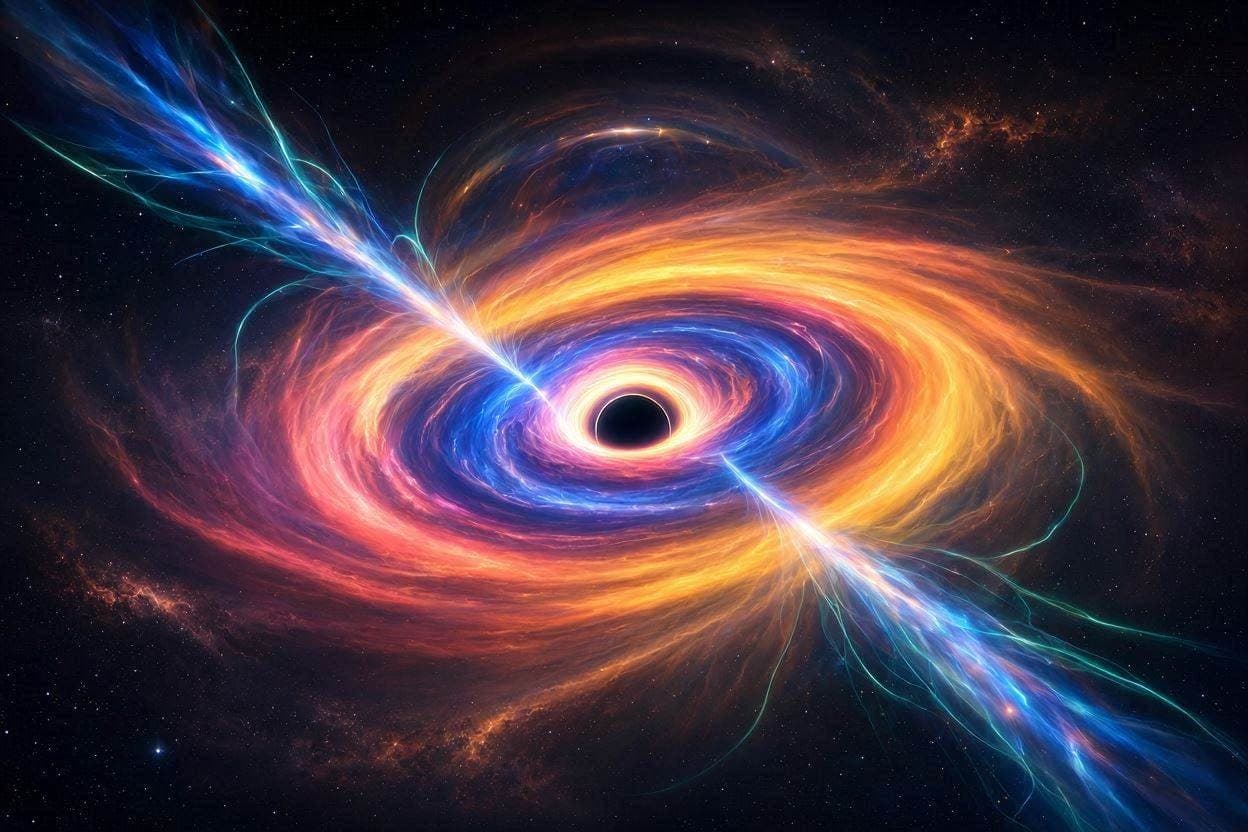
In the vast silence of space, black holes are often perceived as solitary consumers, pulling matter into their infinite depths. Yet, recent observations reveal that they are also powerful engines of creation and destruction, capable of sending shockwaves across cosmic distances. A team of astronomers has discovered that winds generated by supermassive black holes can extend up to 300,000 light-years, a scale that dwarfs entire galaxies and reshapes our understanding of their influence on the universe.
The discovery, based on high-precision observations from the Subaru Telescope and other facilities, shows that these outflows carry energy far beyond the immediate vicinity of the black hole. Previously, such winds were thought to be confined to smaller regions, but this finding suggests they play a significant role in regulating star formation and gas distribution on a galactic scale. The sheer magnitude of the blast challenges existing models of black hole feedback.
Researchers studied a quasar located 3.4 billion light-years from Earth, analyzing the spectrum of light from the surrounding gas. They found evidence of high-velocity winds pushing material outward at tremendous speeds. These winds are driven by the intense radiation and magnetic fields near the black hole, creating a pressure that sweeps through the interstellar medium like a cosmic broom.
The impact of these blasts is profound. By clearing out gas, they can suppress the birth of new stars, effectively putting a brake on galaxy growth. Conversely, in some cases, the compression of gas clouds by these winds might trigger star formation in distant regions. This dual role highlights the complex relationship between black holes and their host galaxies, a dynamic that is central to galaxy evolution.
The scale of 300,000 light-years is particularly striking, as it extends well beyond the visible disk of many galaxies. This means that the influence of a central black hole is not limited to its immediate neighborhood but reaches into the circumgalactic medium, affecting the broader ecosystem of the galaxy group. It underscores the interconnectedness of cosmic structures.
These findings also provide clues about the early universe. If such powerful outflows were common in the past, they may have played a crucial role in shaping the first generations of galaxies. Understanding this process helps astronomers reconstruct the history of cosmic structure formation, from the dark ages to the present day.
Future observations with next-generation telescopes will aim to map these winds in greater detail, determining their frequency and variability. By studying more quasars, scientists hope to build a comprehensive picture of how black holes interact with their environments over billions of years. Each discovery adds a piece to the puzzle of cosmic evolution.
The detection of a black hole blast reaching 300,000 light-years is a reminder of the immense power hidden in the centers of galaxies. As we continue to explore these phenomena, we gain a deeper appreciation for the forces that shape the universe on the grandest scales.
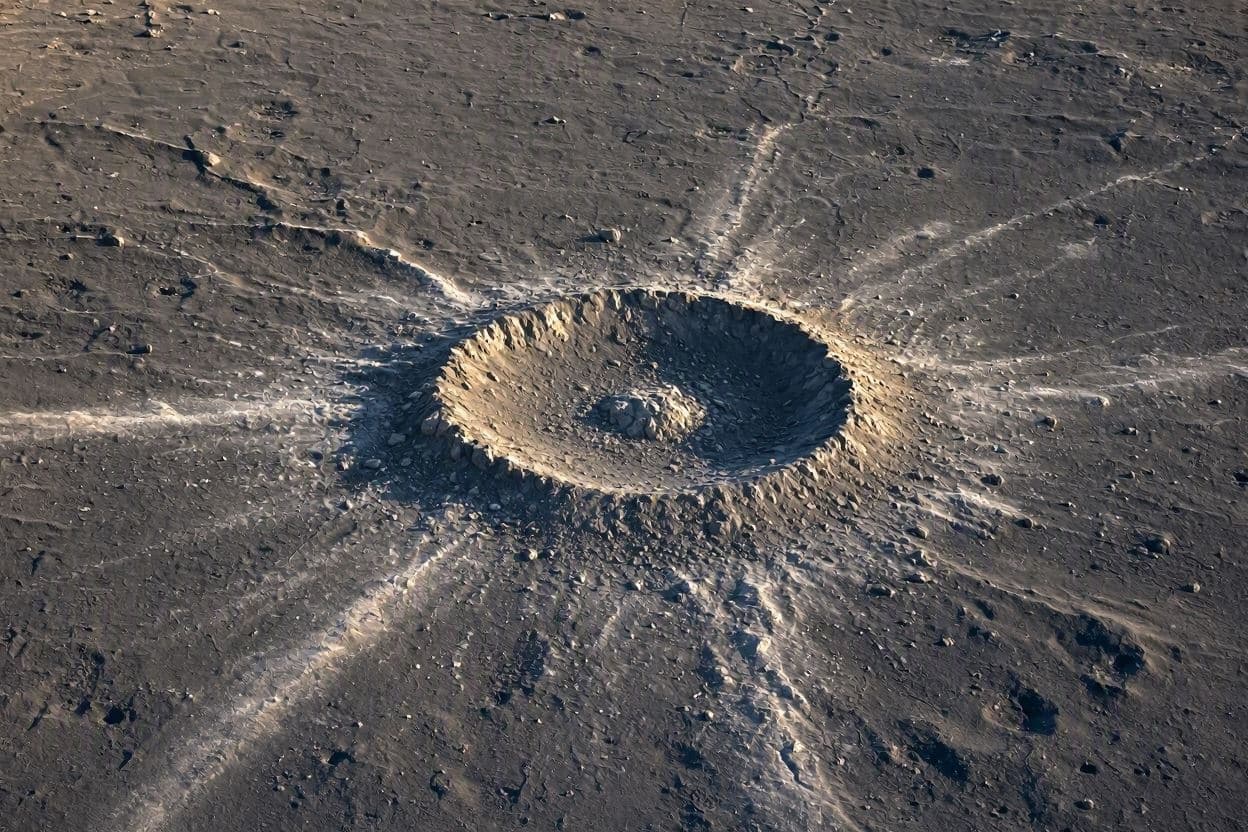
AI Image Disclaimer: Please note that the images in this piece are AI-generated illustrations created to depict the themes of astrophysics and black hole dynamics.
Sources: Phys.org, Tohoku University, JAXA, Nature Astronomy
Published by Banx Network. This article is part of the Banx decentralized media programme, powered by the BXE token on the XRP Ledger.