We often imagine our galaxy as a stable, rotating disk of stars, a celestial carousel spinning with predictable grace. Yet, recent astronomical research suggests that the Milky Way has not always been so composed. Evidence indicates that billions of years ago, our home galaxy underwent a dramatic flip, tilting its orientation relative to the surrounding universe. This discovery invites us to reconsider the dynamic history of the cosmos, reminding us that even the grandest structures are subject to violent change and gravitational persuasion. It is a story of cosmic turbulence written in the positions of ancient stars.
Body: The key to uncovering this past event lies in the study of stellar streams—long trails of stars left behind by smaller galaxies that were torn apart and absorbed by the Milky Way. By mapping the positions and movements of these stars, astronomers have reconstructed the galaxy’s evolutionary timeline. The data reveals a period roughly seven to ten billion years ago when the Milky Way’s disk tilted significantly, altering its angle relative to the galactic halo.
This "flip" was likely caused by a massive collision with a satellite galaxy, possibly the progenitor of the Sagittarius Dwarf Spheroidal Galaxy. Such mergers are common in the life of large galaxies, but the scale of this particular impact was sufficient to disrupt the Milky Way’s equilibrium. The gravitational tug-of-war pulled the disk out of alignment, creating a wobble that persisted for millions of years before settling into its current plane.
Understanding this tilt helps explain anomalies in the distribution of dark matter and the motion of stars in the outer reaches of the galaxy. For decades, certain orbital patterns seemed inconsistent with standard models. The flip provides a coherent explanation, linking disparate observations into a single narrative of interaction and adjustment. It demonstrates how external forces can reshape internal structures.
The implications extend beyond our own galaxy. If the Milky Way experienced such a dramatic reorientation, it is likely that other spiral galaxies have undergone similar transformations. This insight enriches our understanding of galaxy formation, suggesting that stability is often the result of long-term settling after periods of chaos. It paints a picture of a universe that is constantly in flux.
Modern telescopes, such as Gaia, have been instrumental in this discovery. By precisely measuring the positions and velocities of over a billion stars, Gaia has provided the three-dimensional map necessary to detect subtle historical shifts. This technological leap allows astronomers to look back in time, reading the fossil record of the galaxy through the motion of its stars.
For the public, this finding adds a layer of drama to our cosmic address. We live in a galaxy that has survived cataclysmic events, emerging stronger and more structured. It fosters a sense of resilience, connecting human existence to the enduring nature of the universe. We are inhabitants of a survivor.
Closing: The revelation of the Milky Way’s dramatic flip reshapes our understanding of galactic history. It highlights the violent yet creative processes that shape the cosmos. As we continue to map the stars, we uncover more chapters of this epic story, deepening our appreciation for the dynamic universe we call home.
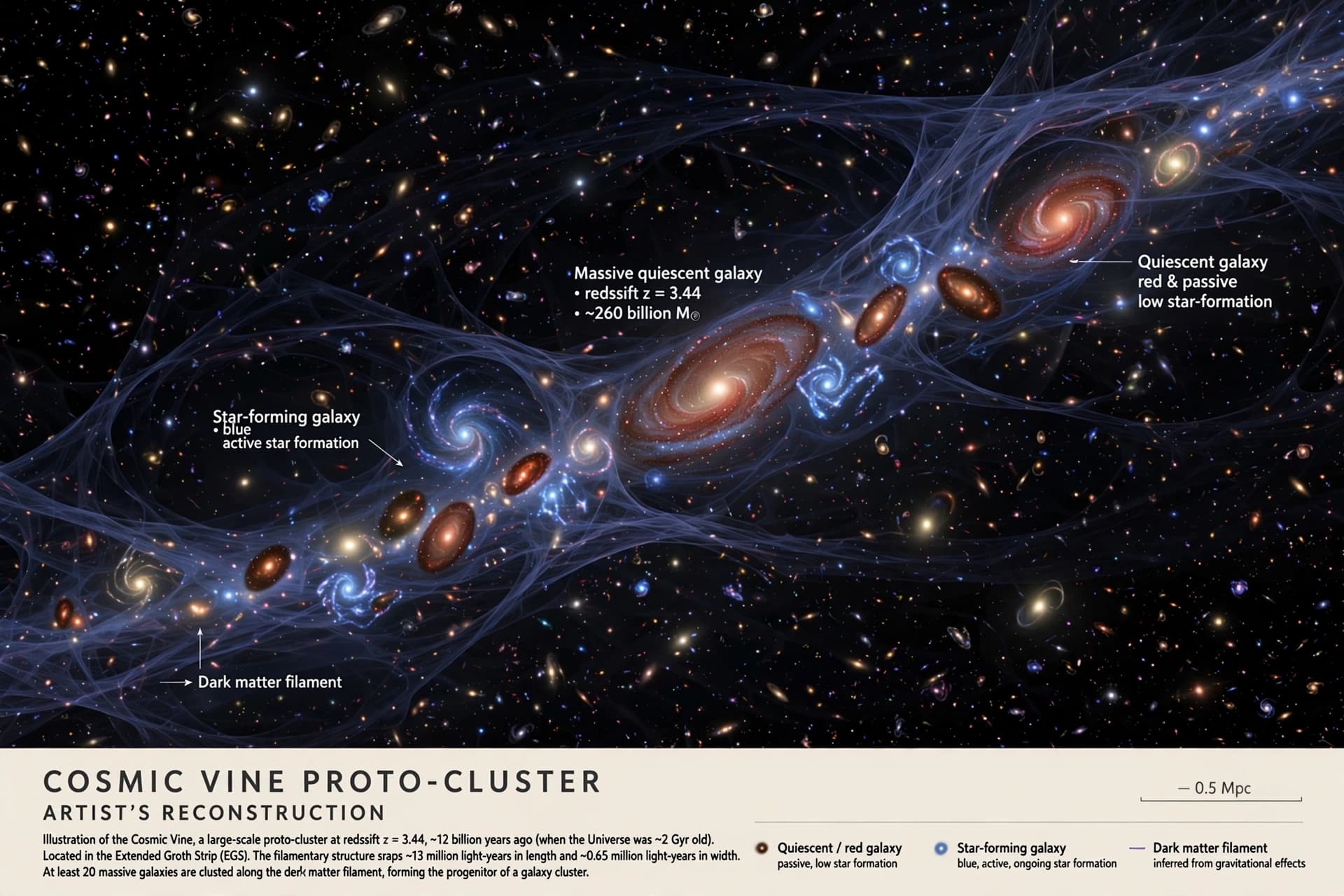
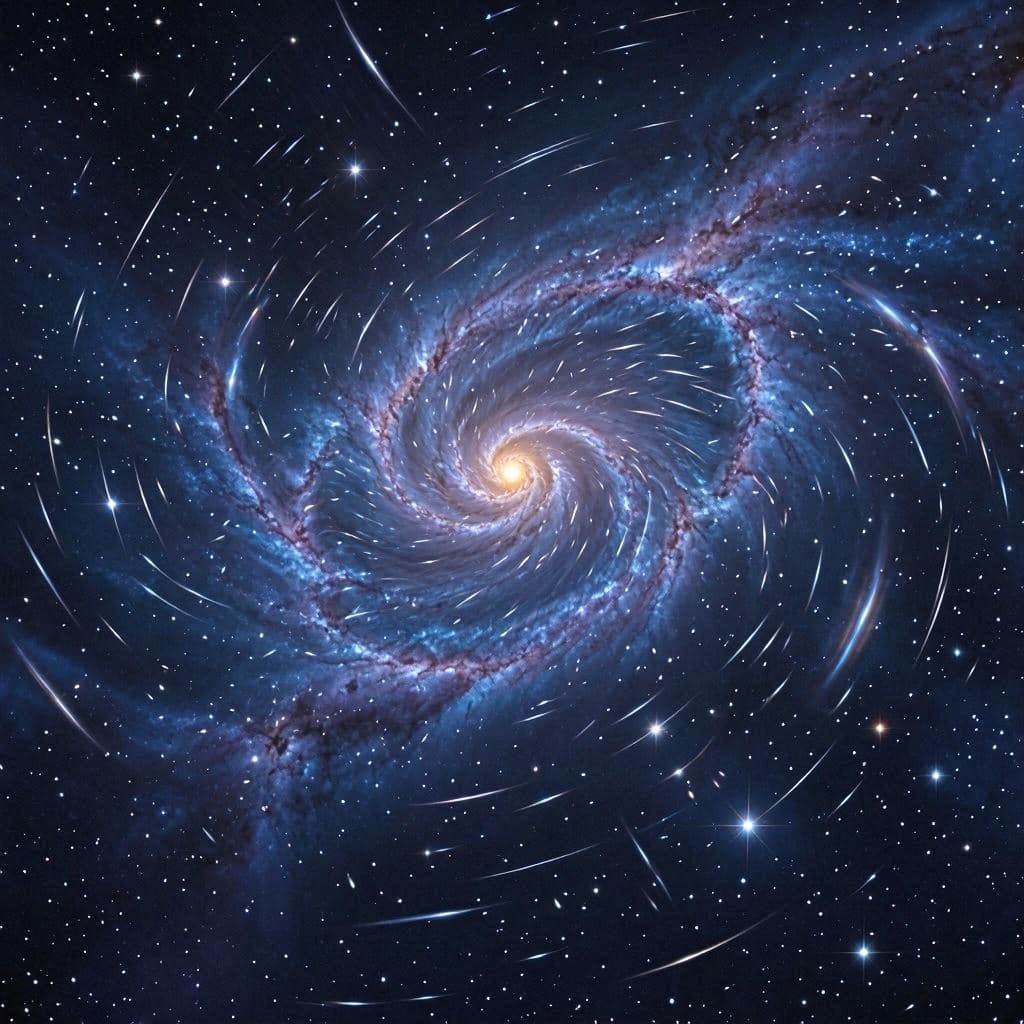
AI Image Disclaimer: The images accompanying this article are AI-generated conceptual illustrations of galactic structures and stellar movements, designed to visualize the themes of cosmic evolution and astronomical discovery.
Sources: Nature Astronomy European Space Agency (ESA) Space.com Scientific American
Published by Banx Network. This article is part of the Banx decentralized media programme, powered by the BXE token on the XRP Ledger.