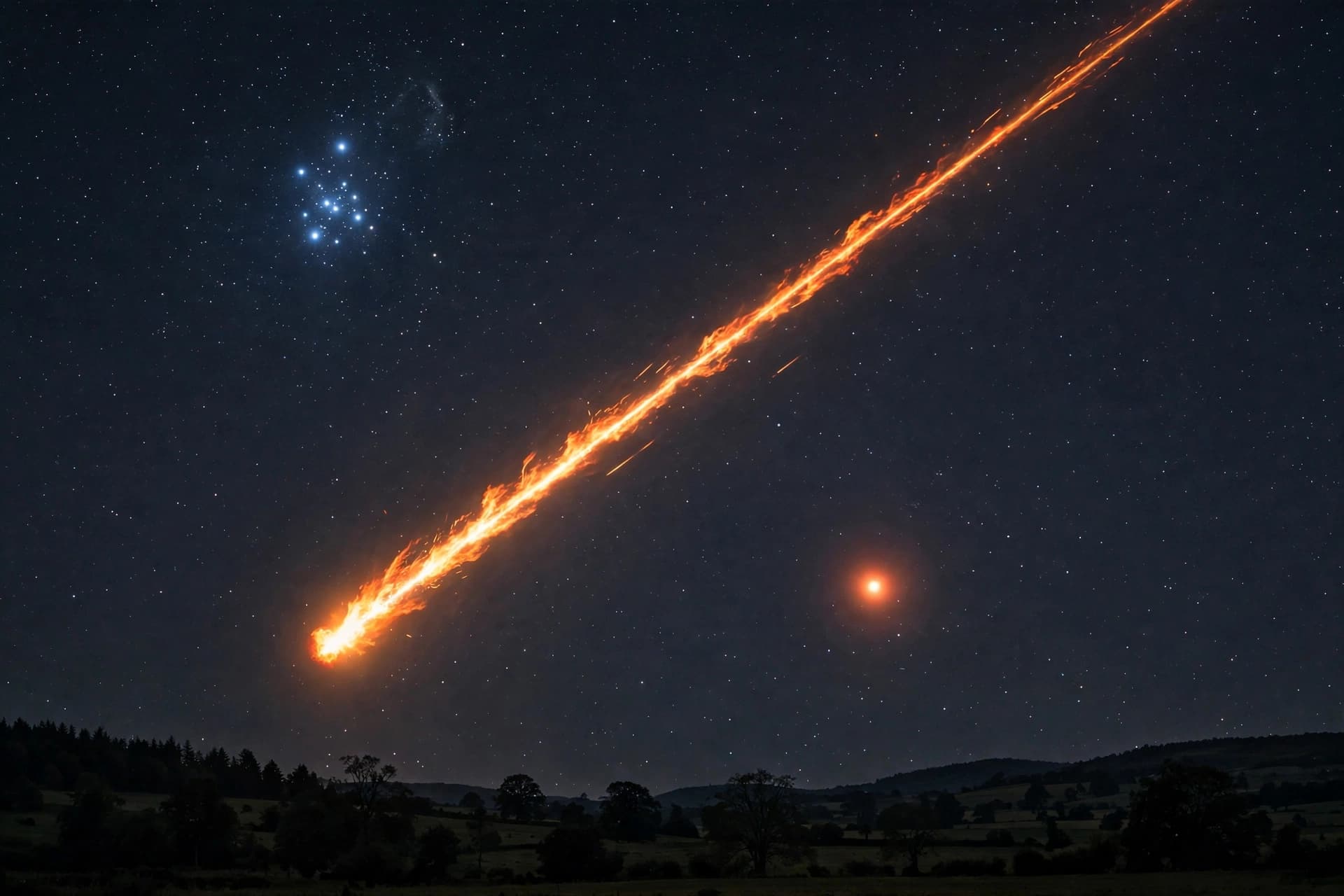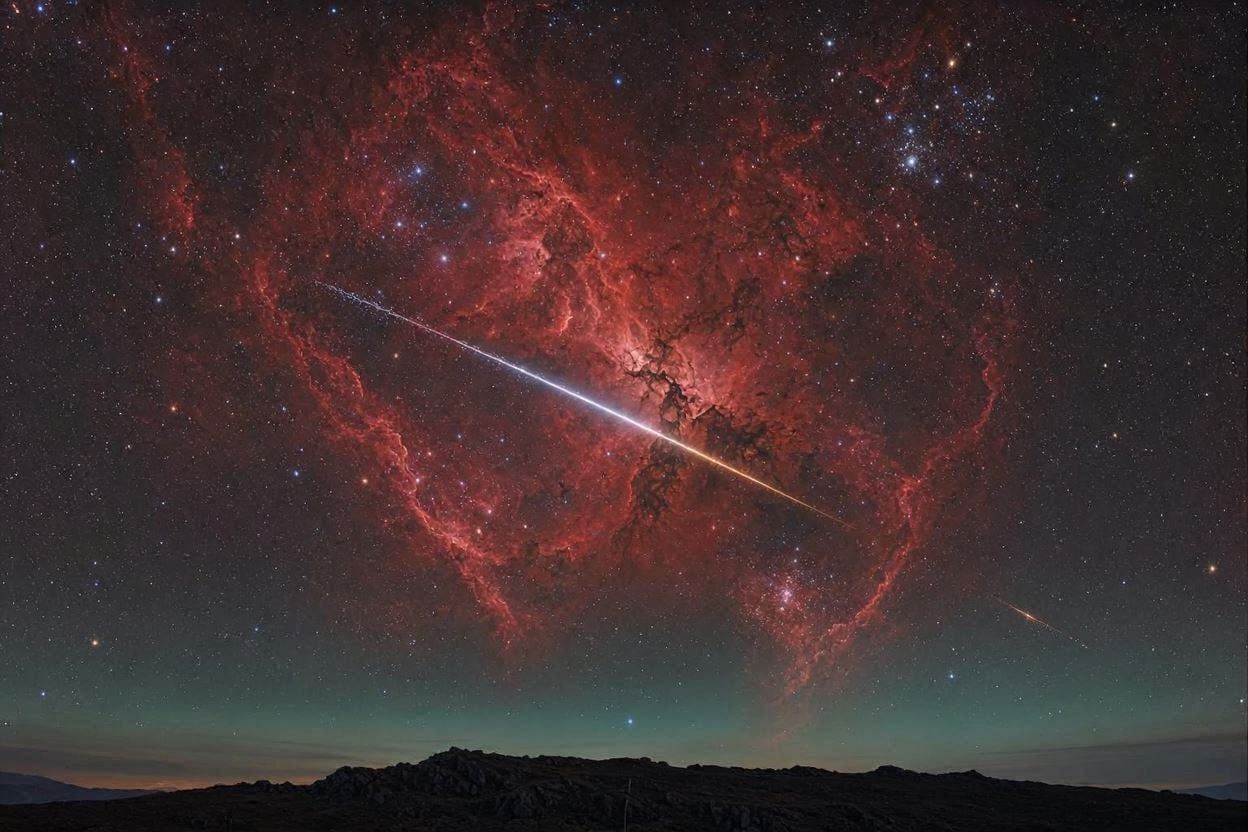
In the vast silence of the cosmos, moments of unexpected drama occasionally pierce the stillness. Recently, astronomers capturing a long-exposure image of the Great Lacerta Nebula were treated to a fleeting spectacle: a bright meteor streaking across the field of view. This cosmic photobomb, lasting only a fraction of a second, added a dynamic element to the serene backdrop of distant gas and dust. It serves as a reminder that while we gaze at the ancient light of nebulae, our own solar system remains active and alive, with debris dancing through the night sky.
Body: The image, featured as NASA’s Astronomy Picture of the Day, showcases the Lacerta Nebula, a faint red cloud of ionized hydrogen located in the constellation Lacerta. The nebula itself is a site of star formation, glowing softly in infrared light. However, the standout feature of this particular capture is the bright, white trail of a meteor that vaporized in Earth’s atmosphere during the exposure. The contrast between the static, distant nebula and the rapid, nearby meteor creates a striking visual juxtaposition.
Meteors are small particles of rock or dust, often remnants of comets or asteroids, that burn up upon entering Earth’s atmosphere at high speeds. When captured in long-exposure astrophotography, they appear as bright streaks, sometimes outshining the celestial objects they pass in front of. In this case, the meteor’s brightness and speed made it a prominent feature, drawing the eye immediately despite the intricate details of the nebula behind it.
The Lacerta Nebula, also known as the "Cosmic Bat," is a complex structure of dust and gas. Its reddish hue comes from hydrogen-alpha emissions, indicating areas where new stars are being born. The nebula is located thousands of light-years away, meaning the light we see today left its source long before human history began. The meteor, by contrast, was a local event, happening just above our heads in the present moment.
Such photobombs are rare but cherished by astronomers. They add a sense of immediacy and connection to the viewer, reminding us that we are part of the same universe we observe. The chance alignment of a nearby meteor with a distant deep-sky object is a coincidence of timing and perspective, a happy accident that enhances the beauty of the image.
For photographers, capturing such events requires patience and luck. Long exposures increase the likelihood of recording a meteor, but they also require precise tracking of the sky to keep the background stars sharp. The successful capture of this image demonstrates the skill of the photographer and the serendipity of nature. It is a testament to the joy of amateur and professional astronomy alike.
The image also highlights the diversity of phenomena visible in the night sky. From the slow evolution of nebulae to the fleeting flash of meteors, the cosmos offers a range of temporal experiences. Observing these different timescales helps us appreciate the dynamic nature of the universe, from the birth of stars to the decay of orbits.
The meteor’s brief appearance in the Lacerta Nebula image is a delightful reminder of the unexpected beauty in astronomy. It bridges the gap between the distant and the immediate, the ancient and the now. As we continue to explore the skies, such moments of surprise will continue to inspire wonder and curiosity.
AI Image Disclaimer: The images associated with this article are AI-generated illustrations designed to represent the themes of astrophotography and celestial events.
Sources: NASA APOD, Space.com, Astronomy Magazine, Miragenews
Published by Banx Network. This article is part of the Banx decentralized media programme, powered by the BXE token on the XRP Ledger.