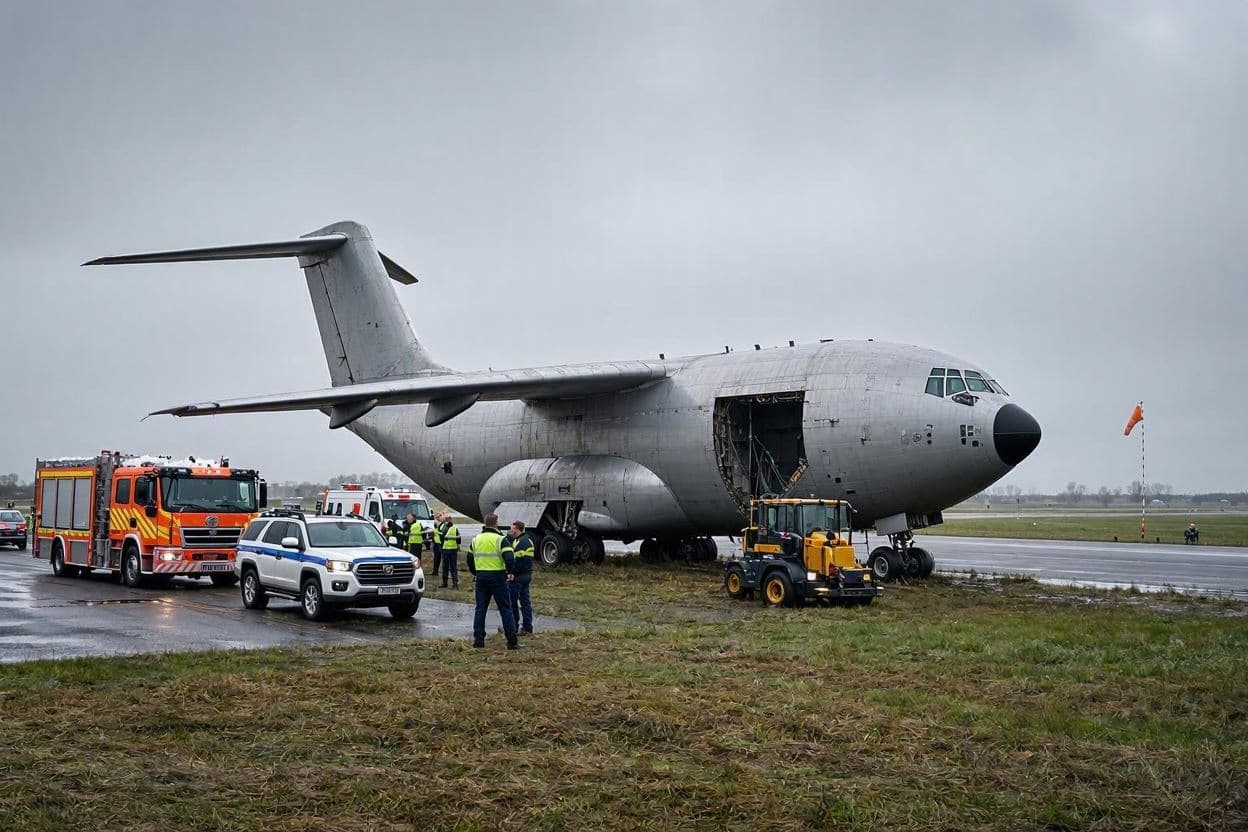
The rhythm of aviation is defined by precision, a carefully choreographed dance of arrival and departure. At Miami International Airport, a major hub for global cargo, this rhythm was briefly interrupted by an incident involving a freighter aircraft. A cargo plane overran the runway during landing, striking ground vehicles parked nearby. While the event caused disruption, it also served as a testament to the robust safety protocols that prevent such occurrences from becoming catastrophic.
The aircraft, a large freighter, touched down but failed to stop within the designated pavement limits. It veered off the tarmac, coming to rest after colliding with service vehicles. The impact was significant enough to damage the equipment, but fortunately, reports indicate that there were no serious injuries among the ground crew or flight personnel. This outcome is a relief in an industry where margins for error are slim.
Emergency responders arrived swiftly, securing the area and assessing the structural integrity of the aircraft. Fire crews and airport police worked together to manage the situation, ensuring that no fuel leaks or other hazards posed a threat to the surrounding infrastructure. Their quick action minimized the potential for further damage and allowed for a controlled investigation.
The National Transportation Safety Board (NTSB) has launched an inquiry to determine the cause of the overrun. Factors such as weather conditions, runway friction, and mechanical performance will be closely examined. Understanding why the brakes or reverse thrusters did not perform as expected is crucial for preventing similar incidents in the future.
For the airport, the incident caused temporary delays and diversions. Flights were held on the ground or rerouted to other facilities while the runway was cleared and inspected. The ripple effect of such events highlights the interdependence of air traffic systems, where a single incident can impact schedules across the network.
Cargo operations are the backbone of global trade, moving goods efficiently across continents. Any disruption to these logistics chains can have economic implications. However, the priority remains always on safety. The willingness to halt operations for inspection demonstrates a commitment to maintaining the highest standards of aviation security.
As the investigation proceeds, the aviation community watches closely. Lessons learned from this incident will likely inform training and maintenance procedures worldwide. It is a reminder that even in routine operations, vigilance is essential to ensure the safety of all who work in and around the skies.
The runway overrun at Miami International Airport was a serious incident that thankfully resulted in no major injuries. As investigators work to determine the cause, the event reinforces the importance of continuous improvement in aviation safety and operational precision.
AI Image Disclaimer: Visual representations associated with this aviation incident are generated by artificial intelligence for editorial context.
Sources: Miami Herald Aviation Week
Published by Banx Network. This article is part of the Banx decentralized media programme, powered by the BXE token on the XRP Ledger.