There is a strange tenderness in the way a city can adopt what it does not understand. In Busan, South Korea's largest port, a shark has been circling an artificial canal for nearly two weeks. It arrived quietly, following prey into waters that narrow and curve at both ends, and has since refused to leave. The city, rather than treating it as a nuisance, has embraced it.
The shark, estimated at 3.5 meters long and believed to be either a sandbar shark or a dusky shark, was first spotted on September 18 in a canal at the North Port Waterfront Park . It was given the name Bukangi—a combination of Bukhang, the Korean name for North Port, and the affectionate suffix "i" . Officials estimate it may have followed amberjack or mackerel into the waterway and then failed to find its way out, as both ends of the canal curve slightly .
The response from the public has been remarkable. More than 600,000 visitors have flocked to the waterfront park since counting began on September 19, compared with a usual daily average of about 2,000 during holidays—a fiftyfold increase . During the Chuseok holiday alone, 483,000 people visited over four days . The shark has become a social media sensation, with some calling it a "Shafluencer" . Busan Mayor Chun Jae-soo said Bukangi "has naturally become a new part of Busan's story with the interest and love of the city's people" .
Authorities attempted to guide the shark back to open sea on Tuesday, deploying five vessels to spray water streams and herd it toward the exit. The effort failed. The shark repeatedly swam past or dived to avoid the boats, remaining inside the canal. The operation was called off after about five hours . A second attempt is planned using a specially designed net, 50 meters or longer, to be stretched across the waterway by boat while another vessel sprays water from behind .
Experts say the shark's health remains stable, but time may not be on its side. The canal is only 1.5 kilometers long, 30 to 60 meters wide, and 2.5 to 4 meters deep depending on the tide . As autumn temperatures drop, the shallow water will cool more quickly than the open sea. If surface temperatures fall below 20 degrees Celsius, the environment becomes unsuitable for the shark. Feeding has not been observed since its arrival .
Choi Yoon, professor emeritus at Kunsan National University, noted that the shark's swimming speed should be watched closely. If its movements become sluggish over a day or two, intervention becomes necessary. "Sharks can jump 2 to 3 meters above the water," he cautioned, "so forcing an operation can be dangerous" . For now, Bukangi continues its slow circles, watched by thousands, while authorities prepare their next attempt to guide it home.
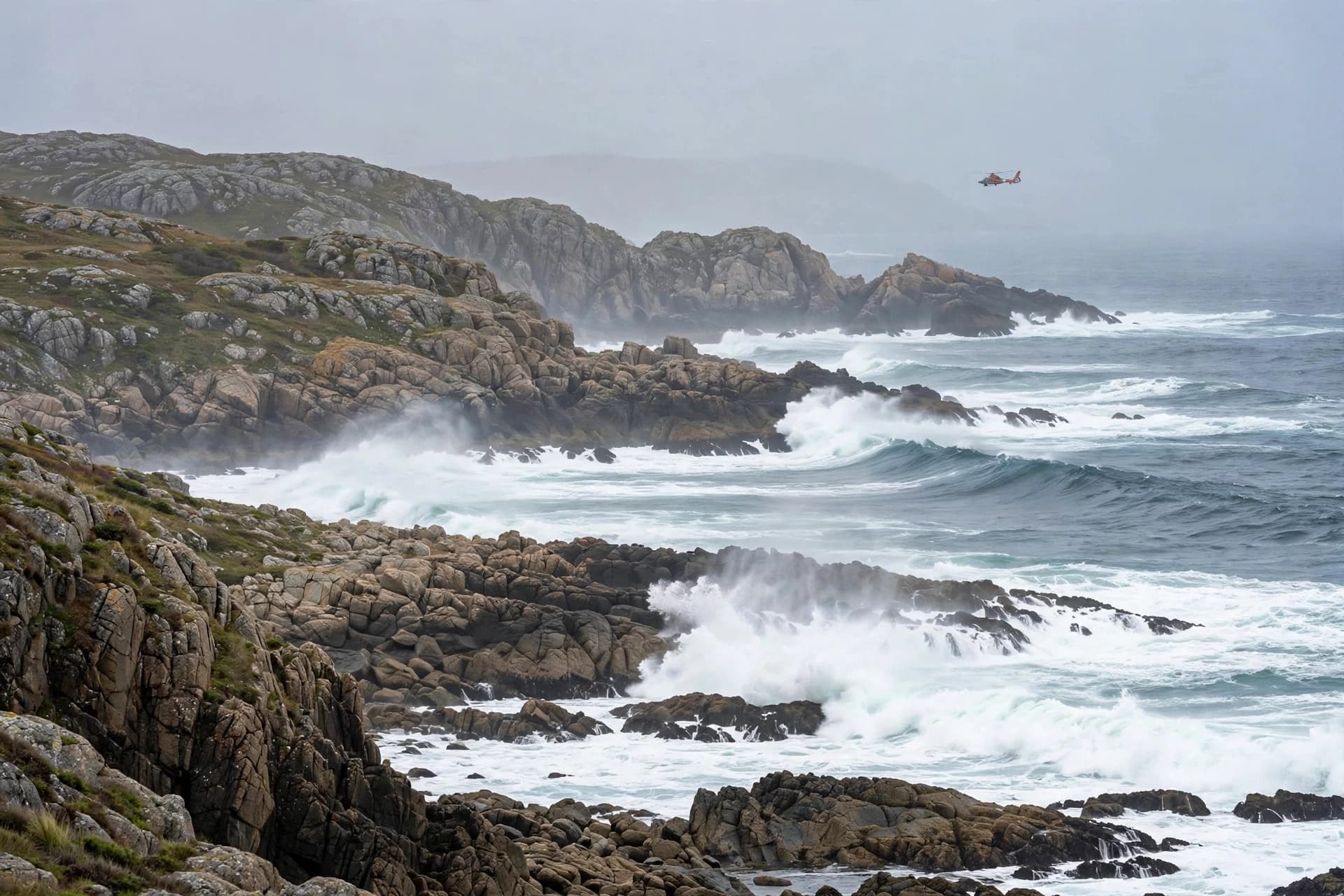
AI Image Disclaimer: The accompanying images in this report were created with artificial intelligence and are intended for conceptual representation only.
Sources: AP News, Yonhap News Agency, KBS, SBS, Seoul Shinmun, U.S. News & World Report
Published by Banx Network. This article is part of the Banx decentralized media programme, powered by the BXE token on the XRP Ledger.