There are moments in exploration when the veil lifts just enough to reveal a mystery beneath, and the observer must learn to see with new eyes. On a late October day in 2004, a small spacecraft threading its way through the Saturn system turned its camera toward a moon wrapped in orange haze and, for the first time, looked closely enough to catch the faint outlines of an alien surface.
The Cassini spacecraft had arrived at Saturn only months earlier, and Titan had been a priority from the start. On October 26, 2004, the orbiter swept just 1,200 kilometers above the moon’s cloud tops, roughly three hundred times closer than its initial distant pass that July . The imaging science subsystem captured views that, while still filtered through the moon’s thick nitrogen-methane atmosphere, showed patterns of light and dark that scientists had never resolved before .
What the images revealed was not a frozen, cratered relic but something more puzzling. The surface appeared shaped by multiple geological processes, with bright and dark bands stretching east to west and narrow dark lines cutting across brighter terrain . The brighter region near the equator, later named Xanadu Regio, hinted at a young surface with few definitive impact craters—a landscape that had been reworked by forces still unknown . Scientists at the time were careful not to leap toward conclusions, describing the features as intriguing and unlike any environment previously observed .
The flyby was not merely a photographic triumph. It was a calibration of curiosity, a moment when a distant world began to shift from a hazy disk in a telescope to a place with topography, texture, and history. The images would later be assembled into a mosaic, a fuller portrait of Titan that showed brightness variations across the disc and bright clouds near the south pole, inviting years of speculation about tectonics, winds, rivers, or perhaps something colder and more exotic .
For the scientists involved, the close approach was a reminder of how much remained unknown. As one researcher put it at the time, the data were like building a puzzle without the picture on the box, requiring patience and a willingness to reassemble assumptions as new pieces arrived . The moon’s lack of obvious craters suggested activity, but whether that activity was tectonic, atmospheric, or fluvial remained a matter of open inquiry .
Two decades later, the October 2004 flyby stands as a quiet hinge in planetary science. It did not answer the question of Titan in a single stroke. Instead, it made the question richer, turning a shrouded moon into a world with a surface worth mapping, a landscape worth wondering about.
The Cassini mission would go on to make dozens more passes by Titan, and the Huygens probe would later descend through its atmosphere to touch the surface. But the first close look, on that autumn day, remains a study in the value of proximity—of the simple act of drawing near enough to see that the haze conceals not emptiness, but complexity.
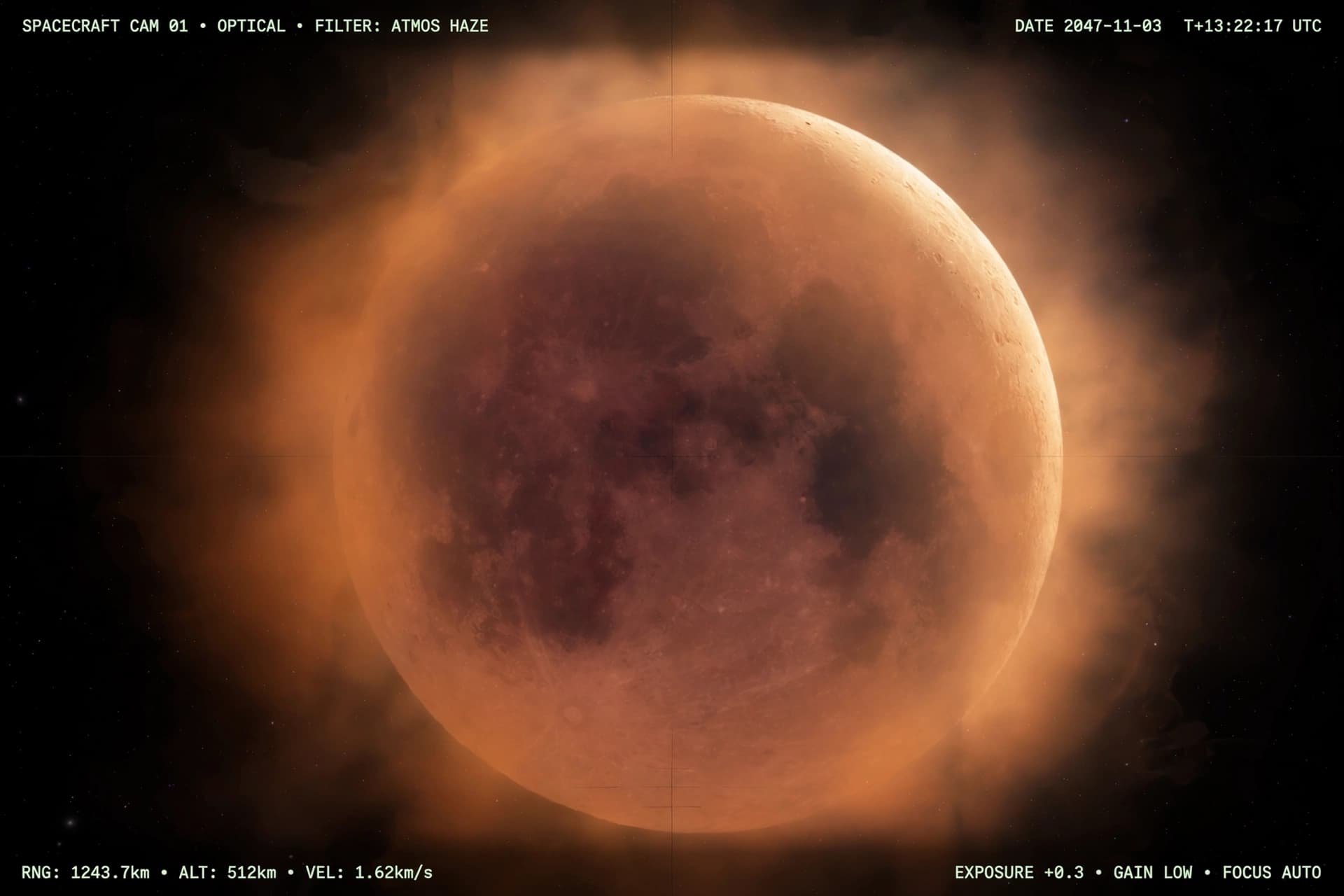
Image note: The visual accompanying this article is AI-generated and intended for illustrative purposes only.
Sources: NASA, European Space Agency, NASA Jet Propulsion Laboratory, Science
Published by Banx Network. This article is part of the Banx decentralized media programme, powered by the BXE token on the XRP Ledger.