There is a particular cruelty in the sea's indifference. It does not distinguish between the fisherman and the migrant, the leisure boat and the smuggler's vessel. When a boat goes down in the dark, the water receives everyone the same way—and sometimes, it sends back something else entirely. Off the coast of Baja California, that indifference has taken a form that rescuers and survivors will carry with them for a long time.
Sixteen Mexican nationals were rescued on Friday after a boat carrying an estimated 27 people capsized about 140 miles west of Ensenada, Mexico. Eleven remain missing, and the search continues . Several of the survivors were treated for severe injuries consistent with shark bites, according to the U.S. Coast Guard, which provided life-saving first aid as the rescued were flown to San Diego .
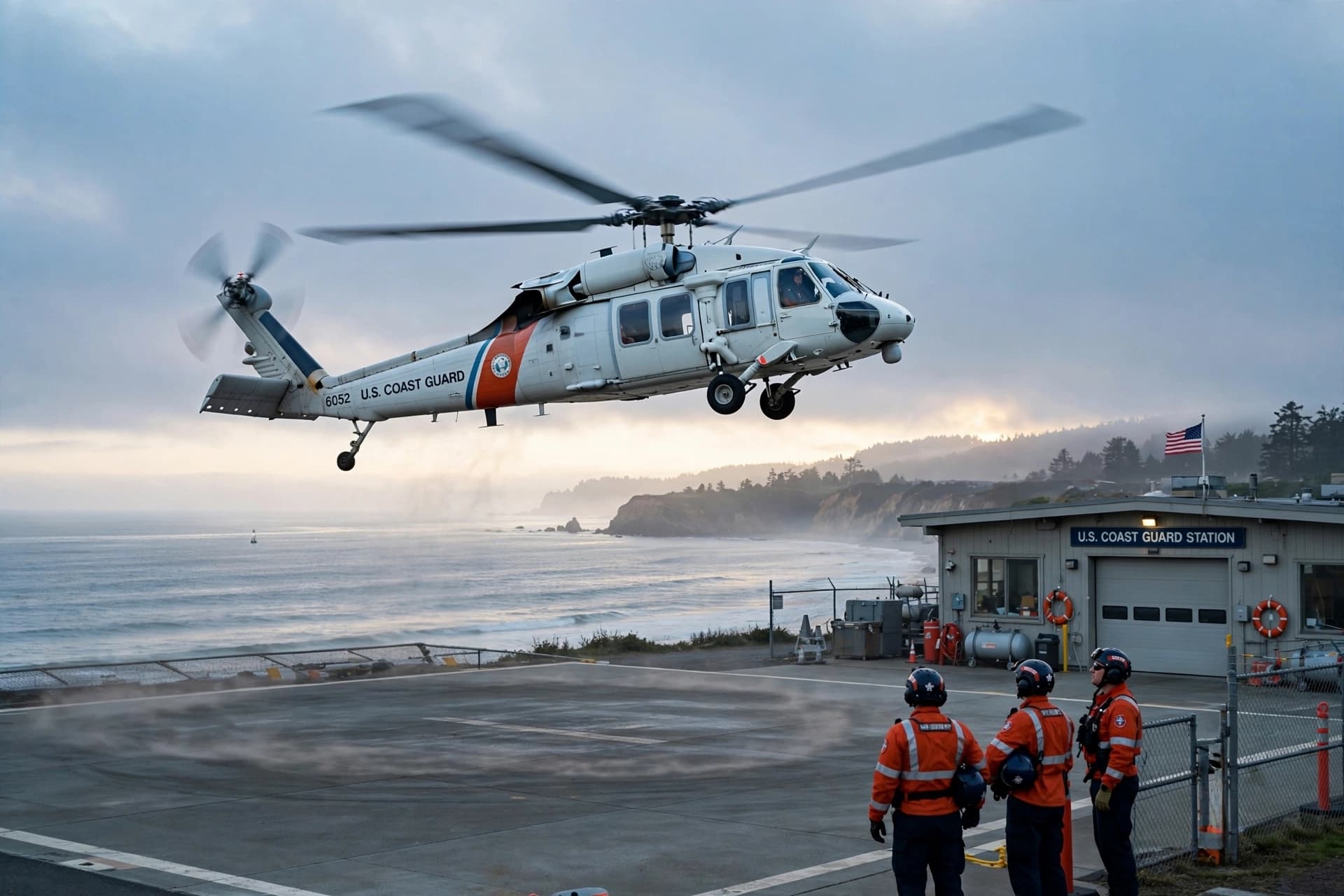
The sequence of events is stark in its simplicity. A mayday call was transmitted around 1 a.m. Friday. A rescue helicopter reached the site roughly two hours later, and for about ninety minutes, a crew that included a rescue swimmer pulled people from the water . Lt. Santiago Tamburini described what they found: people holding onto each other, holding onto debris, treading water and trying to stay above the surface before being rescued .
The boat went down in an area frequented by smugglers transporting migrants toward the United States, though the Coast Guard emphasized that the vessel's origin, destination, and purpose were not immediately clear . The region is also popular with fishing and leisure boats. What is known is that all those rescued were Mexican nationals, and the Mexican consulate in San Diego has offered consular assistance . Customs and Border Protection is investigating and interviewing the survivors.
The search operation has involved an unusual concentration of assets: U.S. Coast Guard and Navy helicopters, a fixed-wing plane, a cutter, and a Navy combat ship, joined by the Mexican Navy . An additional helicopter was deployed as the search stretched into Saturday. The efforts cover roughly 3,200 square kilometers of open ocean, a vastness that makes the word "search" feel almost inadequate.
For the families of the eleven still missing, the wait is measured in hours that accumulate into something heavier. The survivors who reached hospitals in San Diego carry injuries that will heal and memories that may not. Some were in critical condition. One was treated for a suspected shark bite . The sea, as Tamburini observed, is unforgiving .
The investigation will continue, and the questions will multiply before they resolve. What kind of boat was it? Where was it going? Who was responsible for the people aboard? For now, the answers matter less than the search itself—the helicopters tracing patterns over the water, the crews watching for a hand raised above the surface, the hope that the count of eleven might yet grow smaller.
AI Image Disclaimer: The images accompanying this article were generated by artificial intelligence and are intended for illustrative purposes only.
Sources: AP News, CBC, Qazinform (citing Al Jazeera), Daily Express, New York Post
Published by Banx Network. This article is part of the Banx decentralized media programme, powered by the BXE token on the XRP Ledger.