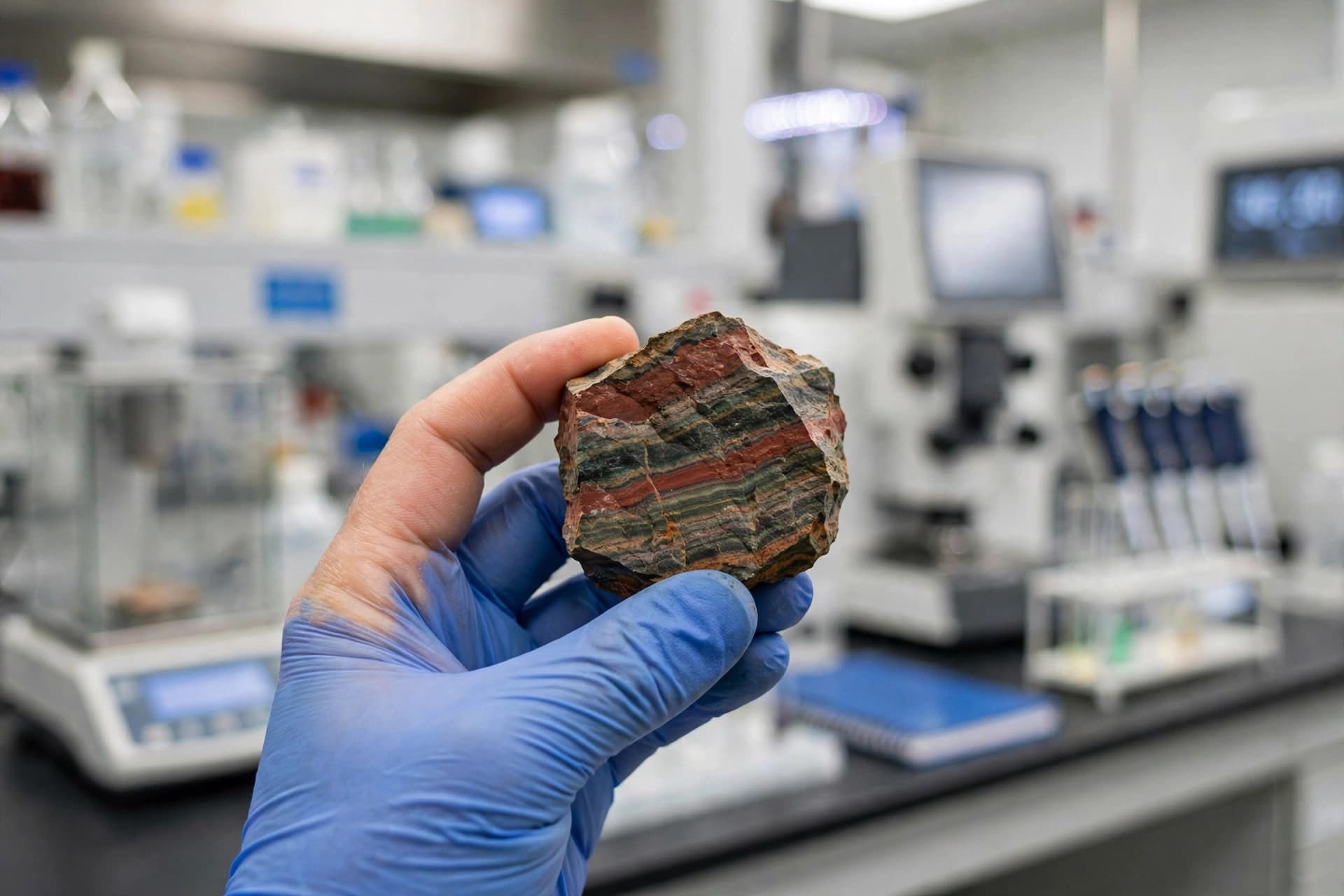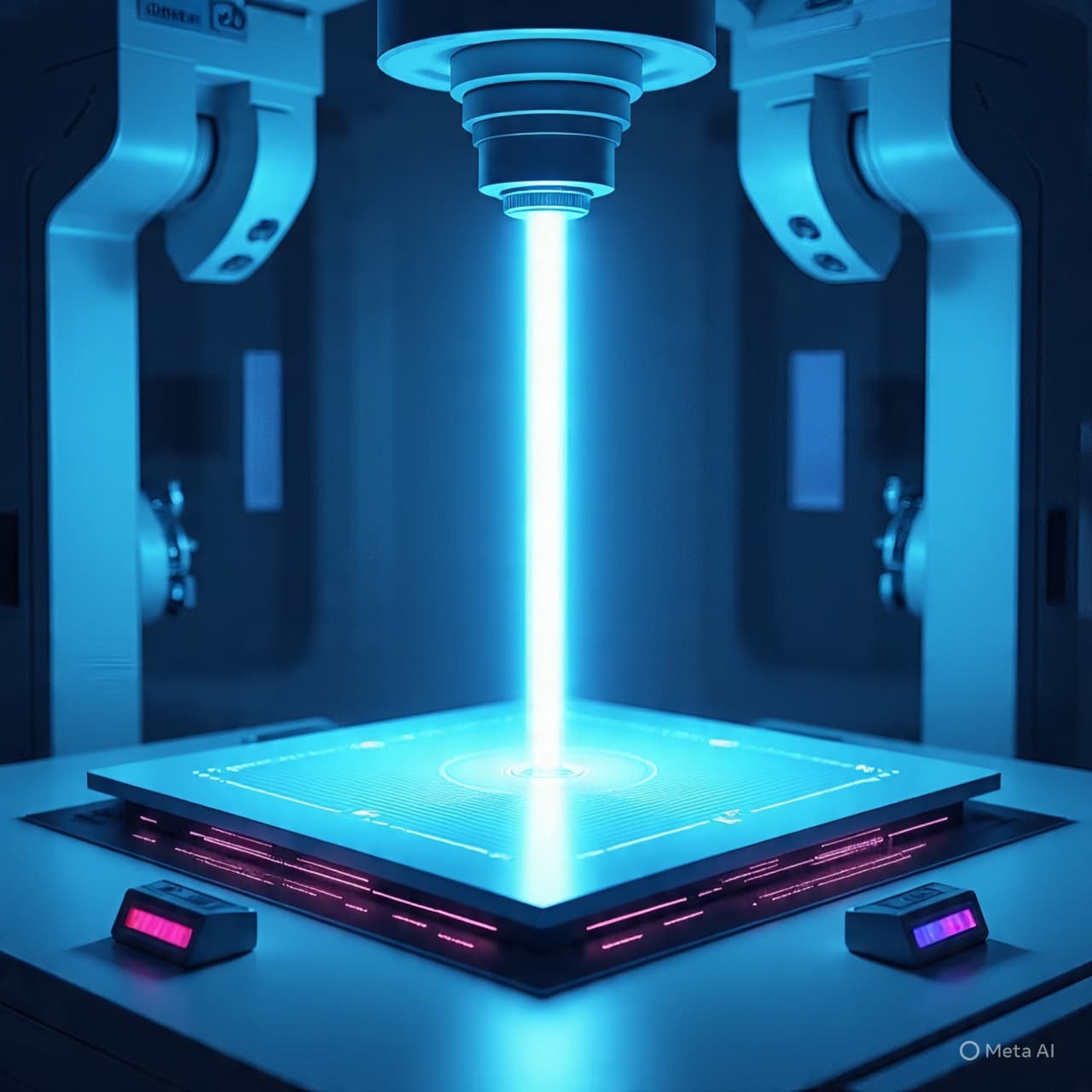
Morning in a physics laboratory often begins with light. Not the sunlight that slips through windows or settles softly across instruments, but beams carefully guided through mirrors and lenses—thin lines of brightness drawn with purpose across the room.
For decades, some of the most precise of these beams have come from enormous facilities, machines that fill entire rooms or even buildings. Their light reaches wavelengths and energies difficult to achieve with ordinary laboratory equipment. Yet recently, researchers have begun to shrink some of that capability down to the size of a tabletop.
A new laser system reported by physicists is said to be up to a thousand times more efficient than earlier approaches used to produce similar high-energy light. The device operates on a laboratory bench rather than inside vast accelerator halls, but its performance may allow scientists to explore phenomena once accessible only with far larger equipment.
The beam produced by the system lies in the extreme ultraviolet (EUV) region of the electromagnetic spectrum. Light at these wavelengths carries enough energy to probe materials at extremely small scales—small enough to reveal imperfections hidden deep within semiconductor chips.
For engineers working in microelectronics, such defects can determine the reliability of devices that power modern computing. Even a tiny irregularity in a chip’s structure may influence how electrons flow through circuits. A more efficient EUV laser could make it possible to scan semiconductor materials with greater sensitivity, detecting flaws that previously remained invisible.
But the implications of the new technology extend beyond manufacturing.
Extreme ultraviolet light also interacts with atomic nuclei in unusual ways. Certain isotopes possess nuclear energy transitions that can be triggered by photons in this part of the spectrum. These transitions are central to the idea of a nuclear clock, a theoretical timekeeping device that could surpass the precision of even today’s best atomic clocks.
The concept rests on the principle that frequency determines time. In physics, the relationship between frequency and oscillation period can be written as:
genui{"math_block_widget_common_keywords": {"content": "T = \\frac{1}{f}"}}Where is the period of a cycle and is the oscillation frequency. The higher and more stable the frequency used to mark time, the more precise the resulting clock becomes.
Atomic clocks already exploit extremely stable electron transitions within atoms to measure time with extraordinary accuracy. Nuclear clocks, by contrast, would rely on transitions inside the atomic nucleus itself—events believed to be even less sensitive to environmental disturbances.
Producing the right kind of light to excite these nuclear transitions has long been a technical challenge. The wavelengths required lie in the difficult territory between traditional ultraviolet lasers and high-energy radiation sources. Efficient tabletop EUV lasers could help bridge that gap, offering laboratories a practical way to study these elusive transitions.
The new system achieves its efficiency through improvements in the process known as high-harmonic generation, where intense laser pulses interact with gases to produce light at much shorter wavelengths. By refining how energy is transferred during this interaction, researchers managed to dramatically increase the amount of usable EUV light produced.
The result is a beam strong enough to support experiments that previously demanded much larger installations. For scientists exploring semiconductor materials or the foundations of timekeeping, the difference is significant.
The study reports that the new tabletop laser can generate extreme ultraviolet light with efficiencies roughly a thousand times greater than earlier systems, potentially enabling improved semiconductor inspection and advancing research toward practical nuclear clocks.
AI Image Disclaimer
Illustrations were created using AI tools and are not real photographs.
Source Check
Credible coverage and/or primary reporting exist from: Nature Photonics Physics World ScienceDaily Phys.org IEEE Spectrum
Published by Banx Network. This article is part of the Banx decentralized media programme, powered by the BXE token on the XRP Ledger.